E X P L O R E
Free Tokyo Night Views: Skyline Spots Open Late (2026)
See Tokyo's skyline at night for ¥0. Free spots that stay open late — LUFTBAUM Takanawa, Yebisu — plus the bridges, parks, and riversides where you watch the city light up.

Tokyo’s skyline doesn’t have to cost anything. Observation decks like Tokyo Skytree (from ¥1,800 online) or SHIBUYA SKY run ¥2,000–3,000+, but several spots around the city give you the same view for ¥0.
This guide covers the free observation spots that stay open late at night, plus the bridges and parks — not observation decks — where you watch the skyline light up. For the full daytime roundup, see the free observation decks guide; this article is only about where to see the view for free after dark.
Pick by what you’re after:
- Open the latest — LUFTBAUM Takanawa (gardens to 23:00, area to 24:00), Yebisu Garden Place
- Bay and bridge views — Odaiba Seaside Park, Toyosu Gururi Park, Caretta Shiodome
- To photograph Skytree — the Sumida River bridges (Azumabashi, Jikkenbashi, Genmoribashi)
- On a whim near Shinjuku — the TMG Building’s South Observatory (open until 22:00, last entry 21:30)
Free observation spots that stay open late
Most free observation spots close by early evening. The ones below stay open late enough to fit in after dinner. They’re listed from the latest closing time down.
| Spot | Closes | Free | Nearest station | What you see |
|---|---|---|---|---|
| LUFTBAUM (Takanawa Gateway) | Gardens 23:00 / area 24:00 | Free | Takanawa Gateway (direct) | Tokyo Bay, Rainbow Bridge |
| Yebisu Sky Lounge | Open late (not posted — confirm) | Free | Ebisu, ~5 min | Tokyo Tower, Skytree |
| Caretta Shiodome SKY VIEW | Open late (not posted — confirm) | Free | Shiodome, ~1 min | Bay area, bridges |
| TMG South Observatory | 22:00 (last entry 21:30) | Free | Tochomae (direct) | Central Tokyo panorama |
| Sky Carrot (Sangenjaya) | 22:00 | Free | Sangenjaya, ~3 min | Central Tokyo, Tokyo Tower |
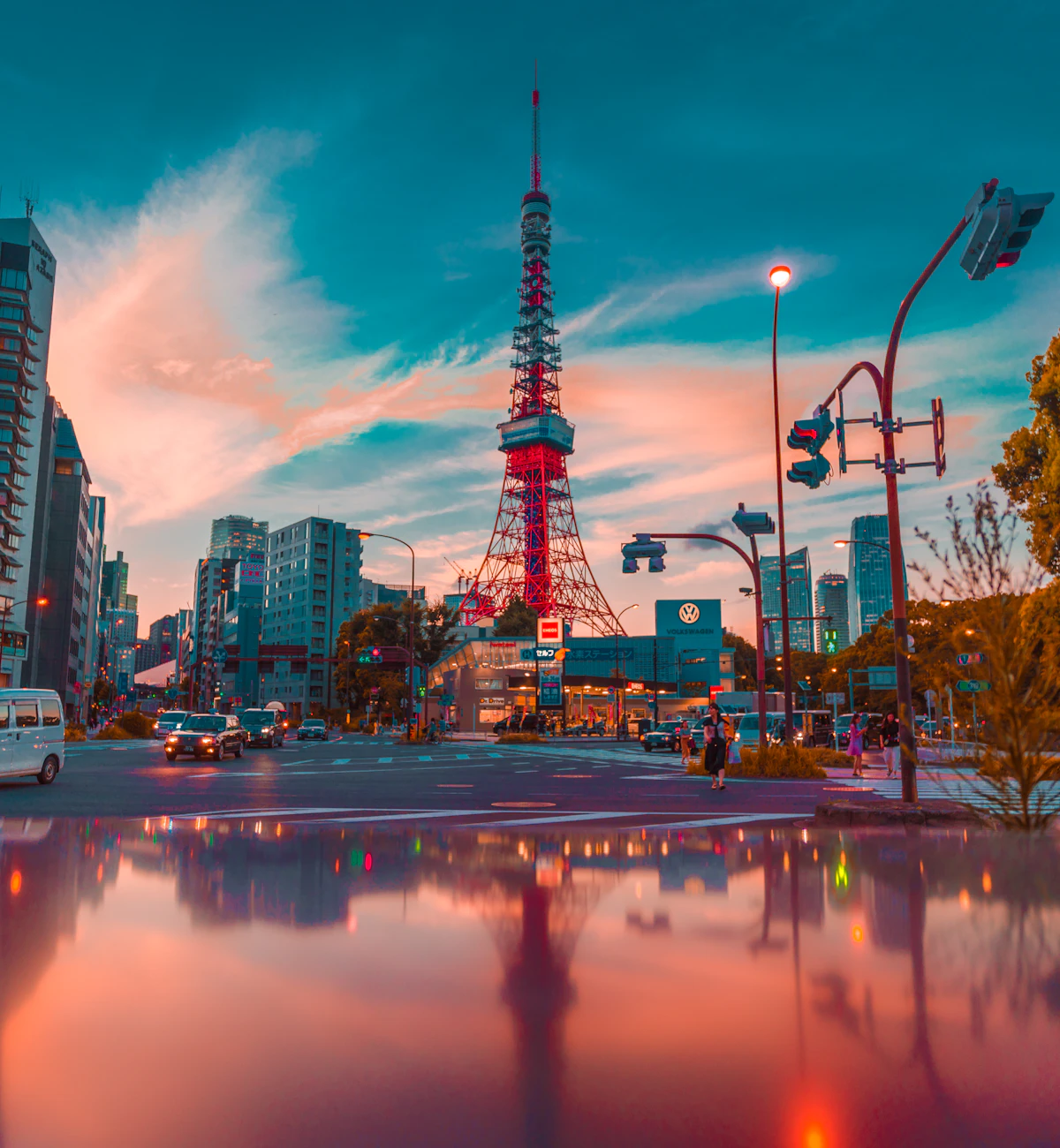
LUFTBAUM (Takanawa Gateway City, 28th–29th floors)
This is Tokyo’s newest free night-view spot, opened in September 2025. Two garden terraces — “Midori no Niwa” (Green Garden) and “Yamabuki no Niwa” (Golden Garden) — are open to the public, looking out over Tokyo Bay, Rainbow Bridge, and the trains rolling past Shinagawa from the 28th and 29th floors. On a clear day, Mt. Fuji’s silhouette appears from the Green Garden.
The facility area is open 8:00–24:00, and the gardens until 23:00 (the Golden Garden opens at 10:50) — so the gardens aren’t a 24-hour space. The nearest station is Takanawa Gateway on the JR Yamanote and Keihin-Tohoku lines, directly connected. Since it’s a new venue, it’s worth checking the official opening hours before you go.
Yebisu Garden Place Sky Lounge (38th–39th floors)
A free observation lounge on the upper floors of Yebisu Garden Place Tower. From around 160m, you can see Tokyo Tower, Skytree, and Rainbow Bridge all at once — a balanced view at a height that’s easy to reach after dinner.
From the east exit of Ebisu Station (JR and Tokyo Metro Hibiya Line), take the covered moving walkway, the “Yebisu Skywalk,” for about 5 minutes, then an elevator from the tower’s ground floor up to the 38th–39th floors. It stays open late, but the official site doesn’t list hours, so check how late before you go.
Caretta Shiodome SKY VIEW (46th floor)
A free observation space on the 46th floor of Caretta Shiodome, about 200m up. The view leans fully toward the bay — Odaiba, Rainbow Bridge, and Tokyo Gate Bridge spread out below. A shuttle elevator from B2F takes you straight to the 46th floor.
It’s a 1-minute walk, directly connected, from Shiodome Station (Toei Oedo Line and Yurikamome), and 3–5 minutes from JR Shimbashi. The observation space is free; the sky restaurants on the same floor are paid and separate. It stays open late, but since hours aren’t published officially, check how late before you go.
Tokyo Metropolitan Government Building, South Observatory (202m, 45F)
A reliable free observatory in Shinjuku. As a night option, the South Observatory stays open until 22:00, with last admission at 21:30 (30 minutes before closing). On the 1st and 3rd Tuesdays, when the South is closed, the North Observatory stays open until 22:00 instead.
No reservation is needed, and you won’t be asked to order anything. The North and South close on different days and have other quirks, so the access details and daytime information are in the free observation decks guide. For the latest status, check the official page.
Sky Carrot Observation Lobby (Sangenjaya, Carrot Tower 26F)
A free observation lobby on the 26th floor of Carrot Tower, the landmark of Sangenjaya. Looking east you get central Tokyo and Tokyo Tower; looking west, the western suburbs and, in the right season, Mt. Fuji. It’s a quieter spot, away from the tourist crowds.
Hours are 9:30–22:00. The opening hours changed in October 2025, and it now closes at 22:00 — older listings that say 23:00 are out of date (the Setagaya City page is current). Closed on the 2nd Wednesday of each month and December 29 – January 1. It’s about a 3-minute walk from Sangenjaya Station (Tokyu Den-en-toshi and Setagaya lines).
Free night views without an observation deck
Lounges get hazy in bad weather, and they have closing times. Bridges, riverbanks, and parks let you enjoy the view for free, on your own schedule. These are the Tokyo night views the observation-deck guide doesn’t cover.
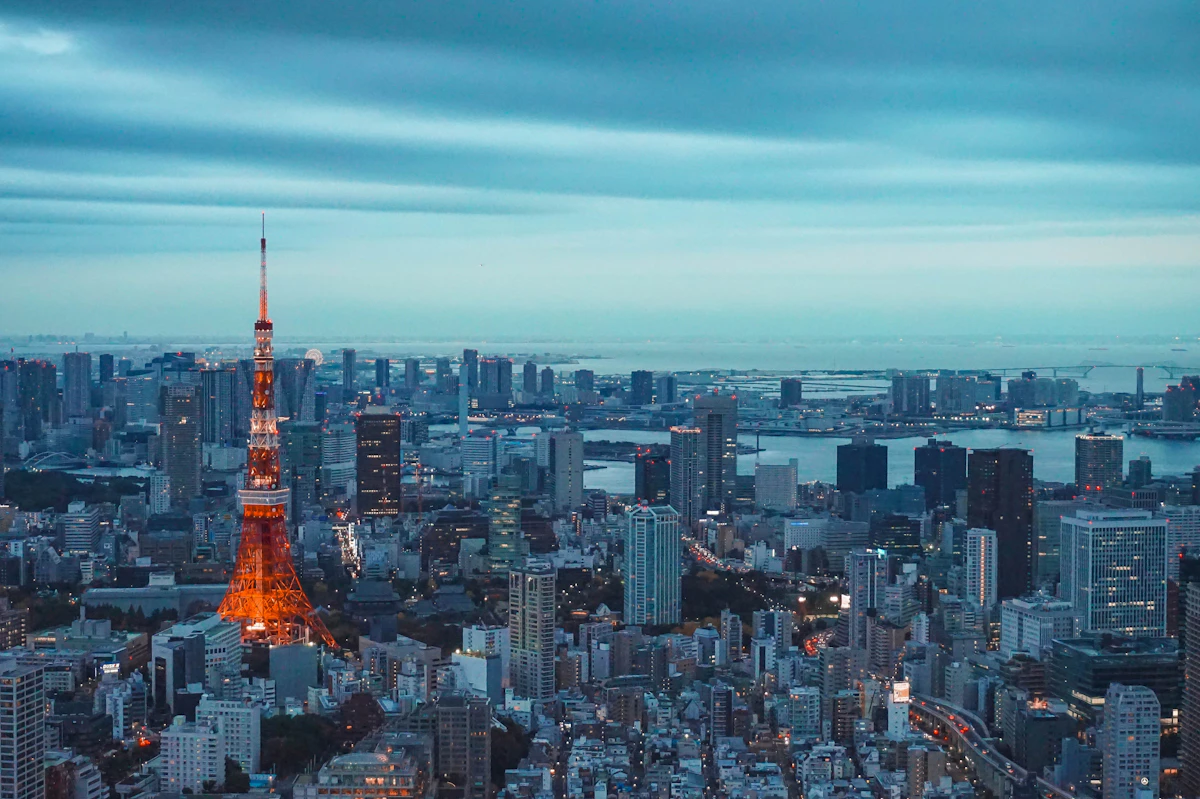
Skytree lit up across the Sumida River
You don’t have to go up Skytree for it to be the star of the night. Its illumination switches on at 18:45, with a rainbow sequence until 19:45 and signature designs like “Iki” and “Miyabi” after that. The end time varies by day — usually around midnight, but some nights end at 22:00, with collaboration light-ups too — so check the official schedule for the day.
The classics are the bridges and parks along the Sumida River. Azumabashi (right by Asakusa Station on the Tokyo Metro and Toei Asakusa lines) lines up the gold Asahi sculpture and Skytree across the water. Jikkenbashi (about 10 minutes’ walk from Oshiage) is known for the “upside-down Skytree” reflected in the Kita-Jikken River. Genmoribashi (about 5 minutes from Tokyo Skytree Station) frames Skytree together with the Tobu Skytree Line trains. On the Sumida-ward side, Sumida Park is always open and gives you Skytree across the river. All of these are public streets and parks — free, of course.
Rainbow Bridge from Odaiba
Odaiba Seaside Park is open year-round and free, and looks straight across at the lit Rainbow Bridge. The bridge’s illumination runs from about 30 minutes after sunset until around midnight (Metropolitan Expressway info), and the classic shot frames it with the Statue of Liberty replica in the foreground.
One thing to watch: the promenade attached to the bridge (the Rainbow Promenade). It closes around 21:00 in summer and 18:00 in winter, so you can’t walk across it during the hours the illumination looks its best. Treat it as a view to watch from the Odaiba side. The nearest stations are Odaiba-Kaihinkoen and Daiba on the Yurikamome.
Toyosu Gururi Park (24 hours, free)
A waterfront park next to the Toyosu market, with a 4.5km path that takes in the whole bay. It’s open 24 hours, year-round, and free, with Rainbow Bridge, Tokyo Tower, the waterfront high-rises, and the Harumi area all in view. Shijo-mae Station is the closest stop for the night view at the park’s tip.
The path is long, though, and some stretches are dimly lit. Stick to brighter areas, and don’t push a late-night walk alone. Some facilities inside the park, like the barbecue area and parking, are paid and have set hours.
Free vs. paid at night — when it’s worth paying
If the view is all you’re after, the free spots are more than enough. Where seeing Skytree from the Sumida riverbank costs ¥0, the Tembo Deck runs from ¥1,800 online and Tokyo Tower’s Main Deck from ¥1,500.
Paid spots still offer things the free ones can’t — glass floors, open-air rooftop decks, the feeling of standing on the landmark itself. Prices are dynamic and change by date, so check each official site before you go.
How to not waste your evening
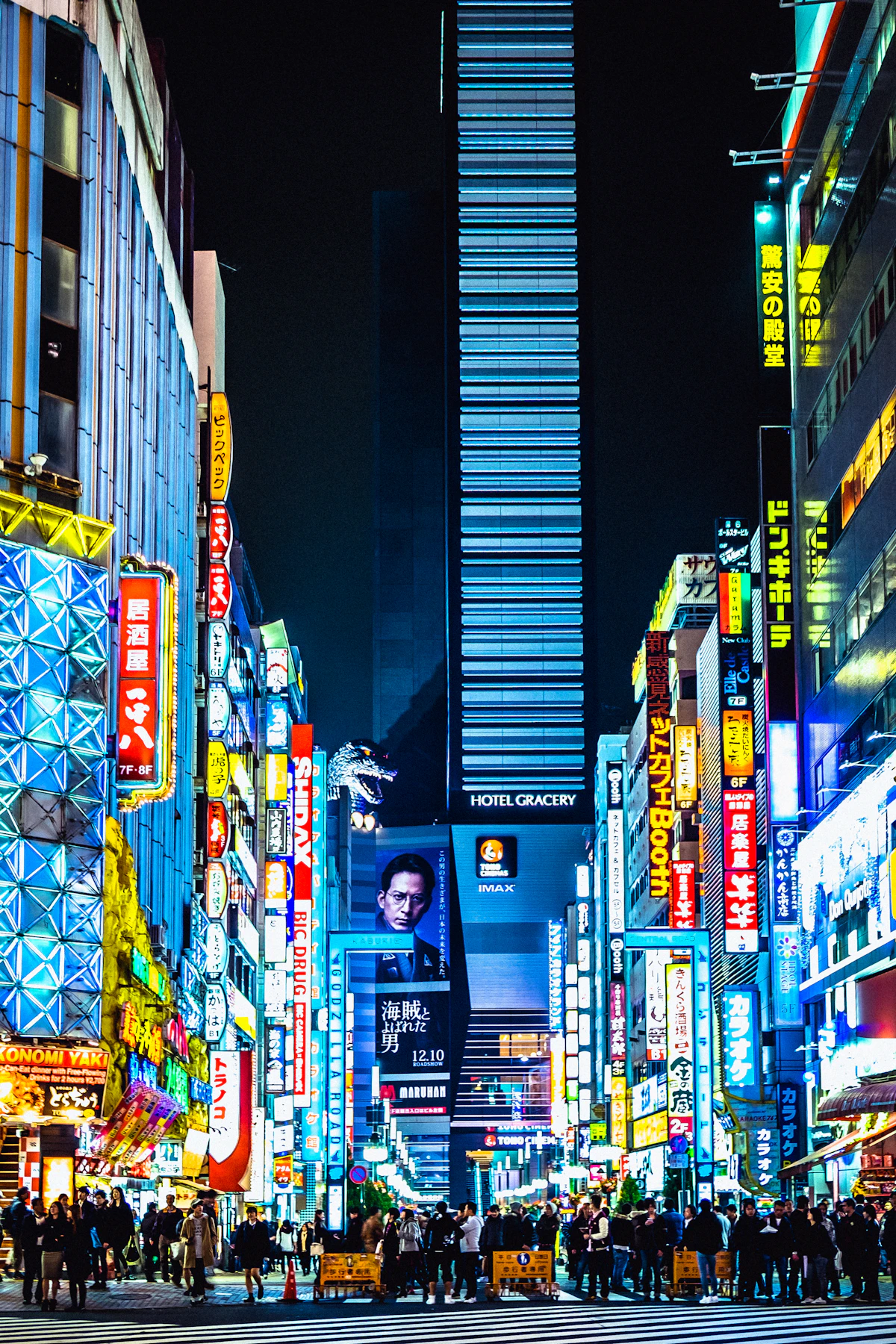
“Last entry” isn’t the same as “closing”
Observation spots often stop letting people in 30 minutes before closing. The TMG South Observatory closes at 22:00, with last admission at 21:30. Cut it too fine and you may find the elevator already shut down, so leave yourself some margin. Many lounges don’t publish a last-entry time, and arriving early is the safe move there too.
Hours change
Free spots adjust their hours for maintenance and operational changes, and new venues and lounges especially tend to shift. Trusting the times in an old roundup can leave you standing outside a closed door. For any spot you’re set on, confirm on the official site before heading out.
Plan by area to cover more in one night
A single spot takes 30 minutes to an hour. Trying to hit too many in one night wears you out on transfers alone, so it’s more realistic to group nearby ones. The Shiodome–Odaiba–Toyosu bay area is connected by a single Yurikamome line: take in the height from Caretta Shiodome, then come down to the Odaiba waterfront for Rainbow Bridge up close. The Sumida River bridges cluster around Asakusa and Oshiage, so those work as a walking loop too. With kids, the indoor spots that look good earlier in the evening — the TMG Building and Sky Carrot — are the easier picks.
The Rainbow Bridge promenade closes before dark
Worth repeating: the bridge’s walkway is closed during the night-view hours. A “walk across the bridge at night” plan doesn’t work. Take the aerial walk in the afternoon or at dusk, and watch the illumination from the Odaiba side — two separate things.
Night safety and the last train home
Outdoor riverbanks and parks get quiet at certain hours. Stick to well-lit routes and keep an eye on your belongings. And the easy thing to forget is the trip back: the Yurikamome and many private lines stop running before midnight, so check the last train times before you set out.
The best time of evening
The city lights and the blue of the sky come together in the 20–30 minutes after sunset — the blue hour. That window, before it goes fully dark, is when photos look best. To put Mt. Fuji’s silhouette in the distance, aim for a clear day between November and February, when the air is dry. In spring, framing the view with the cherry blossoms adds a seasonal foreground.
Related articles
- Free Observation Decks in Tokyo — the full roundup, daytime included, with each venue’s hours and access
- Tokyo Last Train Guide — so you don’t miss the train home after a night view
- 8 Cherry Blossom Spots in Tokyo — pair night views with the blossoms in spring
- Tokyo Itinerary Planning Guide — fitting night views into your plan
Sources:
- Tokyo Metropolitan Government Bureau of Finance “Observation Room Guide” https://www.zaimu.metro.tokyo.lg.jp/tochousha/goannai/tenbou (accessed: 2026-06-26)
- Yebisu Garden Place “TOP of YEBISU” https://gardenplace.jp/special/sp/top_of_yebisu/ (accessed: 2026-06-26)
- Caretta Shiodome “Sky Restaurants” https://www.caretta.jp/skyrestaurants/ (accessed: 2026-06-26)
- NEWoMan Takanawa “Hours” https://www.newoman.jp/takanawa/information/hours/ (accessed: 2026-06-26)
- Setagaya City “Sky Carrot Observation Lobby” https://www.city.setagaya.lg.jp/02072/8528.html (accessed: 2026-06-26)
- Tokyo Port Terminal “Odaiba Seaside Park” https://www.tptc.co.jp/park/01_02 (accessed: 2026-06-26)
- Metropolitan Expressway “Rainbow Bridge Light-up” https://www.shutoko.jp/fun/lightup/rainbowbridge/lightup/ (accessed: 2026-06-26)
- Tokyo Metropolitan Government Bureau of Port and Harbor “Rainbow Bridge Promenade” https://www.kouwan.metro.tokyo.lg.jp/kanko/road/rainbowbridge (accessed: 2026-06-26)
- Toyosu Gururi Park https://toyosugururi.jp/about/ (accessed: 2026-06-26)
- Sumida City “Sumida Park” https://www.city.sumida.lg.jp/sisetu_info/kouen/kunai_park_annai/sumida_park/park33.html (accessed: 2026-06-26)
- Tokyo Skytree “Lighting” https://www.tokyo-skytree.jp/enjoy/lighting/ (accessed: 2026-06-26)
FAQ
- Where can you see Tokyo's skyline at night for free?
- For observation spots, the Tokyo Metropolitan Government Building's South Observatory (202m, open until 22:00), the Yebisu Garden Place Sky Lounge, Caretta Shiodome, Sky Carrot in Sangenjaya, and LUFTBAUM at Takanawa Gateway are all free. Away from observation decks, the bridges along the Sumida River (Azumabashi, Jikkenbashi) frame Tokyo Skytree, and Odaiba Seaside Park and Toyosu Gururi Park look out over the lit Rainbow Bridge — all free.
- Which free night-view spot stays open the latest?
- LUFTBAUM at Takanawa Gateway City keeps its garden terraces open until 23:00, and the wider facility area until 24:00. The Yebisu Garden Place Sky Lounge and Caretta Shiodome also stay open late, but their hours aren't published officially, so confirm with the venue before heading over late.
- Can you walk across Rainbow Bridge at night?
- Not at night. The promenade attached to the bridge closes at 21:00 in summer (April–October) and 18:00 in winter (November–March), with last entry 30 minutes earlier. The bridge's illumination stays on until around midnight, so to enjoy it as a night view, watch it lit up from Odaiba Seaside Park or the Shibaura side.
- Are the free night-view lounges actually free? Do I need a reservation?
- The TMG Building, Sky Carrot, Yebisu, Caretta, and LUFTBAUM are all free to enter, with no reservation required, and you won't be asked to order a drink. The restaurants and bars on the same floors are paid and sit in a separate area. If you only want the view, there's no extra cost.
- When is the best time for night views and to see Mt. Fuji?
- The 20–30 minutes after sunset (the blue hour) is when the city lights and the deep-blue sky look best together. To catch Mt. Fuji's silhouette in the distance, aim for a clear day between November and February, when the air is dry. In summer, even clear evenings are often too hazy for distant views.
- Are these night-view spots safe to visit alone?
- Indoor lounges and the TMG Building see steady foot traffic and feel reasonably comfortable after dark. Riverbanks, parks, and the areas around bridges, on the other hand, can get quiet, and some stretches are poorly lit. Stick to well-lit main routes, check the last train, and don't push beyond your comfort level.
* This article was translated from the original Japanese with the help of machine translation. Some expressions may not read naturally.


