E X P L O R E
Tokyo Restaurant Extra Charges Explained
A small dish you didn't order. A service fee on your bill. This guide breaks down the four extra charges at Tokyo restaurants — otoshi, table charge, service fee, and consumption tax — with typical prices and cultural context.
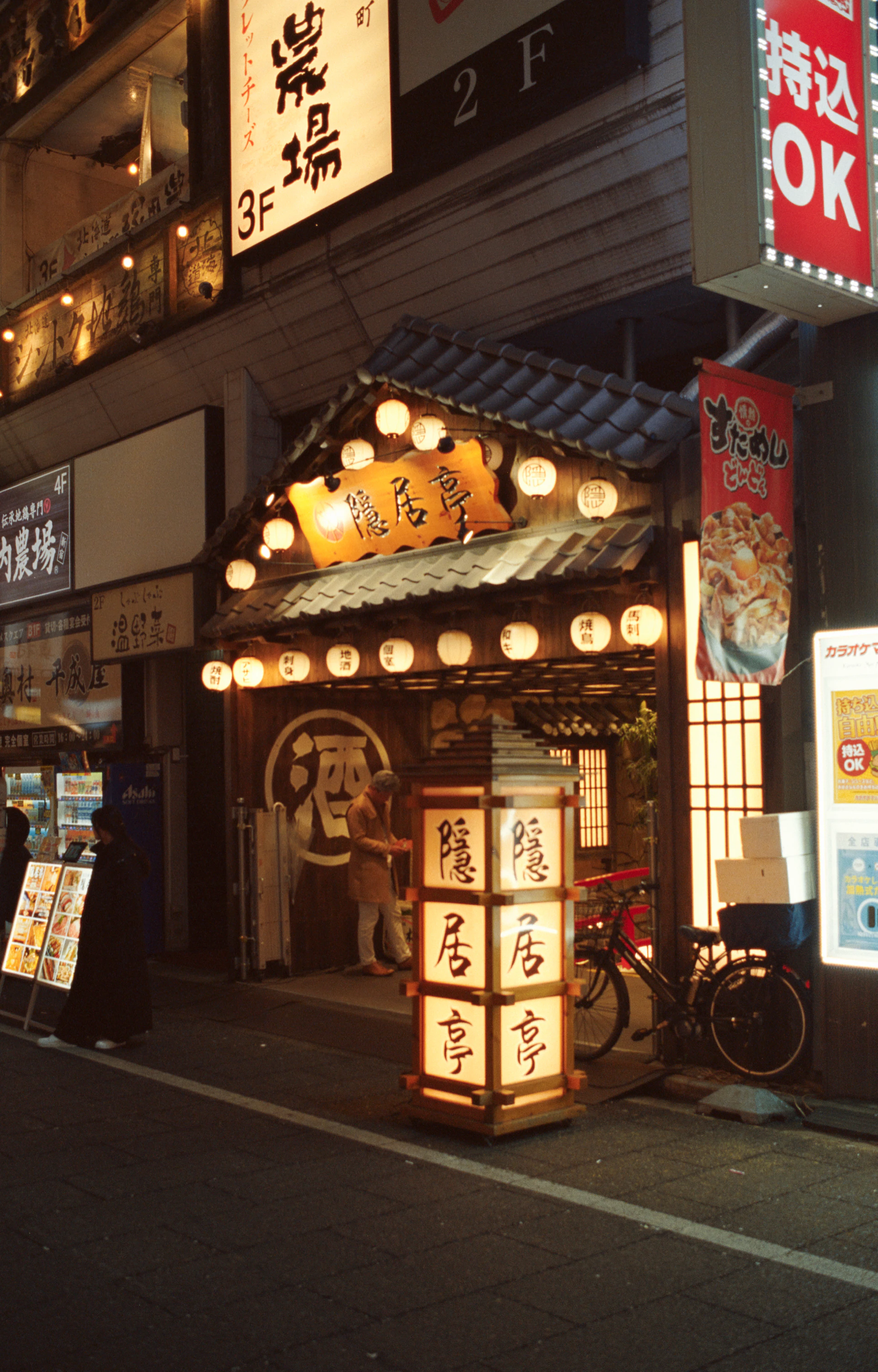
What Is Otoshi?
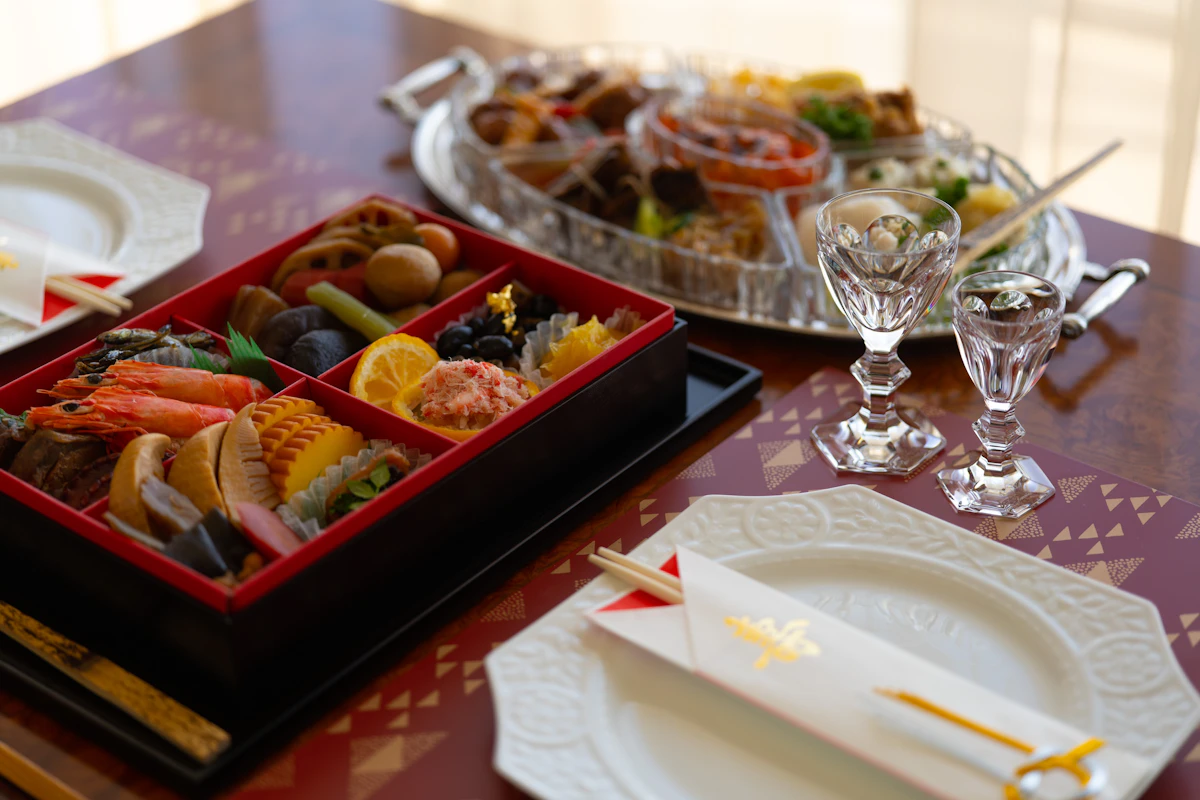
Walk into a Tokyo izakaya, take a seat, and a small dish will appear before you order anything. Edamame, potato salad, simmered vegetables, pickles — the contents vary from place to place. This is otoshi (お通し).
The word comes from tōsu (通す), meaning “to show a guest to their seat.” Otoshi is a starter meant to fill the gap between sitting down and your first order arriving. In the Kansai region around Osaka, some restaurants call it tsukidashi (突き出し) instead.
Japan has no tipping culture. Otoshi partly serves as the price of table service — receiving a hot towel, being shown to your seat, having your order taken. In a country where tipping doesn’t exist, this custom took its place.
Otoshi also gives a restaurant a chance to show its personality. A traditional kappo (割烹) might serve a carefully prepared seasonal simmered dish, while a neighborhood izakaya might set itself apart with house-smoked meat or homemade pickles. Some regulars pick their favorite spots specifically because they look forward to the otoshi.
Not every izakaya charges otoshi. A 2023 survey by inshokuten.com found that fewer than 40% of responding restaurants still charge for it — down from over half in earlier years.
How Much Does It Cost?
The price depends on the type of restaurant.
| Restaurant type | Typical otoshi price |
|---|---|
| Chain izakaya (e.g. Uoshin) | ¥300–400 per person |
| Independent izakaya | ¥300–500 per person |
| Upscale restaurants / kappo | ¥500–¥1,000+ per person |
At a typical izakaya, expect around ¥300. Prices have crept up slightly with inflation, but it’s still in the range of a few hundred yen per person.
Otoshi is charged once per person. Ordering a second round of drinks won’t bring a second dish. If you’re dining with children who aren’t ordering alcohol, most places won’t serve them otoshi — though policies vary, so it’s worth asking when you sit down.
Some Places Don’t Charge Otoshi
Otoshi is not a universal rule. Torikizoku (鳥貴族) states on its website that it charges no otoshi, table fee, or late-night surcharge. At some other chains, you can decline by saying you don’t want it.
More restaurants are waiving otoshi for foreign visitors, or letting customers opt out if they ask. Some multilingual menus list it as “cover charge” in English, so you can check the menu or signage at the entrance before sitting down.
If you want to ask about otoshi, these phrases work:
To a staff member: “Otoshi wa arimasu ka?” (お通しはありますか?) — “Is there an otoshi?”
To decline: “Otoshi nashi de onegai shimasu” (お通しなしでお願いします) — “No otoshi, please”
Four Types of Extra Charges at Tokyo Restaurants
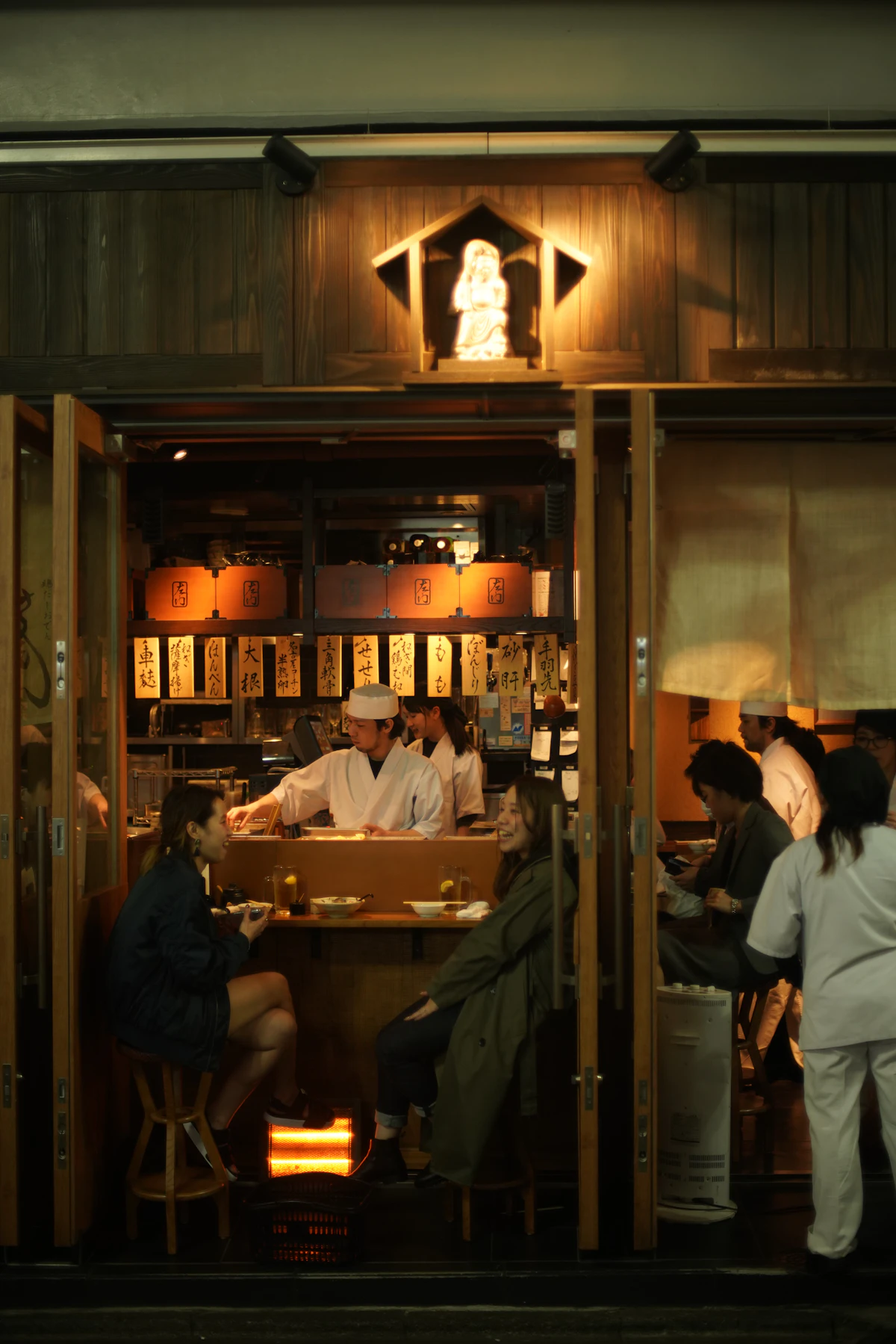
Beyond otoshi, there are other charges that may appear on your bill in Tokyo. Here are the four types.
| Charge | What it is | Typical amount | Where you’ll see it |
|---|---|---|---|
| Otoshi (お通し) | A small dish served before you order | ¥300–500/person | Izakaya |
| Table charge (席料) | Fee for using the seat | ¥300–1,000/person | Bars, private-room izakaya |
| Service charge (サービス料) | Fee for table service | 10–15% of food & drink total | High-end restaurants, hotels |
| Consumption tax (消費税) | National tax | 10% dine-in / 8% takeout | All restaurants |
Table Charge Is Separate from Otoshi
A table charge — sekiryō (席料) — is a fee just for sitting at the table. No food comes with it. At a bar, you’ll typically pay ¥500–1,000 when you take a seat at the counter. In Ginza or at hotel bars, it can run ¥1,500 or more.
At izakaya with private rooms, you may be charged both otoshi and a private-room fee. If otoshi is ¥300 and the room fee is ¥500, that’s ¥800 per person on top of your food and drinks. In Japan, private rooms are commonly booked for workplace welcome and farewell parties, and it’s not unusual for the organizer to get a surprise at the bill when they’ve overlooked these charges.
Service Charges at High-End Restaurants
Hotel restaurants and formal Japanese dining establishments add a service charge of 10–15% on top of your food and drink total. Consumption tax is calculated on the subtotal including the service charge, so the math works like this:
- Food & drink: ¥20,000 + Service charge at 10%: ¥2,000 = Subtotal: ¥22,000
- Consumption tax at 10%: ¥2,200
- Total: ¥24,200
Chain izakaya almost never charge a service fee. If a restaurant charges one, it will be noted on the menu or at the entrance — if you don’t see it mentioned, there isn’t one. When in doubt, ask when you arrive.
Consumption Tax
Japan’s consumption tax is 10% for dine-in and 8% for takeout. Buy the same onigiri at a convenience store, and the tax rate changes depending on whether you eat it in the store’s seating area (10%) or take it home (8%).
Since April 2021, tax-inclusive pricing has been mandatory, so prices on menus already include consumption tax. A few restaurants still show pre-tax prices — look for 税込 (zeikomi, tax included) or 税抜 (zeinuki, before tax) next to the price.
One important note: tax-free shopping does not apply to restaurant meals. The tax-free system covers goods you take out of Japan, not food eaten on the premises.
What It Actually Costs — Three Scenarios
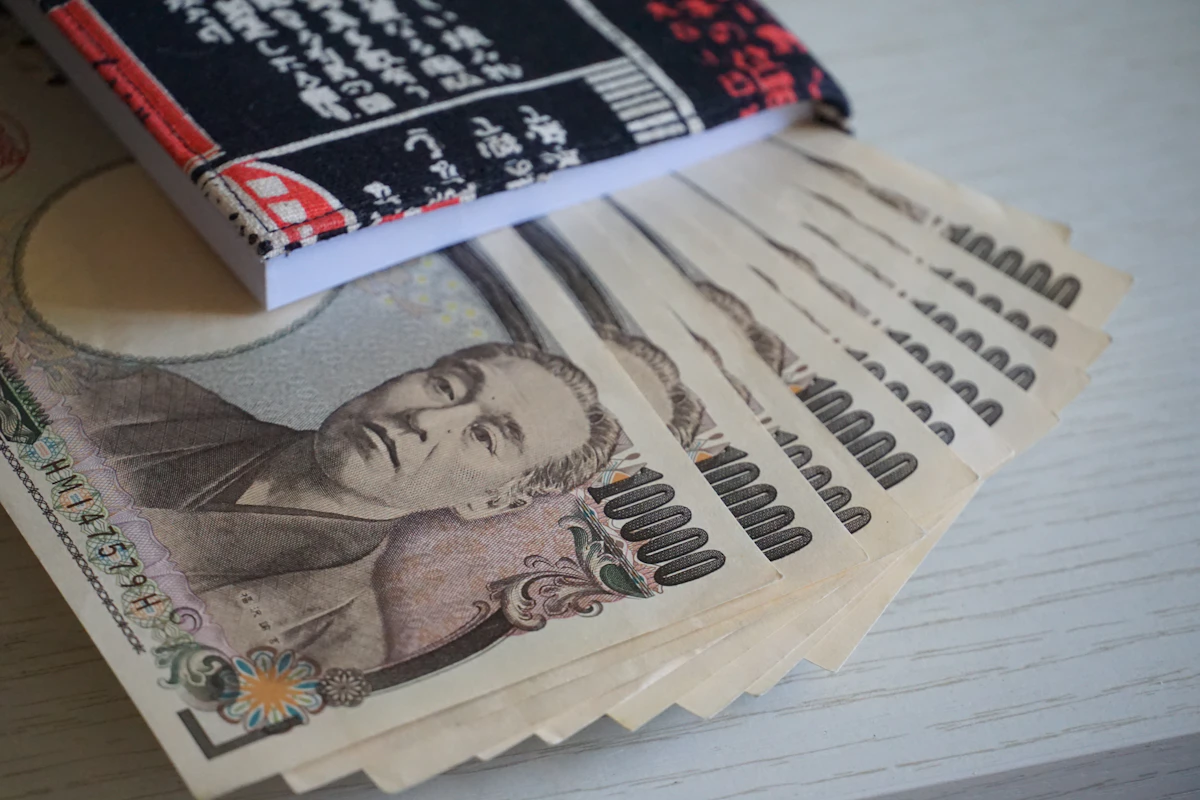
Here’s what the extra charges look like in practice.
Two people at a chain izakaya Otoshi: ¥350 × 2 = ¥700. If food and drinks come to ¥3,000 per person, the total is ¥6,700 (tax included). The extra charges add about 12% to the food bill.
Four people at a private-room izakaya (welcome party) Otoshi: ¥400 × 4 + Private room: ¥500 × 4 = ¥3,600. At ¥4,000 per person in food and drinks, the total is ¥19,600 (tax included) — ¥4,900 per person. If the organizer budgeted ¥4,000 per head, they’re ¥900 short. Better to estimate ¥5,000 per person to account for the extras.
Dinner for two at a hotel restaurant Food & drink: ¥20,000 × 2 + Service charge at 10% (¥4,000) + Tax at 10% (¥4,400) = ¥48,400 total. If you were expecting a ¥40,000 evening, that’s an ¥8,400 surprise.
How to Check Before You Go
Otoshi and table charges are increasingly posted on menus and signage at the entrance. On reservation sites like Tabelog and Hot Pepper Gourmet, look at the “Course details” or “Notes” section at the bottom of a course page — many restaurants list otoshi, table charges, and service fees there. If it’s not listed, the quickest way to find out is to ask in the reservation form’s comment field or via message.
When booking: “Otoshi ya sekiryō wa kakarimasu ka?” (お通しや席料はかかりますか?) — “Are there otoshi or table charges?”
What to Do If Your Bill Seems High
If the total feels higher than expected, check the receipt. Otoshi, table charges, and service fees are usually listed as separate line items, so you can see exactly where each charge came from.
If the receipt is hard to read, it’s perfectly fine to ask a staff member.
To a staff member: “Okaikei wo kakunin shite mo ii desu ka?” (お会計を確認してもいいですか?) — “Can I check the bill?”
Asking about your bill isn’t rude in Japan.
If you believe you’ve been charged unfairly, the Japan National Consumer Affairs Center’s Visitor Hotline offers support in multiple languages including English.
Related Articles
- Restaurant Booking Guide — Compare English-friendly reservation services
- Payment Methods in Tokyo — Cash, cards, and PayPay
- Tokyo Etiquette Guide — Manners for trains, onsen, and shrines
References:
- National Tax Agency, “Reduced Tax Rate System for Consumption Tax” https://www.nta.go.jp/taxes/shiraberu/zeimokubetsu/shohi/keigenzeiritsu/01.htm (accessed 2026-04-07)
- National Tax Agency, “Tax-Inclusive Pricing Obligation” https://www.nta.go.jp/taxes/shiraberu/taxanswer/shohi/6902.htm (accessed 2026-04-07)
- National Tax Agency, “Consumption Tax Treatment of Service Charges” https://www.nta.go.jp/law/shitsugi/shohi/20/12.htm (accessed 2026-04-07)
- National Tax Agency, “Scope of Export Tax Exemption” https://www.nta.go.jp/taxes/shiraberu/taxanswer/shohi/6559.htm (accessed 2026-04-07)
- Japan National Consumer Affairs Center, “Visitor Hotline” https://www.cht.kokusen.go.jp/en/index.html (accessed 2026-04-08)
- JNTO, “Drinking the Japanese Way” https://www.japan.travel/en/us/blog/drinking-the-japanese-way/ (accessed 2026-04-07)
* This article was translated from the original Japanese with the help of machine translation. Some expressions may not read naturally.


