E X P L O R E
Tokyo Onsen & Sento Guide — Prices, Etiquette & Tattoo Policies
Tokyo sento cost ¥550 flat. This guide covers bathing steps, tattoo policies by venue, and beginner-friendly bathhouses and day-trip onsen — all based on official sources.
This article contains affiliate links. tokyo.how may earn a commission at no extra cost to you if you make a purchase through these links. This does not influence our editorial content.
Picking Your First Bathhouse
“Going to a bath” in Tokyo can mean very different things depending on whether you walk into a neighborhood sento, a city-style spa complex, or a day-trip onsen with a garden. Here’s a side-by-side comparison using four beginner-friendly examples: Daikokuyu and Kosugiyu for neighborhood sento, RAKU SPA 1010 Kanda for the urban spa category, and Maenohara Onsen Sayanoyudokoro for a day-trip onsen.
| Neighborhood sento | Urban spa complex | Day-trip onsen | |
|---|---|---|---|
| Examples | Daikokuyu, Kosugiyu | RAKU SPA 1010 Kanda | Maenohara Onsen Sayanoyudokoro |
| Price range | ¥550 for adults | ¥550 / 3 hrs – ¥2,050–2,370 / 10 hrs | ¥970 weekdays / ¥1,300 weekends |
| Amenities | Often sold at the counter | 10-hr plan includes towels and loungewear | Towel rental available |
| Tattoos | Varies by venue | Not allowed at RAKU SPA 1010 Kanda | Allowed at Sayanoyudokoro if fully covered by up to 2 designated stickers |
| Best for | Trying it once at the lowest cost | Spending time beyond the bath (lounge, sauna) | Prioritizing water quality and atmosphere |
If you want the cheapest way to experience Tokyo’s bathing culture, a neighborhood sento is the obvious choice. If you’d rather spend half a day relaxing, a place like RAKU SPA works better. And if you care most about the onsen experience itself, a day-trip onsen like Sayanoyudokoro is more satisfying.
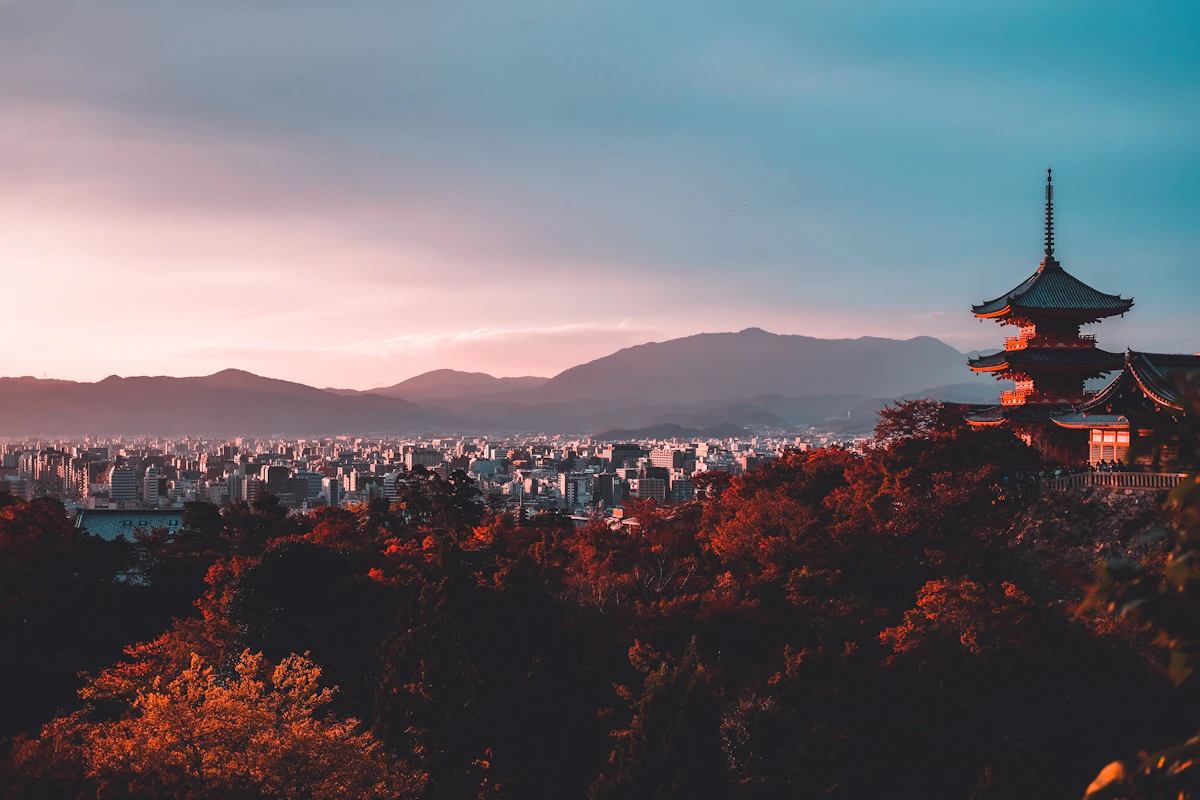
The experience starts at the entrance. At traditional sento with a bandai (front desk), the men’s and women’s sides may split right from the door.
How Bathing Works
The parts that trip people up the first time: where to take off your shoes, when to wash, and what counts as a faux pas. This order covers it.
- Take off your shoes at the entrance and put them in a shoe locker. At bandai-style sento, the entrance may split into men’s and women’s sides right away — the Tokyo Sento Association guide recommends checking the noren curtain or door signs.
- Pay at the counter. Tokyo sento charge a flat rate: ¥550 for adults, ¥200 for children 6–11, ¥100 for children under 6. Two phrases are enough: 「大人一人です」 (otona hitori desu / “One adult”) and 「タオルはありますか」 (taoru wa arimasu ka / “Do you have towels?”).
- In the changing room, undress completely. Both the Tokyo Sento Association and JNTO confirm that swimsuits are not worn.
- In the bathing area, pour water over yourself (kakeyu) first, then wash at a washing station. JNTO lists washing thoroughly with soap and shampoo before entering the tub as the basic rule.
- When you get in the tub, keep your towel and long hair out of the water and don’t bring your phone into the bathing area. Tokyo sento tend to run hot, so keep your first soak short.
- Before heading back to the changing room, dry off. The Tokyo Sento Association guide asks you not to return to the changing room dripping wet. Grab some water and you’re done.
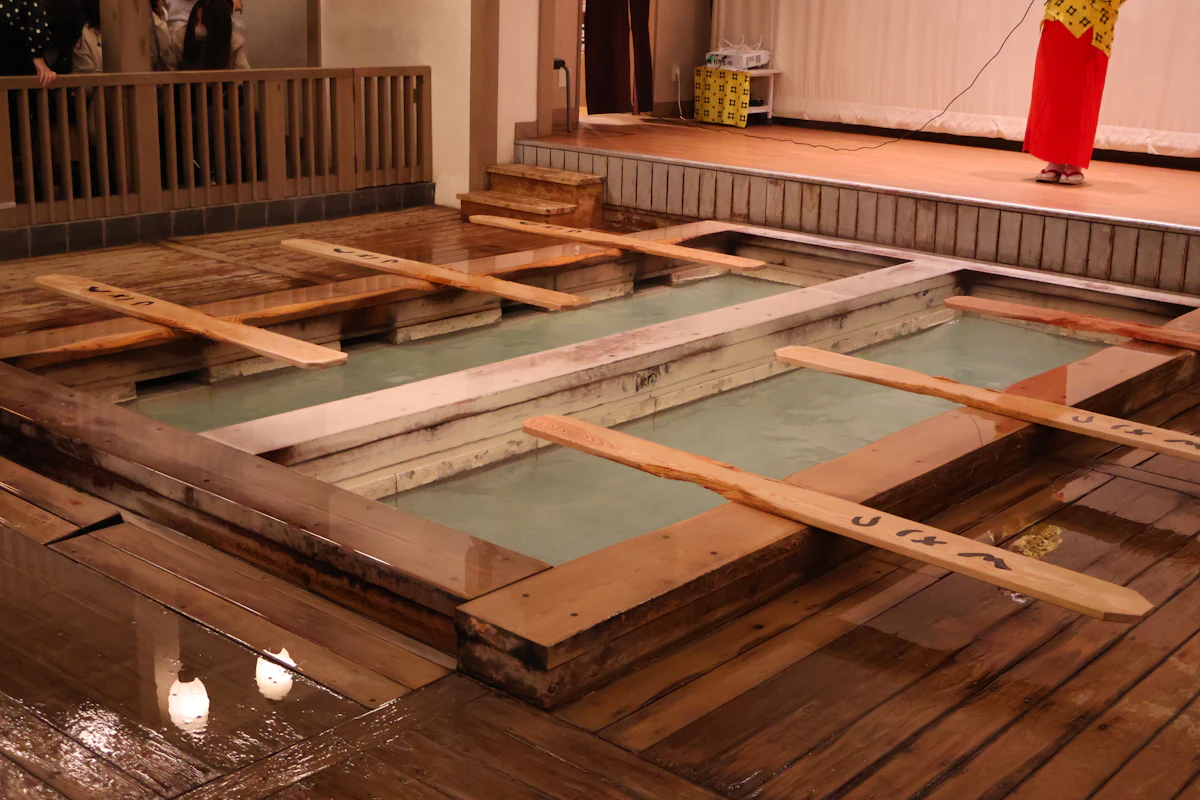
Wash first, soak second. People notice this one basic step more than any elaborate routine.
Tattoos and What to Bring
There’s no single tattoo rule for Tokyo bathhouses. JNTO also recommends checking with each venue in advance. A quick look at three official websites shows just how much the policies differ:
| Venue | Official policy |
|---|---|
| Daikokuyu | Tattoos OK |
| Maenohara Onsen Sayanoyudokoro | Allowed if fully covered by up to 2 designated cover stickers |
| RAKU SPA 1010 Kanda | Tattoos not allowed |
Even among these three, you can’t generalize by type — it’s not “sento = OK” or “onsen = no.” If you have a large tattoo or want to avoid being turned away at the door, check the official FAQ beforehand or ask at the counter: 「タトゥーは大丈夫ですか」 (tattoo wa daijoubu desu ka / “Are tattoos OK?”).
You can get by with very little at a neighborhood sento. The Tokyo Sento Association guide says bringing your own towel and soap is standard, but most places sell them on-site. For specifics: Daikokuyu offers a towel rental set for ¥130, RAKU SPA 1010 Kanda’s 10-hour plan includes face towel, bath towel, and loungewear, and Sayanoyudokoro rents bath and face towels for ¥380.
Payment options also vary. Daikokuyu is cash only, while Sayanoyudokoro accepts credit cards, transit IC cards, and some QR payments. A safe assumption while traveling: neighborhood sento usually mean cash, day-trip onsen are more likely to take cards.
Four Beginner-Friendly Picks
These four venues have clear pricing and rules on their official websites, making them easy to research before your first visit. All information is current as of April 2, 2026.
Daikokuyu
Daikokuyu is a short walk from Oshiage Station, and its deal is straightforward: ¥550, tattoos allowed. A towel rental set costs ¥130, and shampoo and body soap are provided free. If you just want to try a sento once while in Tokyo, this is one of the easiest places to start.
Kosugiyu
Kosugiyu has been running since 1933, with the standard ¥550 admission. It’s a good pick if you want to soak up the Koenji neighborhood vibe along with the bath. Tattoo and payment policies aren’t prominently listed on the website, so check directly before visiting.
RAKU SPA 1010 Kanda
RAKU SPA 1010 Kanda offers a sento plan at ¥550 and a 10-hour plan at ¥2,050 weekdays / ¥2,370 weekends. The 10-hour plan includes towels and loungewear, with access to lounge areas and sauna. The tradeoff: tattoos are not allowed. Good for days when you want more than just a bath.
Maenohara Onsen Sayanoyudokoro
Maenohara Onsen Sayanoyudokoro is a day-trip onsen at ¥970 weekdays / ¥1,300 weekends. It’s a match for anyone who wants garden views and a longer stay. Tattoos are allowed if covered by up to 2 designated stickers, and the venue accepts credit cards, transit IC cards, and some QR payments — convenient for travelers.
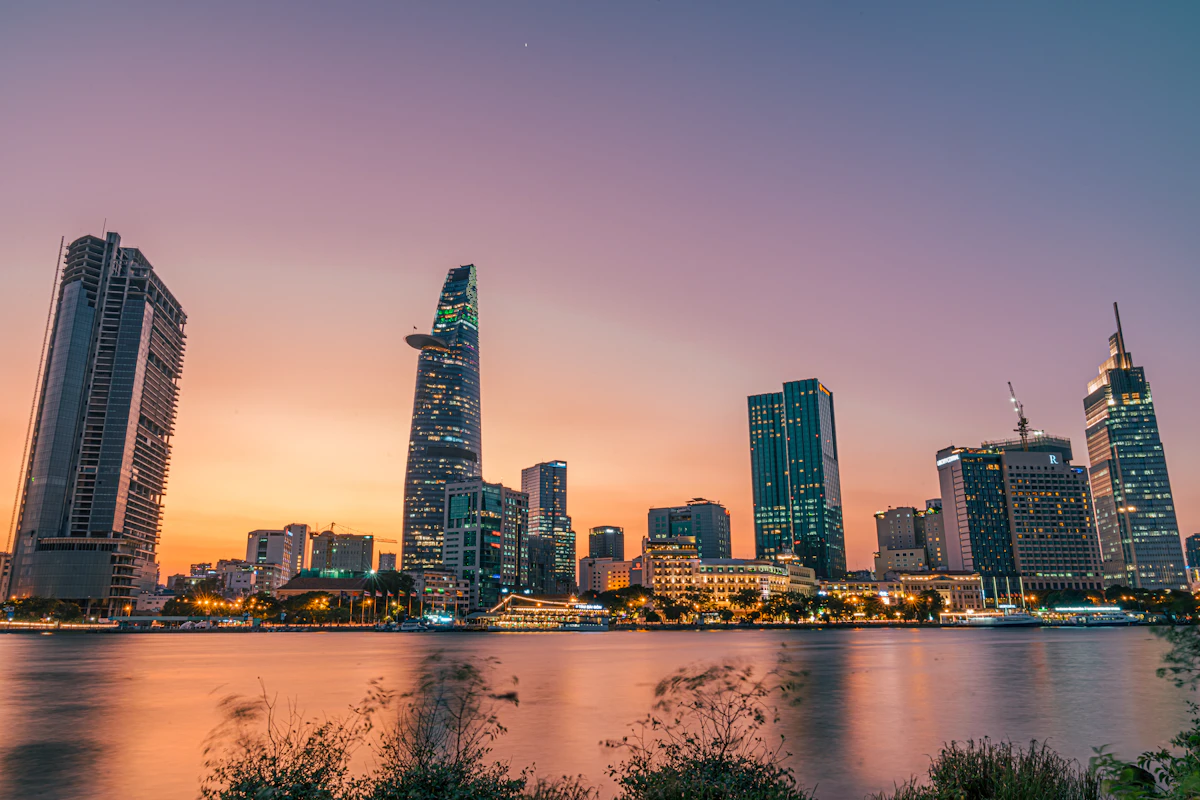
Beyond neighborhood sento, Tokyo has day-trip onsen where you can stay longer and enjoy the setting. Choose based on what matters most to you.
Spa & Day-Trip Onsen Tickets on Klook
If you’d rather book an English-language e-ticket from your phone — instead of paying cash at a small sento counter — a few popular Tokyo and Hakone hot spring facilities sell tickets through Klook. Mobile vouchers, no Japanese phone number required.
Spa LaQua (Tokyo Dome City) — A 1,700-meter-deep natural hot spring spa attached to Tokyo Dome City, with open-air baths, carbonated baths, and several types of saunas. Convenient if you’re already visiting Tokyo Dome or LaQua.
Thermae-Yu (Shinjuku) — Tokyo’s largest hot spring complex, a 5-minute walk from Shinjuku Station, next to Kabukicho. Open 24 hours. A discounted admission ticket through Klook tends to be cheaper than the counter rate.
Hakone Yuryo (day trip from Tokyo) — A peaceful day-trip onsen in Hakone with private and outdoor baths, about 90 minutes from Shinjuku. Free shuttle from Hakone-Yumoto Station. Worth combining with a Hakone Freepass for the round trip.
Hakone Kowakien Yunessun (day trip from Tokyo) — A hot spring theme park with wine baths, green tea baths, coffee baths, and outdoor pools. Swimsuits are worn here, so it’s a comfortable option for travelers uncomfortable with full nudity, families, or anyone with tattoos.
For the neighborhood sento experience (Daikokuyu, Kosugiyu), you’ll still need to pay cash at the counter — these aren’t sold on Klook.
When Things Go Wrong
Turned away for a tattoo: Don’t push it — switch to another venue. JNTO suggests private baths (kashikiri buro) as an alternative. For large tattoos, booking a private bath or a ryokan room with its own open-air bath is more realistic from the start.
Forgot your towel or soap: Most Tokyo sento sell them at the counter. No need to rush back to your hotel — just ask 「タオルはありますか」 (taoru wa arimasu ka / “Do you have towels?”) and you’ll be fine.
Water is too hot: Pour kakeyu over yourself first to warm up gradually, and keep your first soak short. The Tokyo Sento Association guide warns against turning on cold water without asking — it can cause trouble with other bathers. If it’s unbearable, move to a different tub or get out.
Uncomfortable being naked around others: JNTO lists private baths and rooms with in-room open-air baths as alternatives. You don’t have to start with a public bath if it doesn’t feel right.
Related Guides
- Tokyo Etiquette — General manners that apply across daily life in Japan
- Payment Methods in Japan — Useful when you need to know where cash is required
Sources:
- Tokyo Sento Association, “Bathing Fee Information” https://www.1010.or.jp/guide/%E5%85%A5%E6%B5%B4%E6%96%99%E9%87%91%E3%81%AE%E3%81%8A%E7%9F%A5%E3%82%89%E3%81%9B/ (accessed: 2026-04-02)
- Tokyo Sento Association, “Common Bath Ticket Pricing Update” https://www.1010.or.jp/mag-topic-250602/ (accessed: 2026-04-02)
- Tokyo Sento Association, “How to Use a Sento” https://www.1010.or.jp/guide/howto/ (accessed: 2026-04-02)
- Tokyo Sento Association, “Sento Q&A” https://www.1010.or.jp/guide/qa/ (accessed: 2026-04-02)
- Tokyo Sento Association, “Tokyo Sento Map” https://www.1010.or.jp/map/ (accessed: 2026-04-02)
- Japan National Tourism Organization, “How to Best Enjoy Japan’s Onsen” https://www.japan.travel/en/guide/how-to-best-enjoy-onsen/ (accessed: 2026-04-02)
- Oshiage Onsen Daikokuyu, “Hours, Prices & Services” https://www.daikokuyu.com/services.html (accessed: 2026-04-02)
- Oshiage Onsen Daikokuyu, “English” https://www.daikokuyu.com/english/index.html (accessed: 2026-04-02)
- Kosugiyu https://kosugiyu.co.jp/ (accessed: 2026-04-02)
- RAKU SPA 1010 Kanda, “Prices & Access” https://rakuspa.com/kanda/access/ (accessed: 2026-04-02)
- Maenohara Onsen Sayanoyudokoro, “Prices & Hours” https://www.sayanoyudokoro.co.jp/guide-2/ (accessed: 2026-04-02)
- Maenohara Onsen Sayanoyudokoro, “FAQ” https://www.sayanoyudokoro.co.jp/faq/ (accessed: 2026-04-02)
* This article was translated from the original Japanese with the help of machine translation. Some expressions may not read naturally.


