L I V I N G
Tokyo Housing Without a Guarantor: 3 Routes for Foreigners
Rent Tokyo without a guarantor: share houses from ¥30k, monthly mansions, and standard rentals via guarantor company — 3 routes compared.

Before You Look for Housing in Tokyo Without a Guarantor
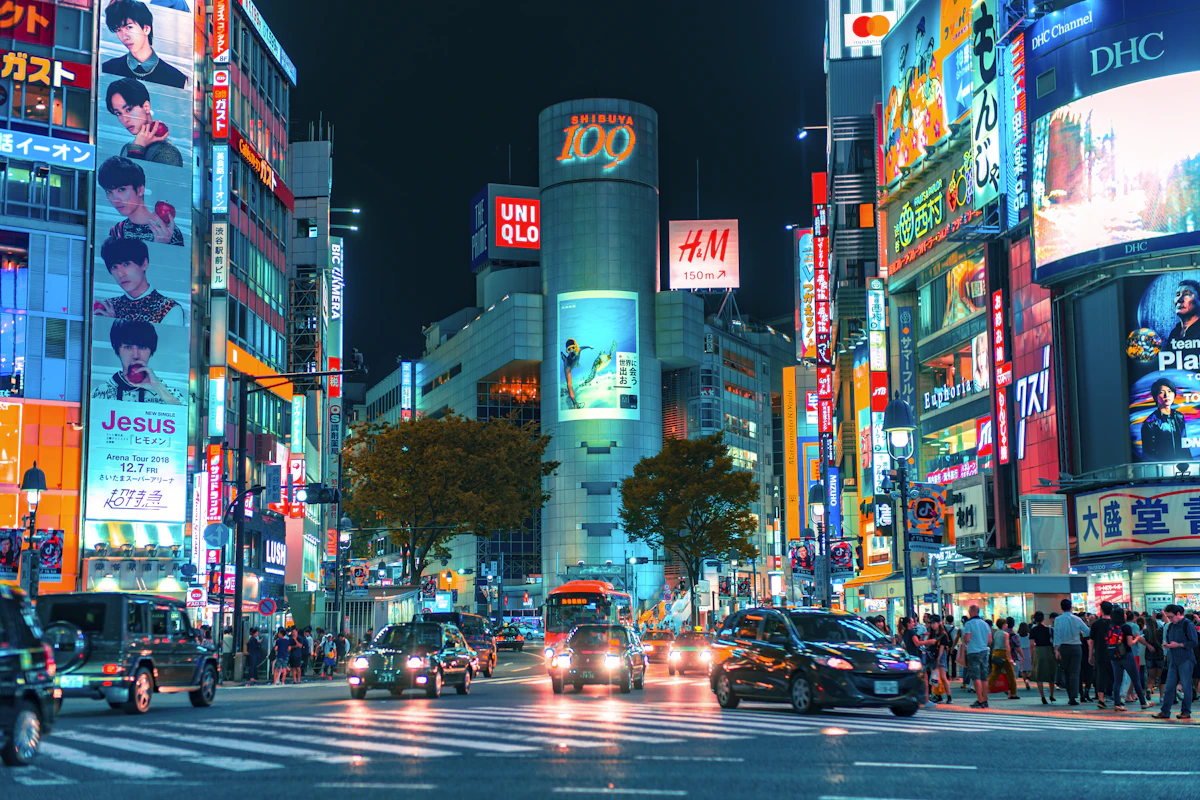
Have you tried to rent a place in Tokyo and been told, “We need a Japanese 連帯保証人 (rentai hoshounin / personal guarantor)” — only to realize you don’t know anyone in Japan who could play that role? For foreigners who’ve just arrived, having a Japanese relative or close acquaintance step in as guarantor is almost never an option.
In practice, three routes let you start living in Tokyo without a personal guarantor: a share house you can move into within days of arrival, a furnished monthly mansion (マンスリーマンション), and a standard rental using a guarantor company (保証会社 / hosho gaisha). Each route differs in upfront cost, contract length, time-to-move-in, and whether you can register your residence card address there. Which one fits depends on your stay length and visa.
The institutional side is shifting too. The amended Housing Safety Net Act that took effect on October 1, 2025 explicitly added foreigners to the list of “persons needing housing assistance” (住宅確保要配慮者 / juutaku kakuho yo hairyo sha) via ministerial ordinance. The Japan Property Management Association (JPM) and the Ministry of Land, Infrastructure, Transport and Tourism (MLIT) publish a multilingual housing guideline in 14 languages, nudging brokers and landlords toward accepting foreign tenants. Operators who flat-out refuse foreigners are slowly decreasing, but the guarantor barrier remains.
This article is for foreign residents in their first two years in Tokyo. It’s not a guide for short tourist stays. It explains the mechanics and feature differences of the three routes — not a ranked comparison of operators, and not personal anecdotes. Read it as a neutral map of which route fits which situation.
Three Routes at a Glance
| Route | Move-in time | Initial cost | Min. contract | Residence registration | Best for |
|---|---|---|---|---|---|
| (1) Share house | Same day – 1 week | ¥30,000–150,000 | 1 month | Property-dependent (often yes) | First week after arrival, short stays |
| (2) Monthly mansion | A few days – 1 week | ~¥150,000 (1-month use) | 1 month | Property-dependent | Short assignments, bridge to lease |
| (3) Standard rental + guarantor company | 2–4 weeks | 4–5 months’ rent | 2 years (renewable) | Yes | Mid-to-long-term living |
Your choice depends on the combination of stay length and visa. Short assignments of around three months tend toward share house or monthly mansion; one year or more of work or study points to a standard rental. Many people stay in a share house or monthly mansion in their first year and migrate to a standard rental afterwards — viewing it as a “stepping-stone journey” makes the decision easier.
Route 1: Share Houses You Can Move Into the Same Day
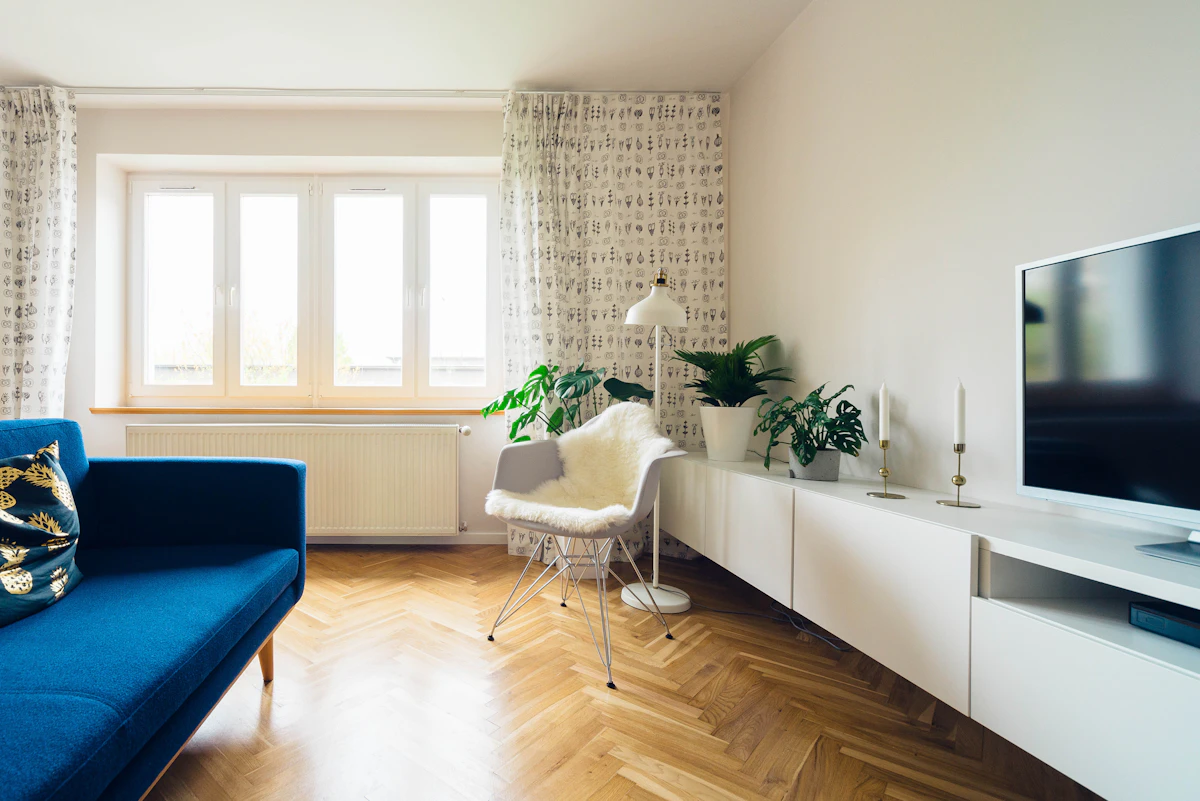
A share house (シェアハウス / sharehouse) is a building where multiple people share common areas — toilet, bathroom, kitchen, lounge — and keep a private bedroom. Rent is monthly, the room comes furnished, and most properties charge no 敷金 (shikikin / deposit), 礼金 (reikin / key money), or agent fee.
Application to Move-In
You apply via the operator’s website, confirm availability, and pay a reservation fee. Your zairyu card (在留カード / residence card) and passport often suffice as ID, and many properties don’t ask for a guarantor or even an emergency contact (緊急連絡先 / kinkyuu renrakusaki). If the room is available, same-day or next-day move-in is realistic — making this the fastest route within days of landing.
Sakura House has operated furnished housing for foreigners in Tokyo, Izu, and Kyoto since 1992. Monthly rent in Tokyo starts at around ¥75,000 per the official site (running up to ¥130,000 depending on property and room type), with utilities and internet bundled in. Reservation fee is 30% of the first month (or full payment for stays of one month or less) as of May 2026.
Oakhouse runs share houses and furnished apartments mainly in Tokyo. Pricing varies by property type: Tokyo share house average around ¥60,000, social residence around ¥64,000, and furnished apartments around ¥130,000. No key money, no guarantor, and contracts from one month are available (as of May 2026).
BORDERLESS HOUSE is designed as an international house with both Japanese and foreign tenants, attracting residents focused on language and cultural exchange. Initial fee is ¥45,000 (¥30,000 key money + ¥15,000 cleaning fee), minimum stay is one month, and 30 days’ advance notice is required to move out (as of May 2026).
The Residence Registration Question
The biggest fork when choosing a share house is whether you can register your 住民票 (juuminhyou / certificate of residence) at the address. The Basic Resident Registration Act requires you to notify the city office within 14 days of moving in or changing address — failing to do so can result in a fine of up to ¥50,000.
Share houses where the address qualifies as your “base of living” do allow registration under the law. Some operators publicly state that all of their properties are registered housing — meaning you can use the address for residence card registration, National Health Insurance, opening a bank account, and signing a mobile contract.
Other share houses, however, advertise themselves as “short-stay only” and don’t allow residence registration. These don’t meet the “base of living” test legally. If you’re using a share house as the starting point for setting up your life in Japan, ask the operator point-blank: “Can I register my residence card address at this property?”
Mail, Utilities, and House Rules
Mail typically arrives at a shared mailbox, a private PO box, or a slot in your bedroom door. Utilities and internet are usually included in the rent rather than billed separately. Common-area usage and quiet-hours rules are covered in your move-in orientation.
Route 2: Monthly Mansions as a 1–12 Month Bridge
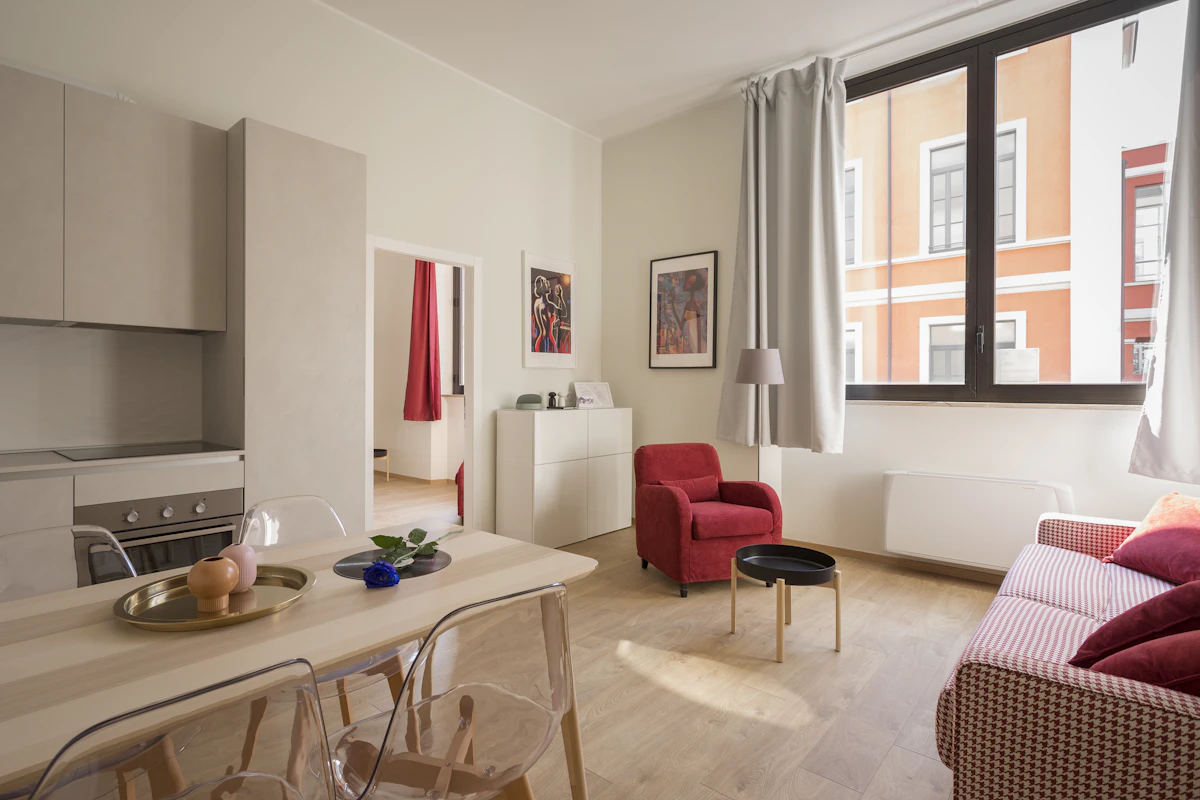
A monthly mansion is a short-term rental service contracted in one-month units. Furniture, appliances, bedding, and kitchenware are all set up on arrival — you live normally from day one. Utilities and internet are usually bundled into a flat “package rate,” and the service is widely used as a bridge after arrival or for 1–3 month assignments. It’s also a familiar option for Japanese people themselves — used for business trips, job transfers, or temporary housing during home renovations — not a special foreigner-only product.
Contract Length and Pricing
Minimum is one month; maximum typically twelve. In Tokyo’s 23 wards, a smaller 1R/1K runs about ¥80,000–130,000/month, and a 1K–1DK runs about ¥140,000–180,000/month as a general industry range. First-month upfront cost lands around ¥150,000.
Cost breakdown: rent + common-area fee + utilities + first cleaning fee + contract fee + internet, presented as a single package rate. Contracts of three months or more often unlock 5–10% monthly discounts and waived cleaning fees.
As a foreigner, the contract flow is essentially the same as for a Japanese person — passport may be required as ID, but that’s the main difference. Note that some management companies require contracts to be signed in Japanese, so English-speaking operators become a deciding factor.
Foreigner-Friendly Monthly Mansion Operators in Tokyo
Tokyo has operators that publish English content or dedicated foreigner-friendly property searches. They split into portal sites that let you search across multiple operators and specialized services with in-house English-speaking staff. Below are four operators (in no particular order) reflecting public information as of May 2026.
Portal sites:
- MAN3’S — search portal with a dedicated foreigner-friendly category for Tokyo
- Good Monthly — foreigner-friendly category, searchable across all 23 wards and surrounding municipalities by line and district. Operated by Good Communication Inc.
Specialized services with English support:
- PLAZA HOMES — geared for expats and business travelers, English-speaking staff and English contracts. Minimum 1 month, rent starts around ¥110,000/month (with many properties in upscale areas like Minami-Aoyama, Hiroo, Denenchofu)
- WPO (World Potential Co., Ltd.) — properties near Tokyo train stations and embassies, with staff in English, French, and Spanish
Conditions, pricing, and language coverage vary by operator. The pragmatic move is to query several operators against your target area and budget.
Mid-Contract Cancellation and Penalties
Because monthly contracts unit at one month, plans can shift — you may need to leave earlier than intended. Mid-contract cancellation triggers either a penalty fee or remaining-day rent, depending on the contract. Cancellation policy varies by operator: cancellations close to or right after the contract start date sometimes forfeit the full payment, and contracts under long-term discount can be re-priced at the original (undiscounted) rate. Check the cancellation policy before signing.
Residence Registration Is Also Property-Dependent
Monthly mansions can legally allow residence registration, but it varies by property. Those labeled “short-stay only” can’t be registered. If you plan to use the monthly mansion as your hub for opening a bank account or completing city-office paperwork, confirm with the operator before signing.
Route 3: Standard Rentals via a Guarantor Company
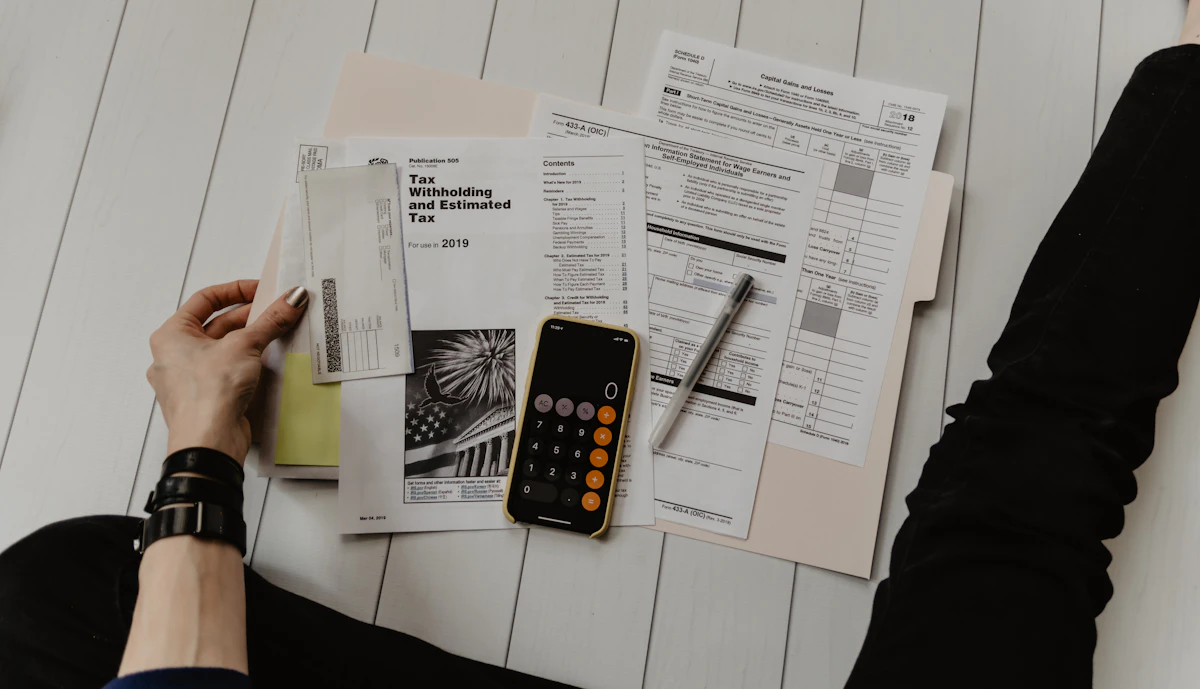
For standard rentals, you can sign without a personal guarantor by using a guarantor company instead. Most Tokyo properties now require this anyway, so it’s a primary route for foreign tenants too.
How Guarantor Companies Work
Guarantor companies cover unpaid rent on your behalf if you fall behind — they pay the landlord, then collect the amount from you. Think of it as a corporation playing the role of a personal guarantor.
Fees: initial guarantee payment of 50–100% of monthly rent (charged at contract signing), plus an annual renewal fee around ¥10,000 or 10–30% of monthly rent. For an ¥80,000 apartment, expect ¥40,000–80,000 initial and roughly ¥10,000/year renewal.
Required Documents
What guarantor companies ask for depends on your visa and employment status. Common to all: residence card and passport, plus documents proving income and employment.
| Document | Japanese term | Working Holiday | Work visa | Student |
|---|---|---|---|---|
| Residence card | zairyu card | Required | Required | Required |
| Passport | passport | Required | Required | Required |
| Employment contract / offer letter | koyou keiyaku-sho | If working part-time | Required | If working part-time |
| Certificate of employment | zaiseki shoumei-sho | — | Required | — |
| Pay slips (3 months) | kyuyo meisai | If working part-time | Required | If working part-time |
| Bank balance certificate | yokin zandaka shoumei-sho | Recommended | — | Recommended |
| Certificate of enrollment | zaigaku shoumei-sho | — | — | Required |
| Off-campus work permit | shikaku-gai katsudou kyoka-sho | — | — | If working part-time |
| Emergency contact | kinkyuu renrakusaki | Required | Required | Required |
Documents follow templates that MLIT and JPM publish in 14 languages (Heisei 30 / 2018 March edition). Preparing them in advance makes interactions with the real estate office much smoother.
What Gets You Rejected
Guarantor company screening reviews income, employment type, visa status, remaining residence period, and document completeness collectively. A common benchmark: monthly income should be at least 3× rent (rent ÷ income ≤ 1/3).
Patterns that make screening tougher include: student visa with part-time income only, less than one year of tenure or just changed jobs, less than one year remaining on your residence card, or freelance work without solid income proof. Stacking these increases the chance of rejection at a standard guarantor company.
The fallback if you’re rejected is switching to a foreigner-specialized guarantor company. Operators like ielove Partners have more flexible screening and multilingual support in English, Chinese, Korean, Vietnamese, Thai, Nepali, Indonesian, Portuguese, Spanish, French, and Russian. Fees: 0.5–1 month’s rent.
The “Foreigner Clause” Reality
Some standard rental contracts include a “foreigner clause” — a rent surcharge or additional terms applied to foreign tenants. Japan’s Land and Building Lease Act applies regardless of nationality, so rent increases require legitimate cause and a landlord’s own discretion alone isn’t grounds. Renewal fees are valid if written into the contract and agreed by both parties. When something in the contract feels off, Tokyo’s foreigner housing support page and MLIT’s private rental consultation case collection are good reference points.
What You Can and Can’t Do on Each Route
The feature differences across routes shape your post-arrival life. Whether you can register your residence card address determines how fast you can set up the rest of your infrastructure.
| Feature | Share house | Monthly mansion | Standard rental |
|---|---|---|---|
| Residence card address registration | Property-dependent | Property-dependent | Allowed |
| Resident certificate (住民票) registration | Property-dependent | Property-dependent | Allowed |
| Mail receipt | Shared mailbox / PO box | Individual mailbox | Individual mailbox |
| Bank account opening address | If registration allowed | If registration allowed | Allowed |
| Family co-habitation | Mostly not allowed | Allowed | Allowed |
| Pets | Mostly not allowed | Property-dependent | Property-dependent |
| Furniture and appliances | Provided | Provided | You provide |
| Utilities | Usually bundled | Usually bundled | Separate contract |
Opening a bank account in Tokyo typically requires a registered address. Whether your share house or monthly mansion allows residence registration directly affects how quickly you can line up a bank account, mobile contract, and health insurance after arrival.
Visa × Timeline Matrix
Your visa shapes which routes are realistic.
| Visa | Share house | Monthly mansion | Standard rental |
|---|---|---|---|
| Working Holiday (max 1 year) | Strong first choice | Workable bridge | Hard to clear if residence period is short |
| Work (Engineer/Specialist in Humanities/International Services, etc.) | Bridge right after arrival | Bridge until standard rental | Safer after 1 year of tenure |
| Student | Strong first choice (school-tied options exist) | Bridge | Possible with school sponsorship or parental backing |
| Business Manager | Usually not chosen | Workable as a base | Strong first choice |
| Permanent Resident / Spouse of Japanese | Optional | Short-term bridge | Strong first choice (sometimes no guarantor needed) |
Typical journeys:
- Working Holiday: arrive → share house for the year → return home, or switch to a work visa and move into a monthly mansion or rental.
- Work visa: arrive → share house or monthly mansion for the first month → standard rental once employment proof is in hand.
- Student: school-tied share house or dorm → standard rental after graduation when employed.
Cost Simulation: 3, 6, and 12 Months
Total cost for each route across two model rents (¥80,000 and ¥100,000). Treat these as ballpark estimates — your actual numbers depend on property, contract terms, and taxes.
Calculation: share house = monthly rent × months (assumes negligible initial cost); monthly mansion = ¥150,000 initial + monthly rent × (months − 1); standard rental = 4 months of rent upfront + monthly rent × months.
Model A: rent of ¥80,000
| Duration | Share house | Monthly mansion | Standard rental |
|---|---|---|---|
| 3 months | ~¥240,000 | ~¥310,000 | ~¥560,000 |
| 6 months | ~¥480,000 | ~¥550,000 | ~¥800,000 |
| 12 months | ~¥960,000 | ~¥1,030,000 | ~¥1,280,000 |
Model B: rent of ¥100,000
| Duration | Share house | Monthly mansion | Standard rental |
|---|---|---|---|
| 3 months | ~¥300,000 | ~¥350,000 | ~¥700,000 |
| 6 months | ~¥600,000 | ~¥650,000 | ~¥1,000,000 |
| 12 months | ~¥1,200,000 | ~¥1,250,000 | ~¥1,600,000 |
In the short term (3 months or less), the share house is the most economical because standard rental burns 4–5 months of rent on initial costs alone. At six months the share house and monthly mansion converge. At twelve months and beyond, the standard rental still runs about 30% above the share house, and renewal fees come due every two years.
Share houses and monthly mansions both come furnished, which removes the cost of buying furniture and appliances. Standard rentals fit better when you’re going long-term and want to bring your own setup.
What to Do If You Don’t Have an Emergency Contact in Japan
Share houses and monthly mansions sometimes skip the emergency contact requirement; standard rentals and guarantor companies almost always require one. If you’ve just arrived and don’t have relatives or close contacts here, the alternatives are:
Emergency contact requirements vary by property, management company, and guarantor company. It doesn’t have to be a relative — a friend, partner, manager at work, or coworker can fill the role.
If you don’t have relatives in Japan, you can register a trusted friend or a manager / coworker from work. Working visa holders often use a workplace contact; foreign-resident applicants sometimes register the “host company contact” (the HR person handling their employment) — operators recognize this in practice. You’ll list the name, phone number, address, and relationship on the application.
Asking your university’s international office or your academic supervisor is a route for students, but university policies differ. Kyoto University’s housing basic-knowledge page states that “Kyoto University does not serve as a guarantor” — they assume you’ll use a guarantor company plus two emergency contacts (one in your home country and one in Japan). Check with your own school’s international office for their specific policy.
Paid emergency-contact services are another option. According to Saison Card’s explainer, prices typically run ¥10,000–20,000 for a 1-year contract or ¥10,000–30,000 for a 2-year contract, with some operators varying the fee by applicant attributes. For foreigners, “must be a Japanese-speaker” is a common condition — the service often doubles as an interpreter.
Foreigner-friendly guarantor companies sometimes offer an all-in-one package where the guarantor company itself acts as your emergency contact. ielove Partners and other specialists in this space typically charge 0.5–1 month’s rent with multilingual support included.
Wrap-up
Three routes let you live in Tokyo without a Japanese guarantor: a share house, a monthly mansion, and a standard rental backed by a guarantor company. A practical mapping: share house right after arrival, monthly mansion as a 3-month bridge, and standard rental for mid-to-long-term once you’re settled with furniture.
For the full process of standard rental — finding a property, viewing, signing, moving in — Renting an Apartment in Tokyo as a Foreigner covers upfront cost breakdowns and how to use listing sites. After move-in, My First Solo Move in Tokyo, the Ward Office Moving Guide, and Credit Cards for Foreigners in Japan for rent autopay are the natural next reads.
How you secure housing in those first weeks shapes how the rest of your setup unfolds. Knowing the three routes lets you map your visa, stay length, and budget to a workable choice.
References:
- Basic Resident Registration Act (e-Gov) https://laws.e-gov.go.jp/law/342AC0000000081 (accessed: 2026-05-20)
- MLIT “Facilitating private rental housing for foreigners” https://www.mlit.go.jp/jutakukentiku/house/jutakukentiku_house_tk3_000017.html (accessed: 2026-05-20)
- MLIT “Amended Housing Safety Net Act” https://www.mlit.go.jp/jutakukentiku/house/jutakukentiku_house_tk3_000055.html (accessed: 2026-05-20)
- MLIT “Private rental consultation case collection” https://www.mlit.go.jp/jutakukentiku/house/content/001399558.pdf (accessed: 2026-05-20)
- Japan Property Management Association (JPM) “Facilitating foreign tenant move-in” https://www.jpm.jp/foreign/ (accessed: 2026-05-20)
- Tokyo Metropolitan Government “Foreigner housing support” https://www.juutakuseisaku.metro.tokyo.lg.jp/fudosan/torihiki/gaikoku_nyuukyo (accessed: 2026-05-20)
- Tokyo Metropolitan Government “Rent increase trouble” https://www.juutakuseisaku.metro.tokyo.lg.jp/fudosan/chinryouneage (accessed: 2026-05-20)
- Sakura House https://www.sakura-house.com/about/share-house (accessed: 2026-05-20)
- Oakhouse https://www.oakhouse.jp/eng/area/tokyo (accessed: 2026-05-20)
- BORDERLESS HOUSE https://www.borderless-house.com/help/ (accessed: 2026-05-20)
- MAN3’S Tokyo foreigner-friendly properties https://man3s.jp/tokyo/foreigner/rooms (accessed: 2026-05-20)
- Good Monthly Tokyo foreigner-friendly search https://www.good-monthly.com/type/tokyo/search/index_add.html?type=foreign (accessed: 2026-05-20)
- PLAZA HOMES Monthly Apartments https://www.realestate-tokyo.com/rent/monthly-apartments/ (accessed: 2026-05-20)
- WPO (World Potential) Tokyo monthly https://wpo.co.jp/monthly-mansion/listings/ (accessed: 2026-05-20)
- PLAZA HOMES “Foreigner-friendly rent guarantor companies” https://www.plazahomes.co.jp/news/chintai-hoshogaisha/ (accessed: 2026-05-20)
- ielove Partners “Renting without a guarantor as a foreigner” https://ielove-partners.co.jp/media/1565/ (accessed: 2026-05-20)
- wagaya Journal “Why foreigners need a guarantor company” https://wagaya-japan.com/jp/journal_detail.php?id=1001 (accessed: 2026-05-20)
- Saison Lifestyle Lab “When you need an emergency contact but have no relatives nearby” https://life.saisoncard.co.jp/post/c2907/ (accessed: 2026-05-20)
- Kyoto University International Support Center “Housing basics” https://kuiso.oc.kyoto-u.ac.jp/housing/basic_knowledge/ (accessed: 2026-05-20)
- Techtopia “Can you sign a lease without an emergency contact?” https://www.techtopia.jp/blog/27368/ (accessed: 2026-05-20)
FAQ
- Can I register my residence card address at a share house?
- It depends on the property. Under the Basic Resident Registration Act (住民基本台帳法 / Juumin Kihon Daichou Hou), registration is allowed if the address is your 'base of living.' Some operators explicitly state all properties are registered housing; others mark properties as 'short-stay only' and don't allow registration. Confirm with the operator before move-in.
- Can foreigners use a guarantor company without any contacts in Japan?
- Yes. Foreigner-specialized guarantor companies have more flexible screening and offer multilingual support in English, Chinese, Korean, Vietnamese, Thai, and more. Fees range from 0.5 to 1 month's rent, and some plans let the guarantor company itself act as your emergency contact.
- How long are monthly mansion contracts and what's the cancellation penalty?
- Minimum is one month, maximum typically twelve. Early cancellation triggers either a penalty fee or remaining-day rent, depending on the contract. Cancellations close to or shortly after the contract start date may forfeit the full payment. Contracts of three months or longer often unlock 5–10% monthly discounts.
- Which route has the lowest upfront cost right after arrival?
- Share houses. No deposit (敷金 / shikikin), no key money (礼金 / reikin), and no agent fee — initial cost ranges from ¥30,000 to ¥150,000. Some operators bundle utilities and internet in the rent; others (like BORDERLESS HOUSE) charge an initial fee of around ¥45,000.
- Can my guarantor company application be rejected?
- Yes. Common rejection patterns: monthly income less than 3× rent, less than 1 year of tenure, residence card with less than 1 year remaining, or freelancers with limited income proof. If rejected, switch to a foreigner-specialized guarantor company, ask your employer to back you, or fall back to a share house or UR public housing (no guarantor required).
- What if I don't have an emergency contact in Japan?
- Your manager or coworker at work, or your university's international office (for students), are common alternatives. Beyond that, paid emergency-contact services (¥10,000–30,000/year) or all-in-one packages from foreigner-friendly guarantor companies (0.5–1 month's rent) cover the gap. Requirements vary by property and management company.
* This article was translated from the original Japanese with the help of machine translation. Some expressions may not read naturally.
![How to Rent an Apartment in Tokyo as a Foreigner [Costs, Guarantor, UR]](https://images.unsplash.com/photo-1480796927426-f609979314bd?w=1920&q=80&fm=webp&w=400&q=60)


