
Explore
5 Tokyo Craft Workshops and How to Book
Compare five Tokyo craft workshops for glass cutting, indigo dyeing, kintsugi and sweets, with prices, English support, family rules and booking tips.

On this page
Make kaminari okoshi sweets, cut patterns into a glass, or dye a piece of cloth indigo blue. To fit a hands-on activity into your Tokyo trip, start with what you want to make and when you can take it home. The language of instruction and minimum booking size also matter when choosing a class.
This guide compares the official information for five workshops, mainly around Asakusa (浅草). Prices, duration, language support, participation rules and booking methods were checked on September 17, 2026. These can change, so check the details shown when you book. The opening photo shows an Asakusa street, not one of the featured workshops. Photo: ayumi kubo / Unsplash
Start with your departure date and available luggage space, then choose a workshop whose collection and curing times fit. Adding travel and check-in time to the class itself helps you fit it into your Tokyo itinerary without packing the day too tightly.
If you can collect your work later, you have options beyond same-day take-home classes. Even for a stay of a few months, your departure date and ability to return are useful starting points. If your weekend plans often change, compare the discount with the rules for changing dates.
Compare Tokyo workshops by price, language and collection
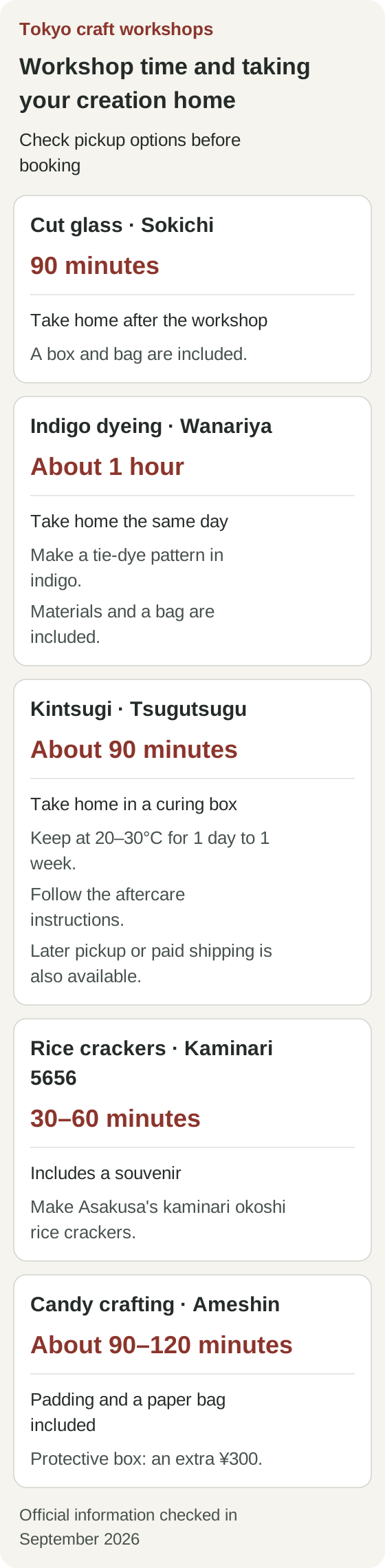
These are basic-plan prices. Colored materials, certain time slots and shipping may cost extra. You can also check the rules for children before making a shortlist.
| Craft workshop | Price, duration and booking size | Instruction language | Taking your work home |
|---|---|---|---|
| Cut glass at Sokichi (創吉) | Adults ¥3,630; 90 minutes; one person or more | Arrange English support in advance | Same day, with a box and bag |
| Indigo dyeing at Wanariya (和なり屋) | Handkerchief ¥2,500; about one hour; two people or more | English-speaking staff | Same day |
| Traditional kintsugi at Tsugutsugu (つぐつぐ) | ¥22,000; about 90 minutes; normally ages 12 and up. One-person booking option shown | Request English when booking | Same day in a curing box; later collection and shipping also available |
| Sweet-making class | Price, duration and booking size | Instruction language | Taking it home |
|---|---|---|---|
| Kaminari okoshi at Kaminari 5656 Kaikan (雷5656会館) | ¥2,420; 30–60 minutes. Check whether solo bookings are accepted | Japanese only; bring an interpreter if needed | Souvenir included |
| Candy sculpting at Ameshin (アメシン) | Adults ¥3,100; 90–120 minutes. Check whether solo bookings are accepted | Japanese with English subtitles and materials | Wrapped in protective material and a paper bag |
The kintsugi price is the amount shown on the official booking page; the other prices include tax. Durations are approximate, so leave some room in your schedule before and after the class.
For example, a solo visitor with a budget of ¥4,000 could choose a clear glass at a regular cut-glass session. If you want to ask questions in English, check that an English-speaking staff member will be there. Sokichi takes cash, so preparing your payment options helps you avoid arriving with only a card.
For one adult, the cut-glass class costs ¥3,630, with an extra ¥550 for the 17:00 session and colored glass starting at an extra ¥1,100. A clear glass costs ¥3,630 at a regular session or ¥4,180 at 17:00. Choosing a glass with a ¥1,100 colored-glass supplement at a regular session brings the total to ¥4,730.
For two people dyeing handkerchiefs, the regular price is ¥2,500 each, or ¥5,000 total without an extra design. Ameshin’s Japanese booking instructions specify a 100% cancellation fee once the booking is confirmed, so compare the booking and cancellation rules alongside the price.
If you want to choose your own pattern, consider selecting and cutting a design into glass or planning how to tie your fabric for indigo dyeing. The candy class teaches you to make a rabbit, while kintsugi covers an assigned intermediate step and the finishing of a different piece.
Craft workshops for glass, pottery and fabric
Cut patterns into a clear glass at Sokichi
Kiriko is a technique for cutting patterns into the surface of glass. You get used to the machine on a practice glass, then choose and cut patterns on the base or sides.
The basic fee includes one of six clear glasses. You can compare their shapes in the glass selection. Colored glass costs an extra ¥1,100–¥4,510. The 17:00 session has a ¥550 supplement, and the basic price for under-18s is ¥2,860.
English- and Chinese-speaking staff are not always available, so select your preferred language on the booking form and ask which sessions can accommodate it. The workshop is very close to Exit 4 of Asakusa Station (浅草駅) on the Ginza Line. You check in on the first floor, with entry from five minutes before the class. Your glass comes with a box and bag; paid shipping is also available.
Dye a handkerchief indigo at Wanariya
Decide which parts of the cloth you want to leave white, then use rubber bands and other ties to make a pattern before dipping it into indigo dye. The handkerchief measures 45 × 45 cm, and the official page shows example patterns. You don’t need to bring an item to dye: the item, dyeing and a bag to take it home are included.
Advance payment costs ¥2,400 instead of the usual ¥2,500, but date changes are not allowed and cancellation fees apply. Whether your plans are settled matters as well as the ¥100 saving. The Aibana (藍華) design costs an extra ¥600.
Bookings are for two people or more, and English-speaking staff guide the session. The shop is about a 10-minute walk from either Iriya Station (入谷駅) or the Tsukuba Express Asakusa Station. You can take your dyed handkerchief home the same day.

This reference photo shows a dyeing studio, not Wanariya or its workshop. Photo: C Cai / Unsplash
Try kintsugi repair steps and gold finishing at Tsugutsugu
This traditional kintsugi workshop uses natural urushi lacquer and gold powder and takes about 90 minutes. In the first half, you try an assigned step such as joining pieces or filling a chip. In the second half, you finish a different, prepared piece with gold and take that second piece home. It is not a course for bringing your own broken pottery and repairing it from scratch.
The official examples and process guide show which parts you will try. Pottery, tools and materials are provided, and the price is ¥22,000 per person.
All tools are provided, so you don’t need to bring any equipment. Samue workwear is available, but wear clothes you don’t mind getting dirty and tie back long hair. You’ll wear gloves during the class because urushi can cause a skin rash.
You can take your piece home in a curing box the same day, but it needs to stay in the closed box at 20–30°C for one day to one week, followed by aftercare according to the instructions. You can also leave it to cure at the studio for later collection, or arrange paid shipping within Japan or internationally.
Request English when you book. The Asakusa studio is about a three-minute walk from Tawaramachi Station (田原町駅); there is also a separate Ebisu (恵比寿) studio. Check the directions for the studio you booked.

This is a reference photo of kintsugi, not a participant’s work from the featured class. Photo: Riho Kitagawa / Unsplash
Sweet-making classes in Asakusa
Make kaminari okoshi at Kaminari 5656 Kaikan
Making this Asakusa specialty costs ¥2,420 including the class and a souvenir, and takes 30–60 minutes. Photos on the official page show what the activity looks like.
The class takes place on the second floor of Kaminari 5656 Kaikan, a separate location from the Kaminarimon Honten (雷門本店) shop. It is about a 10-minute walk from Tobu Asakusa Station. Booking requires email registration, check-in opens 10 minutes before the class, and entry is not allowed after it starts. The production-viewing areas on the third and fourth floors are separate from the hands-on class on the second floor.
Sculpt a candy rabbit at Ameshin
In this class, you shape warm candy with scissors. An English-subtitled video, two practice attempts and a demonstration by the craftsperson lead up to your final piece, which you finish with food coloring. The official process guide, examples and explanation of the English materials help you picture what you will make. The class is run in Japanese, supported by English materials.
Prices are ¥3,100 for adults and ¥2,500 for high-school-age children and younger, for 90–120 minutes. Your work is wrapped in protective material and a paper bag; a protective box costs an extra ¥300. Thinking about where that box will fit can help you decide whether to store your luggage while you attend.
Classes take place at the Hanakawado (花川戸) shop, about a seven-minute walk from Asakusa Station. The Japanese booking instructions say that individual bookings open two weeks ahead, and dates within the next three days must be booked by phone. Contact details are on the official booking page.
For bookings in English, use the email contact listed in the official English instructions.
Fit one workshop into a half-day in Asakusa
For example, you could eat near Asakusa Station, head to Sokichi for its 90-minute cut-glass workshop, then explore the surrounding streets. Setting aside about two hours for the class, travel and check-in gives you some room when planning the day.
Age requirements and family prices
For a family with children aged five and eight, it matters whether the adults will make something or only accompany the children. Sokichi requires an adult to accompany children under nine, with no more than one non-participating companion per group. At Wanariya, parents and children generally participate together; discuss young children’s ages before booking.
For candy sculpting, children of elementary-school age and younger attend with a parent or guardian. If everyone makes their own piece, a family discount gives one parent or guardian the ¥2,500 price for each child of high-school age or younger. Alternatively, a preschool child can share a project with a parent or guardian paying ¥3,100. Non-participants generally cannot enter. Ask the kaminari okoshi shop about age and accompanying-adult rules before booking.
At Ameshin, two adults and two children of high-school age or younger making one piece each would pay ¥10,000 if the family discount above applies. If one preschool child shares with a parent or guardian, while the other parent and child each make their own piece with the family discount, the total is ¥3,100 + ¥2,500 × 2 = ¥8,100. Those arrangements involve four separate projects and three projects respectively. These examples exclude protective boxes, so confirm the children’s ages, how everyone will participate, discount eligibility and the number of boxes with the shop.
Traditional kintsugi is normally for ages 12 and up; children under 12 need an accompanying parent or guardian, so give the child’s age and ask whether an exception is possible. A separate kintsugi-style accessory class uses materials such as resin and is for ages six and up, lasting 60 minutes and costing ¥6,600. Its materials and finished item differ from pottery repair with natural lacquer.
Check the total price and booking confirmation
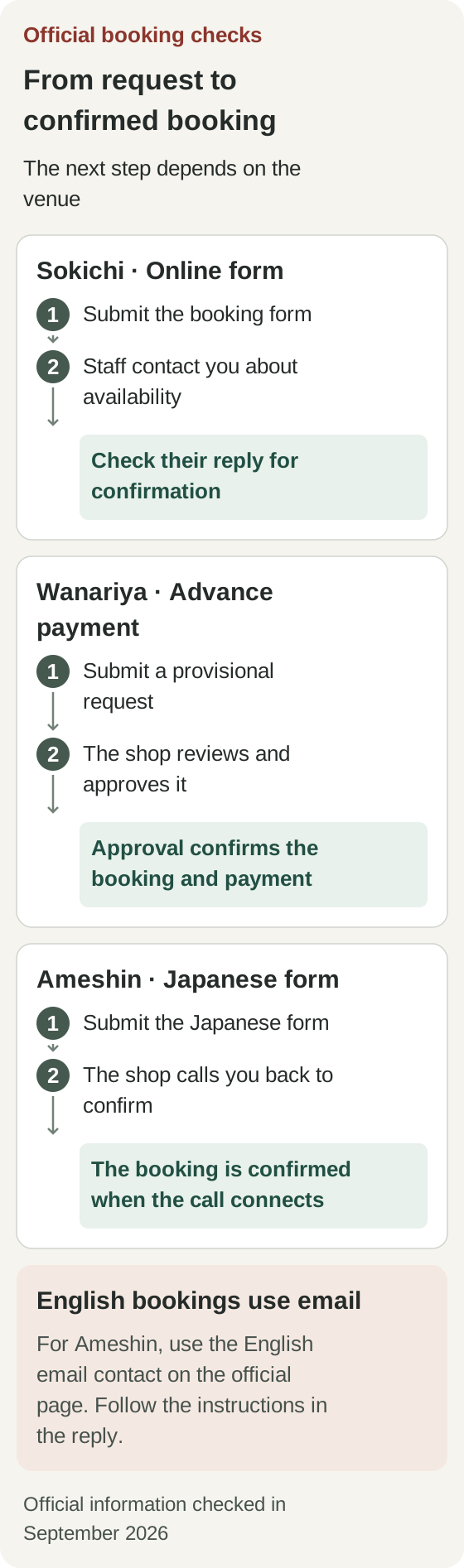
Submitting a request and receiving confirmation are separate steps.
| Workshop and booking method | Payment and confirmation |
|---|---|
| Sokichi | Cash payment. Staff contact you after form submission to say whether they can accept the booking |
| Wanariya advance payment | Card only. The booking is confirmed and payment taken after the shop approves it |
| Tsugutsugu | Choose a date and time on the official booking page and use one of the payment methods shown |
| Kaminari okoshi | Register your email to proceed with booking |
| Ameshin | Japanese-form bookings are confirmed by a return phone call. English bookings go through the email contact |
Check the booking provider’s instructions for payment and confirmation. If you prefer to avoid a phone call, you can ask before applying: “Can the booking be confirmed entirely by email?”
The booking steps are:
- Choose the class, location and date, and give the group size, children’s ages and preferred language.
- Check the total including materials, time-slot supplements, boxes and shipping, along with the payment method.
- Read the cancellation conditions for the booking method you will use. Conditions from another booking site may be different.
- Follow the provider’s instructions and save the booking confirmation message or screen, date and time.
- Check the shop’s address, official directions and check-in time before setting out.
Cancellation conditions also depend on how you book.
| Official booking method | When cancellation fees apply |
|---|---|
| Sokichi cut-glass class | 100% after 18:00 the previous day for groups of up to five, or after the two-week deadline for groups of six or more |
| Wanariya advance payment | 50% from 30 to 11 days before; 80% from 10 days before through the previous day; 100% on the day. No date changes |
| Ameshin Japanese booking instructions | 100% once the booking is confirmed |
| Tsugutsugu official booking | 100% from one day before the scheduled start |
Before confirming, also check the kaminari okoshi cancellation fee and the conditions for other booking methods, such as English email bookings. Include your preferred date, group size, instruction language, total price and confirmation method in your inquiry.
- For a solo visit: “Can one person join on [date] or [alternative date]? Please let me know which sessions offer English instruction, the total price and how the booking is confirmed.”
- For a family: “Can two adults and children aged five and eight join the same session on [date]? We would like English instruction. Please let me know the total price for everyone and how the booking is confirmed.”
If you have a shape or pattern in mind, ask how much choice the class offers. If you prefer a quiet pace, you can ask about class size and how the instruction is organized. When a form asks for a phone number, check whether it accepts a number from outside Japan and how the shop will contact you on the day.
When classes are full or your work will not fit in your luggage
If a class is full, you can try another date or time, or keep free indoor places that do not need reservations as an alternative. Check the cancellation terms of any confirmed bookings before changing your plans.
If you try kintsugi just before leaving Japan, curing at the studio followed by shipping is another option. Ask the shop about destination countries, shipping costs and expected arrival. Candy sculptures are sensitive to humidity and breakage, so ask for the protective box’s dimensions and check whether it will fit in your hand luggage.
If you are traveling light, you can also ask about the packed size and shipping options.
If you get lost on the day, check the shop name, address and contact details in your booking and contact the shop. The kaminari okoshi class does not allow entry after it starts, while Sokichi treats arrivals more than 15 minutes late without notice as cancellations. Once you know what you want to make, add the meeting place and collection date to your itinerary too.
Related guides
References
- Tokiwado’s kaminari okoshi workshop
- Sokichi’s 90-minute cut-glass class and participation and cancellation FAQ
- Wanariya’s indigo dyeing workshop and cancellation conditions
- Tsugutsugu’s kintsugi workshops
- Ameshin’s candy sculpting class and English participation guide
FAQ
- Can I join a Tokyo craft workshop if I don't speak Japanese?
- Wanariya has English-speaking staff, while Sokichi asks you to arrange English support in advance. Request English when booking Tsugutsugu. Ameshin runs its class in Japanese with English subtitles and materials. The kaminari okoshi class is in Japanese, so bring someone who can interpret if needed.
- Are there craft workshops I can join alone?
- Sokichi accepts individual participants, and Tsugutsugu's official booking page has a one-person booking option. Wanariya requires bookings for at least two people.
- Can I take my work home the same day?
- Sokichi, Wanariya and Ameshin offer same-day take-home options. Tsugutsugu's traditional kintsugi piece can go home in a curing box, but it still needs storage for one day to one week and aftercare following the instructions.
- Can I repair my own broken pottery at the kintsugi workshop?
- The 90-minute Tsugutsugu class featured here uses pottery provided by the studio to teach an intermediate step and the finishing process. You work on different pieces in the first and second halves and take home the piece you finish in the second half.
- Can I join with children aged five and eight?
- Sokichi requires an adult to accompany children under nine. Ameshin lets a preschool child share a project with a parent or guardian. Wanariya generally has parents and children participate together; discuss young children's ages before booking.
- Is my booking confirmed when I submit the form?
- At Sokichi, you wait for staff to tell you whether they can accept your booking. Wanariya's advance-payment bookings need the shop's approval. Ameshin confirms Japanese-form bookings by a return phone call, so submitting the form alone does not confirm your place.
- Are there costs beyond the advertised price?
- Sokichi charges extra for colored glass and its evening slot, and Ameshin charges extra for a protective box. Shipping your work can also cost extra. Checking the basic project and optional extras separately makes the total easier to budget for.
- What should I do if I get lost or am running late?
- Check the address and contact details in your booking and contact the shop if you may be late. The kaminari okoshi class does not allow entry after it starts. Sokichi treats arrivals more than 15 minutes late without notice as cancellations, so joining late is not always possible.
* This article was translated from the original Japanese with the help of machine translation. Some expressions may not read naturally.


