
Where to Stay in Tokyo: Comparing Six Areas
Compare Tokyo Station, Ueno, Asakusa, Shinjuku, Shibuya and Shinagawa around your airport and morning and evening plans. Includes an eight-night cost worksheet, family room checks, station exits and late check-in.
tokyo.how uses affiliate links. If you buy through these links, we may earn a commission at no extra cost to you.
On this page
Would you like to walk to Senso-ji in the morning, or head back to your hotel after dinner in Shibuya? Choosing where you want to spend your mornings and evenings helps narrow down where to stay in Tokyo. Ueno is an option for arrival from Narita and visits to Ueno’s museums; Shinagawa for Haneda and the Tokaido Shinkansen; and Shinjuku or Shibuya when your evening plans are concentrated in the west.
For a short trip, choose two areas first, then compare individual places to stay. This guide helps you choose around your plans; it is not a survey of accommodation prices or a review based on hotel stays.
Narrow Your Search by Airport and Evening Plans
Before searching for accommodation, group the places you want to visit by day to see which areas you will return to often. Alongside your morning departures, note where you will be returning from after dinner or shopping.
- Write down your arrival and departure airports, terminals and flight times.
- Choose three places you especially want to visit, and add the areas where you will end your evenings.
- Use the tables below to choose two areas to search.
- Search for accommodation with the same dates, guest numbers and room requirements.
- Check the route from the station exit to the accommodation entrance, then save it along with the booking conditions.
| If transport shapes your choice | Area to compare first | What to check when searching |
|---|---|---|
| Arriving at Narita with plans for Ueno Park | Ueno | The route from Keisei-Ueno to your accommodation |
| Using Haneda and the Tokaido Shinkansen | Shinagawa | The Keikyu and Shinkansen entrances and the side of the station your accommodation is on |
| Taking a Shinkansen to your next city | Around Tokyo Station | Your train line and the positions of Marunouchi and Yaesu |
| If morning and evening plans shape your choice | Area to compare first | What to check when searching |
|---|---|---|
| Morning walks around Senso-ji or the Sumida River | Asakusa | Whether the accommodation is closer to the subway/Tobu stations or TX |
| Frequent dinners or shopping trips in Shinjuku | Shinjuku | The route back from evening venues and the east and west sides of the station |
| Shopping and evening meals in Shibuya | Shibuya | The locations of the places you want to visit and the accommodation entrance |
For example, if you arrive at Narita for eight nights and plan to spend your evenings in Shinjuku or Shibuya, compare Ueno with accommodation in the west. You will make two airport journeys, but repeat the trip back after dinner throughout your stay. This lets you weigh airport access alongside evening travel time and fares.
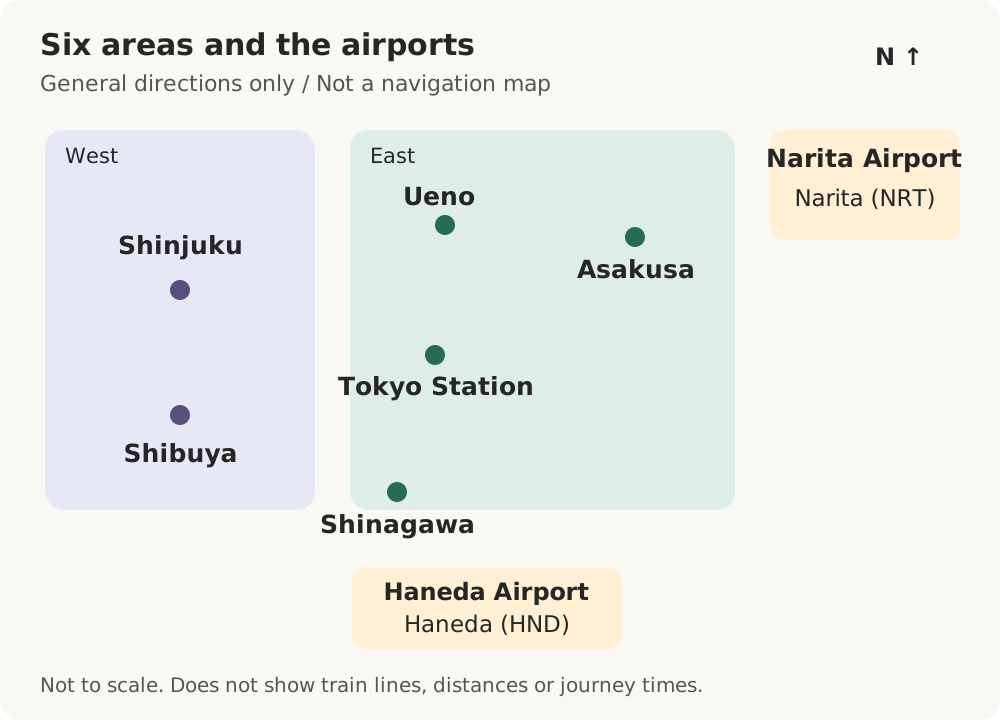
This schematic shows general directions only. It does not show scale, train lines or travel distances. Check actual routes using official station and accommodation directions.
Finding Accommodation Around Tokyo Station, Ueno and Asakusa
The east side offers both streets around major stations and areas where you can walk to parks or temples. Even choosing one daytime destination can help you compare hotel locations.
Tokyo Station: Marunouchi Walks and Your Next Shinkansen
The Tokyo Station area is an option if you want to see the red-brick station building or walk around Marunouchi. GO TOKYO’s area guide introduces the Marunouchi and Yaesu sides separately.
Marunouchi is on the west, where the station building stands; Yaesu is on the east. Use the JR station map to find the ticket gate you will use from your airport train or Shinkansen platform. A hotel’s “a few minutes’ walk from Tokyo Station” is not the time from that platform. With large bags, include the route to the street-level entrance in your comparison.
Ueno: Park Museums and Arrival from Narita
Ueno is an option if you want to visit the museums in Ueno Park or Ameyoko. The Skyliner from Narita arrives at Keisei-Ueno, a separate station from JR Ueno.
For your airport arrival, check the route from the Keisei-Ueno station map to your accommodation. If you will use JR during your stay, check the JR Ueno map too. A booking site’s “near Ueno Station” does not tell you which station is closer.
Asakusa: Morning Walks Around Senso-ji and the Sumida River
Compare Asakusa accommodation if you want to spend your mornings near Senso-ji, Nakamise or the Sumida River. There is no JR station here, so deciding which line you will use helps focus your search.
The Asakusa stations for the Ginza Line, Toei Asakusa Line and Tobu are in a different location from Tsukuba Express (TX) Asakusa Station. Save the exact line and exit names from your accommodation’s access instructions. If you plan to take the Asakusa Line from the airport, search for your travel date and check the train’s destination and whether a transfer is needed.
Finding Accommodation in Shinjuku, Shibuya and Shinagawa
Evening plans help make sense of Shinjuku and Shibuya, while Haneda and your next Shinkansen journey can point you toward Shinagawa. Even with the same station name, the walking route changes with your arrival platform and the side your accommodation is on.
Shinjuku: Returning After Dinner and Shopping
Shinjuku’s east side has shopping complexes and dining streets, while the west has a high-rise district. If you plan to shop, drop off your bags and head out for dinner, compare the route back to your accommodation from the places you want to visit.
Use the JR Shinjuku station map to check whether the accommodation is to the east, west or south. A hotel with “Shinjuku” in its name may be closest to a different station. Opening the nearest station and walking route for each option gives you more to judge by than the name alone.
Shibuya: Staying Near Shopping and Evening Meals
If you will spend time shopping in Shibuya or around the Scramble Crossing, plot the route between those places and your accommodation. Being in the same neighborhood does not necessarily mean they are within a distance you want to walk.
JR and Tokyo Metro use different platforms and levels. Construction can also change routes, so checking station maps again shortly before your stay helps you prepare. Our guide to navigating large stations explains how to find the right exit.
Shinagawa: Haneda and the Tokaido Shinkansen
Shinagawa is an option if you will take Keikyu from Haneda and continue to your next city on the Tokaido Shinkansen. Use the JR station map to find the Takanawa and Konan exits in relation to your accommodation, alongside Keikyu’s station guide.
Proximity to Haneda alone does not settle where to stay before an early flight. Use Keikyu’s early-morning and late-night guide to check the first train on your travel date, then compare the arrival terminal and your airline’s check-in deadline. If it will not get you there in time, compare moving closer to the airport the evening before.
Add Airport and City Transport to the Accommodation Cost
Compare accommodation with the same dates, guest numbers, room type, meals and cancellation terms. Entering the full stay and checking the total is more reliable than multiplying a displayed nightly price. Add accommodation tax, cleaning fees or other charges if they are not included in the tax-inclusive total, and distinguish per-person prices from per-room prices, and dormitory beds from private rooms.
Before booking, save the payment date, payment method and free-cancellation deadline, including the displayed time zone. If paying at the property, check which cards or cash payments it accepts.
Fares from the Airport to the Station
These are standard adult one-way fares. The Narita table uses reserved-seat trains that reach the comparison station without a transfer; it does not compare the cheapest routes. Skyliner prices combine the paper fare ticket and liner ticket, while N’EX prices combine the ordinary-car fare and limited-express charge.
| From Narita Airport or Airport Terminal 2·3 Station | Reserved-seat train | Adult one-way fare |
|---|---|---|
| Keisei-Ueno | Skyliner | ¥2,580 |
| Tokyo | N’EX | ¥3,140 |
| Shinagawa, Shibuya or Shinjuku | N’EX (check the destination) | ¥3,330 |
Official journey-time guides list as little as 41 minutes from Airport Terminal 2·3 to Keisei-Ueno and 53 minutes from Narita Airport Station to Tokyo. Times depend on the service and exclude immigration, baggage collection, waiting for the train and the journey from the station to your accommodation. For Shinjuku and Shibuya too, enter your expected arrival time to choose a train.
From Haneda to Shinagawa, Keikyu’s fare table lists an adult one-way fare of ¥330 with a ticket or ¥327 with an IC card. Train departure times differ between Terminal 3 and Terminals 1·2, so search by terminal station rather than the airport name alone.
Some N’EX services will be partially suspended from the evening of November 6 to the morning of November 8, 2026. On November 7, services between Tokyo and Ofuna or Shinjuku are scheduled to be suspended, with trains turning back at Tokyo. Arrangements on the preceding evening and following morning vary by service; check JR East’s list of affected trains. If you continue from Tokyo on another train, check your ticket’s conditions for transfers and any additional fares.
A Worksheet for One Person Staying Eight Nights
This example compares accommodation in Ueno and Shinjuku. Enter quotes found with the same room conditions in the accommodation-total row. The table does not contain researched quotes from actual properties.
| Cost | Ueno accommodation option | Shinjuku accommodation option |
|---|---|---|
| Total for eight nights, including extra charges | ¥[ ] | ¥[ ] |
| Round trip to Narita plus travel between station and accommodation | ¥[ ] | ¥[ ] |
| City transport during the eight-night stay | ¥[ ] | ¥[ ] |
| Total | ¥[ ] | ¥[ ] |
Using two standard one-way tickets for the Narita round trip gives ¥2,580 × 2 = ¥5,160 for Keisei-Ueno, or ¥3,330 × 2 = ¥6,660 for Shinjuku. If you qualify for a discount ticket, replace this with what you would actually pay. For example, the N’EX TOKYO Round Trip Ticket offers one round trip valid for 14 days at ¥5,200 per adult for holders of non-Japanese passports. Check conditions such as presenting your passport when collecting the ticket.
Look up and add city transport for each part of your itinerary, taking care not to count journeys already included in your airport ticket twice. Next to the total, note evening journey times and transfer counts so you can see what the difference in accommodation prices buys you. Families need a separate calculation based on children’s ages and reserved-seat requirements, rather than using these solo-travel figures unchanged.
Check Rooms and Station Exits for Children or Large Bags
Enter every child’s age and check both occupancy limits and the actual number of beds. “Bed-sharing” or “no extra bed” does not mean another child’s bed is provided. Hotel bed-sharing ages and railway child-fare categories follow separate rules. If you need a baby cot, check the property’s age limits and booking process.
MIMARU Tokyo Asakusa Station is one example of how to read these conditions. Its shared FAQ states that up to two children per room aged 6 or under at check-in are excluded from the occupancy count, while children aged 7 and over count as adults. The booking screen also has a category for children aged 0–6 who do not need a bed. Check the chosen room’s bed configuration to see whether everyone in your family has separate bedding.
The property’s standard access instructions give a 2-minute walk from Toei Asakusa Line Exit A5, but its official PDF route avoiding steps directs you to the elevator at A2b. This is an example of the nearest exit differing from the one you may use with luggage or a stroller. If you use a wheelchair, ask the property about the room entrance width, bathroom and other requirements as well as the route.
If you will arrive before check-in, checking the hours, eligibility and fees for luggage storage can help you plan that day’s walks. Compare station storage options in our Tokyo luggage storage guide.
Late Arrivals, Full Hotels and Quieter Rooms
For a late arrival, add immigration, baggage collection and travel to the property to your flight’s arrival time. Before booking, check the latest check-in time, the night entrance or key collection process, and how to contact the property if you are delayed. Access is not necessarily available around the clock. If the arrangements are unclear, confirm them through the property’s official contact before booking.
If asking in Japanese is difficult, send a short message to the official contact with your dates and party size. Check the reply for the arrival time and conditions the property can accommodate before making a booking.
We expect to arrive at [time] on [date]. Is late check-in possible? We are [number] adults with children aged [ages]. Could you confirm the beds and a step-free route from the station?
If everything within your budget is full, extend the search to stations next to the areas you will visit often. Check the journey back from your dinner reservation first. If you plan to stay out late, use our last-train guide to check the correct date and direction. When switching to a cheaper rate, check whether the terms have changed to non-refundable or payment in advance.
If quiet matters to you, look at the property’s position relative to main roads, railway tracks and late-night venues rather than relying on the area’s overall reputation. Ask about room orientation or requesting a quiet room, and distinguish acceptance of a request from a guarantee. Look for somewhere that makes it easy to reach the mornings and evenings you are looking forward to, and return afterward.
FAQ
Is Shinjuku a good place to stay on a first trip to Tokyo?
Should I stay in Ueno or Asakusa?
Which Tokyo neighborhood has the cheapest hotels?
Where is convenient to stay with children?
Will staying in Shinagawa get me to Haneda in time for an early flight?
* This article was translated from the original Japanese with the help of machine translation. Some expressions may not read naturally.
Related Guides
How to Plan Your Tokyo Itinerary Without Burning Out
2-3 spots per day is the right pace. Group nearby areas, add 15-minute buffers, and halve your plans on jet-lag day one. A practical framework to avoid over-scheduling.
Tokyo Station Transfers: Shinjuku, Shibuya, Tokyo and Ikebukuro
Use official maps to find gates and lines at Tokyo's major stations. Check Shinjuku's Oedo stations, Keiyo transfers, Shinkansen IC tickets, and elevator routes.
Luggage Storage in Tokyo: Lockers, Apps & Delivery (2026 Prices)
Compare coin lockers (¥300–800), ecbo cloak, Bounce, and luggage delivery from ¥2,000. Station-by-station locker availability tips and what to do when lockers are full.
Tokyo's Last Train: How to Check and What to Do If You Miss It
Find the last connection to your hotel and compare taxis, internet cafes, and overnight stays. Check Tokyo taxi fares, venue prices, ID rules, and late check-in.
Tokyo Stays for Families and Groups of 4–6
Compare two hotel rooms, apartment hotels and holiday rentals in Tokyo for 4–6 people, including beds, children's rates, total costs and late arrivals.