L I V I N G
My First Solo Move in Tokyo — From Apartment Hunt to Move-In Day
Apartment hunting in December, free-rent negotiation, provisional reservations, zero key money, and utility setup — a first-hand account of moving out in Tokyo.
December: The Search Begins
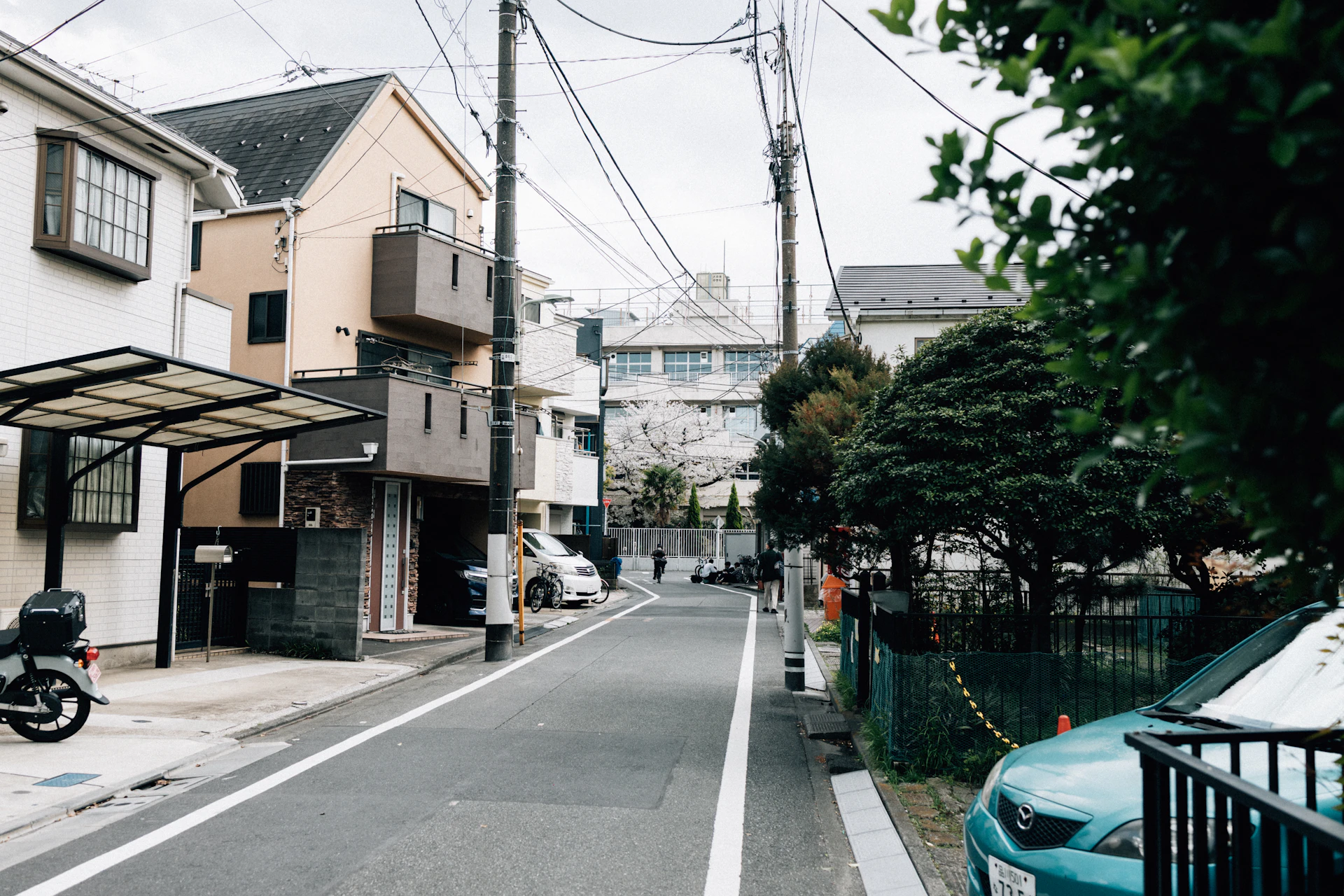
When I finished grad school, I decided to move out of my family’s home and start living on my own — both within Tokyo. It was my first time doing any of this.
I started apartment hunting in December and moved in by February. About two months total. Looking back, there were moments where I wished I had started earlier.
December felt like it should be off-season. The busy period for Tokyo rentals is January through March, when university students and new hires are all searching at once. I’d already narrowed my preferred area using rent and commute data from the 23 wards guide. But in reality, desirable units were already filling up in December. Single-occupancy apartments (1R and 1K layouts) were especially competitive. I kept hearing the same phrase: 「もう仮予約が入っています」 (Mou kari-yoyaku ga haitte imasu / “There’s already a provisional reservation on this one”).
Researching Apartments Online First
Before visiting any real estate agency, I spent time on rental listing sites — SUUMO, LIFULL HOME’S, and Canary (カナリー). I searched for apartments matching my criteria and saved everything I found.
With so many variables to compare — rent, nearest station, building age, floor plan, amenities — I put together a spreadsheet. Columns for each property, rows for rent, key money (礼金 / reikin), deposit (敷金 / shikikin), station, walk time, building age, and equipment (fiber internet, auto-lock, etc.).
This turned out to be one of the best things I did. Before setting foot in a real estate office, I already knew my priorities. When you’re looking at dozens of listings, having them side by side in a spreadsheet keeps your thinking clear.
Same-Day Viewings at the Real Estate Agency
I booked an appointment at a real estate agency (不動産屋 / fudousan-ya), explained my criteria, and the agent pulled up several options on the spot. Then: 「今から見に行きましょう」 (Ima kara mi ni ikimashou / “Let’s go see them now”).
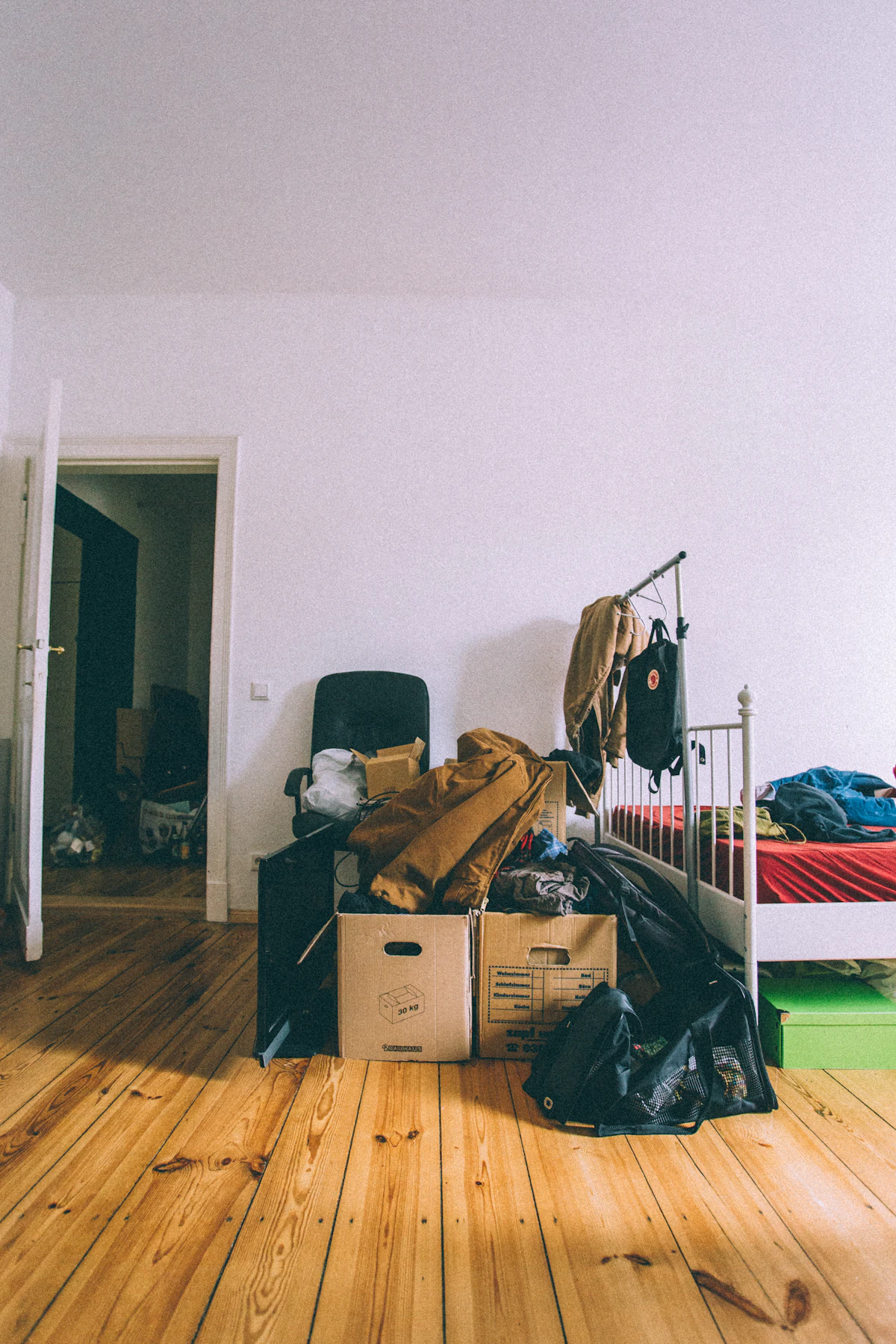
This is standard in Japan — you walk into the office, discuss what you want, and head out to view apartments that same day. One of the units I saw checked all my boxes. But the whole thing happened so fast — walk in, get suggestions, go view — that I couldn’t bring myself to decide on the spot. I told them I’d sleep on it.
The next day, I called to say I wanted that apartment.
It was already taken.
One night. That’s all it took.
Tokyo apartments work on a first-come, first-served basis. If you like a place during the viewing, applying right then and there is the expected pace. This was my first lesson in Tokyo apartment hunting.
Provisional Reservations: Why Listings Show “Taken”
After losing that apartment, the agent suggested more options. I added them to my spreadsheet and kept comparing.
This is when I learned about 仮予約 (kari-yoyaku) — “provisional reservation.” It’s not a formal legal term. In practice, it means someone has submitted a 入居申込書 (nyuukyo moushikomisho / move-in application form). Once an application is in, the unit is typically pulled from listings and won’t be shown to other people.
Even in December, many of the better apartments already had provisional reservations. I kept hearing 「この物件は仮押さえ中です」 (Kono bukken wa kari-osae chuu desu / “This property is provisionally held”).
Technically, a cancellation is possible at this stage, but in practice it almost never happens. Rather than waiting for a cancellation, it’s more realistic to keep searching in parallel without getting attached to a single unit.
From Agency Visit to Move-In: The Full Flow
Here’s the actual sequence from my experience, start to finish.
1. Visit & consultation You tell the agent your preferred area, rent ceiling, layout, and amenities. Bringing your spreadsheet of listings you found online speeds things up.
2. Property suggestions & viewings The agent proposes matching units and you go see them — often the same day. Viewing 2–3 properties in one trip is typical.
3. Application (入居申し込み / nyuukyo moushikomi) If you find one you like, you fill out and submit an application form. There’s no cost at this point, but speed matters — it’s first-come, first-served.
4. Screening (3–7 days) A guarantor company (保証会社 / hoshou gaisha) and the property management company review your application. For salaried employees, approval often comes in 1–2 days. During busy season it can take longer.
5. Contract signing (重要事項説明 / juuyou jiko setsumei + 契約 / keiyaku) A licensed agent (宅地建物取引士 / takuchi tatemono torihikishi) explains the property’s legal details and contract terms. You sign the lease and pay initial costs — deposit, key money, agency fee, first month’s rent, fire insurance, etc.
6. Key handover & move-in You receive the keys on the contract start date. Take photos of any existing scratches or stains immediately — this protects you from disputes when you eventually move out.
The entire process takes about 1 week at minimum, and 2 weeks to 1 month on average.
For a detailed breakdown of initial costs and required documents, see How to Find an Apartment in Tokyo.
The Struggle to Find a No-Key-Money Apartment in Tokyo
I was determined not to pay 礼金 (reikin / key money). Key money is a one-time “thank you” payment to the landlord — it doesn’t come back when you leave. At one month’s rent, that’s ¥80,000 just gone if your rent is ¥80,000.
But filtering for no-key-money apartments in Tokyo significantly narrows your options. According to a LIFULL HOME’S survey (2025), only 30.2% of apartments in the ¥100,000–¥150,000 range in the greater Tokyo area had zero key money — the lowest rate across all price brackets. The more in-demand the price range, the more leverage landlords have to charge key money.
That said, the overall trend is moving toward zero key money. More landlords are dropping it (and deposits too) to attract tenants. But when you combine “no key money” with “fiber internet” and “under 10 minutes from the station,” the number of matching units drops sharply. Compromises are inevitable.
Free Rent Gave Me Breathing Room
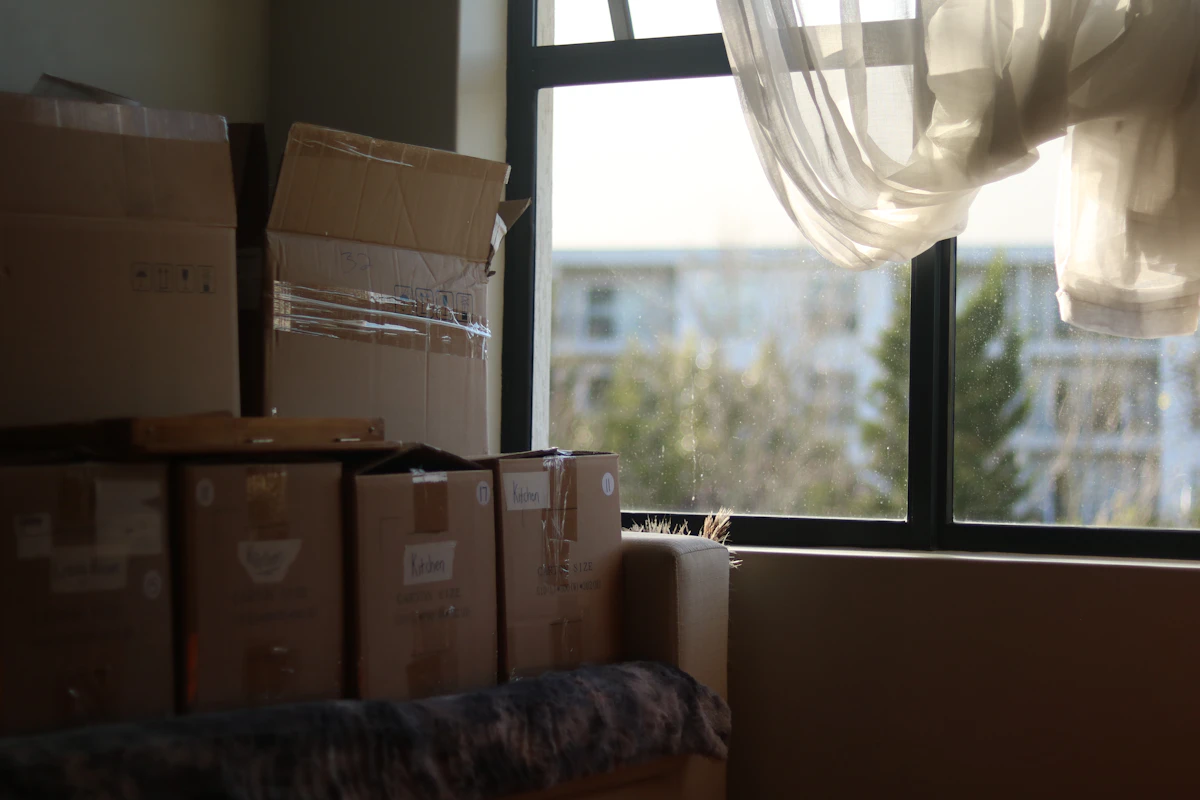
The apartment I ended up choosing came with フリーレント (free rent) — 1 month with no rent. Free rent is offered by landlords as an incentive to fill vacancies. One to two months is the typical range.
The financial benefit was obvious — an entire month’s rent saved. But the bigger impact was psychological. Right after moving in, you’re buying furniture, appliances, and paying all the initial fees at once. Having one month’s rent waived gave me genuine breathing room during that expensive period. Understanding how payments work in Japan also helped me plan for the various fees.
One thing to know: free rent almost always comes with an early termination penalty. A common condition is “if you cancel within 1 year, you pay 1 month’s rent as a penalty.” If you plan to stay for at least a year, this won’t be an issue — but check the contract.
The Fiber Internet Trap in Tokyo Rentals
One of the more unexpected difficulties in Tokyo apartment hunting was finding a unit with fiber internet.
Many single-occupancy apartments in Tokyo — especially new or recently built ones — advertise 「インターネット無料」 (internet free). Sounds great, but this means the landlord has a bulk internet contract for the entire building, and all residents share the same connection. You can’t choose your provider, and speeds often drop during peak hours (evenings, weekends).
Compare this with 「光回線対応」 (hikari kaisen taiou / fiber-ready) or 「インターネット対応」 (internet-ready). These mean fiber runs to the building’s common area, but you contract your own provider and may need installation work inside your unit. More hassle, but you control your connection quality.
| Listing term | What it means | What you need to do |
|---|---|---|
| インターネット無料 (Internet free) | Connection included, ready to use | Nothing (but you can’t choose speed/provider) |
| インターネット対応 / 光回線対応 (Internet-ready / Fiber-ready) | Fiber to the building | Contract a provider + possible in-unit installation |
| インターネット完備 (Internet included) | Same as “free” in most cases | Nothing |
If you game online, pay close attention. Shared “internet free” connections can spike to high ping during evening hours, and download speeds may drop to single-digit Mbps. For FPS or fighting games where lag is a dealbreaker, this can make online play unplayable. Same goes for remote work — if you rely on video calls, an unstable shared connection means frozen video and choppy audio.
If connection speed matters to you, don’t just accept “internet free” at face value. Ask the agent or management company about the connection type (fiber vs. cable) and real-world speeds.
Among the newer apartments I viewed, some did have fiber internet available, so the situation may be improving. But at the time of my search, finding a single-occupancy unit with fiber and no key money was a challenge.
Measure Doorways Before You Buy Appliances
This deserves emphasis.
Doorways, hallways, and interior doors in Tokyo apartments can be smaller than you’d expect — especially in single-occupancy units designed to maximize limited space. There’s a real possibility that your new washing machine or refrigerator won’t fit through the front door.
What to measure during your viewing:
- Front door width and height — Will a refrigerator or washing machine pass through?
- Hallway width — Can furniture be carried around corners?
- Washing machine pan (防水パン / bousui pan) dimensions — Will your intended washing machine fit?
- Refrigerator space width, depth, and height — Include clearance for ventilation
- Interior door widths — Can a sofa or bed frame pass through?
If you buy appliances and they don’t fit through the entrance or onto the washing machine pan, you’re looking at returns, exchanges, and extra delivery fees. Bring a tape measure to every viewing.
Utility Setup After Moving In
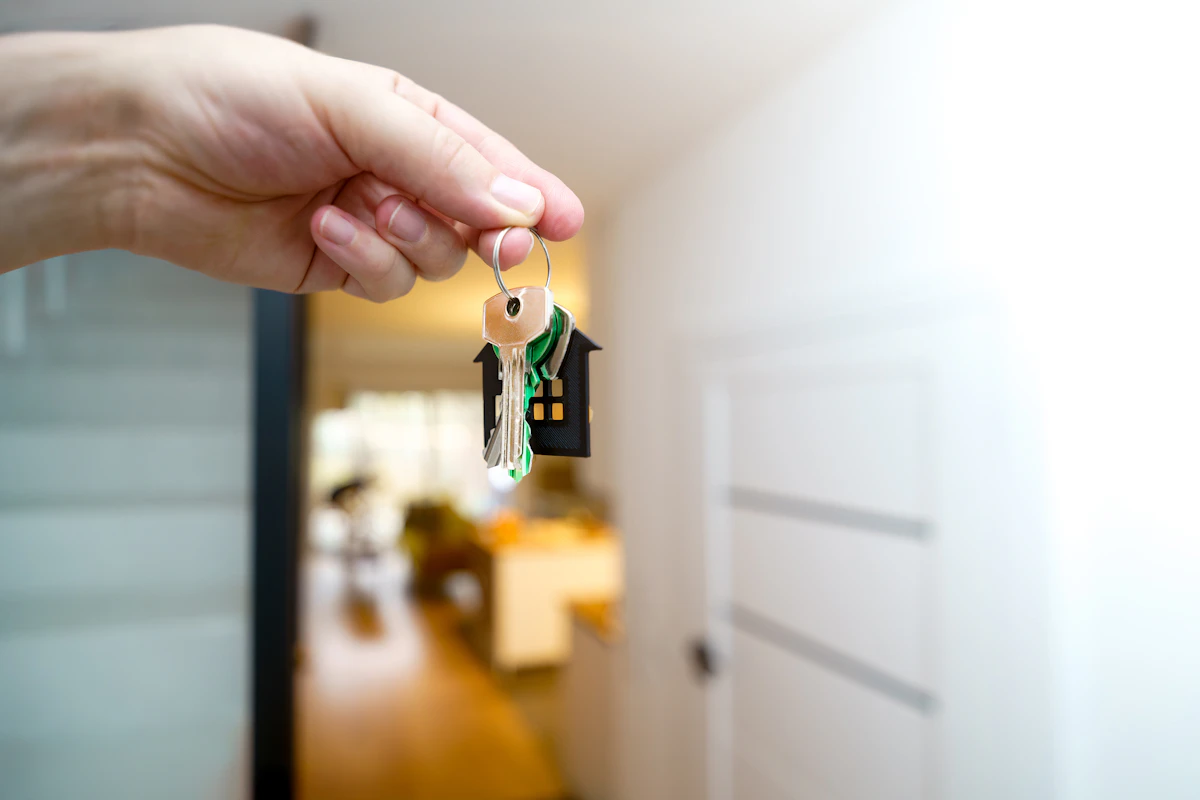
Once you have your keys, the next step is setting up utilities: electricity, water, gas, and internet. You’ll also need to sort out your phone number and bank account if you haven’t already. Each has different requirements — and some need you to be physically present.
| Utility | In-person required? | How to apply | When to do it |
|---|---|---|---|
| Electricity | No | Apply online or by phone with your power company | 10 days before move-in |
| Water | No | Tokyo Waterworks Bureau app, website, or phone | 3–4 days before |
| Gas | Yes | Book activation online or by phone with your gas company | 1–2 weeks before |
| Internet (fiber) | Yes, if installation is needed | Apply with your chosen provider | As early as possible |
Gas activation
Gas requires an in-person safety check to activate. With Tokyo Gas, you can book a time slot between 9:00–19:00. It takes about 15–20 minutes. During busy season, slots fill up quickly — book as soon as your move-in date is confirmed.
Someone else (a family member, building manager) can be present on your behalf.
Internet installation
If you chose a fiber-ready apartment and contracted your own provider, you may need in-unit installation work. This requires you to be home, and takes about 1–1.5 hours. From application to activation usually takes 2 weeks to 1 month — longer during busy season (March–May).
You can choose weekday or weekend appointments, but you need to be home for the full duration. If you want internet from day one, apply to a provider the moment your lease is signed.
Note: installation work in a rental unit requires advance permission from the landlord or management company.
Electricity and water
Electricity and water generally don’t require you to be present. If your building has a smart meter, electricity starts automatically on your requested date. Otherwise, just flip the breaker. For water, turn the faucet — it’s usually already on. If it’s not, open the stopcock (止水栓 / shisui-sen) yourself.
For ward office procedures after moving (residence registration, residence card address update, health insurance, etc.), see Ward Office Procedures After Moving.
Moving Without a Moving Company
I didn’t hire a moving company. Since my family’s home was also in Tokyo, I moved my belongings in several trips by myself.
Large appliances (refrigerator, washing machine) were delivered and installed by the store where I bought them. Everything else went into cardboard boxes and was transported by car and taxi. It saved money, but it was physically demanding.
Whether to hire movers depends on how much stuff you have and how far you’re going. For a short-distance move within Tokyo with minimal belongings, doing it yourself is entirely feasible.
Looking Back on My First Tokyo Move
The biggest takeaway from my first move in Tokyo: speed of decision-making. I did my research on listing sites, organized everything in a spreadsheet, sorted my priorities — I thought I was prepared. But Tokyo’s rental market runs on “see it, apply now.” Preparation helps, but hesitation costs you the apartment.
Free rent was a lifesaver — not just financially, but mentally. The difficulty of finding no-key-money apartments, the scarcity of fiber internet in single-occupancy units, measuring doorways, booking gas activation — each thing is small on its own, but when everything is new, you don’t know what you don’t know. Having this information beforehand makes the whole process less overwhelming.
I hope this account is useful if you’re about to start your first solo life in Tokyo.
Related Articles
- How to Find an Apartment in Tokyo — Full guide to the apartment search process, initial costs, and required documents
- Ward Office Procedures After Moving — Residence registration, residence card updates, and health insurance in one visit
- Health Insurance & Pension in Japan — Which insurance track applies to you, premiums, and the lump-sum withdrawal
- How Payments Work in Japan — Choosing payment methods for daily life in Tokyo
References:
- LIFULL Inc. “2025 Survey on Deposits and Key Money in the Greater Tokyo Area” https://lifull.com/news/45530/ (Accessed: 2026-02-18)
- Tokyo Waterworks Bureau “Starting/Stopping Water Service (Moving Procedures)” https://www.waterworks.metro.tokyo.lg.jp/faq/qa-4 (Accessed: 2026-02-18)
- Tokyo Gas “Gas Procedures When Moving” https://home.tokyo-gas.co.jp/gas_power/procedure/moving/index.html (Accessed: 2026-02-18)
* This article was translated from the original Japanese with the help of machine translation. Some expressions may not read naturally.


