Explore
Shirakawago or Hida Folk Village: What to See at Each
Walk Shirakawago's living village or explore farmhouse interiors at Hida Folk Village. Compare sights, buses, costs and visits in rain or snow.
On this page
In Shirakawago (白川郷), you can walk through a village of houses and fields. At Hida Folk Village (飛騨の里), you can enter relocated farmhouses and trace past ways of life through hearths and working tools. Choose Shirakawago for the scenery of gassho-zukuri houses together, or Hida Folk Village for a closer look at their interiors and construction.
Ogimachi (荻町) in Shirakawago is part of the World Heritage site Historic Villages of Shirakawa-go and Gokayama. Hida Folk Village is an open-air museum in Takayama (高山), with relocated and restored houses from the Hida region. They are separate places, so choose by what you want to see when you get there, beyond the shape of the roofs.
Both can be visited on a day trip from Takayama. To combine them with travel from Tokyo, the Gifu trip guide compares ways to plan your route.
Village scenery or life inside the houses
| What matters to you | Shirakawago’s Ogimachi settlement | Hida Folk Village |
|---|---|---|
| Main things to enjoy | Village scenery, including houses and fields, and visits to buildings open to the public | Interiors of relocated houses, everyday tools and comparisons between buildings |
| Suggested visit including travel from Takayama | 4–6 hours | 2–3 hours |
| Adult transport and admission costs | Bus fare of ¥2,800 each way × 2 = ¥5,600, plus paid attractions | ¥1,000 set ticket for return bus travel and admission |
The times in the table are planning suggestions that include waiting for buses, sightseeing and breaks. They do not allow for major traffic delays. The bus to Shirakawago takes about 50 minutes and costs ¥2,800 each way. The Hida Folk Village set ticket is sold at Takayama Nohi Bus Center and valid only on the day of purchase. Prices were checked on September 17, 2026.
Shirakawago makes the village itself the focus of the outing; Hida Folk Village also fits into a day exploring Takayama. If you have an afternoon train booked, checking your return time to Takayama helps you enjoy either visit without rushing.
Walk through a village where people still live
In Ogimachi, look across the gassho-zukuri houses and fields from a viewpoint, then explore the village streets. Looking up at those roofs from nearby lets you see the familiar village photograph as a collection of individual homes. UNESCO’s description also recognizes the settlement and its way of life as adaptations to the natural environment.
There is no admission charge to walk around the village; buildings open to visitors charge separately. There is no single “Shirakawago admission ticket” that covers everything. Alongside return transport, budget for the houses you want to enter, transport to a viewpoint and lunch.
If you choose one house to visit, Wada House (和田家) is about a 4-minute walk from the bus terminal, with adult admission of ¥400, payable in cash. It remains a home, with parts of the first and second floors open to visitors; English audio explanations play on the second floor. Hours are 09:00–17:00, with irregular closures. Living areas are private, so follow the visiting boundaries shown at the entrance.
The tourist association suggests 2–3 hours to explore the settlement. A visit focused on viewpoints will feel different from one spent looking closely inside houses. When choosing the gap between your buses, allow for leaving luggage and returning to the stop as well as walking around.
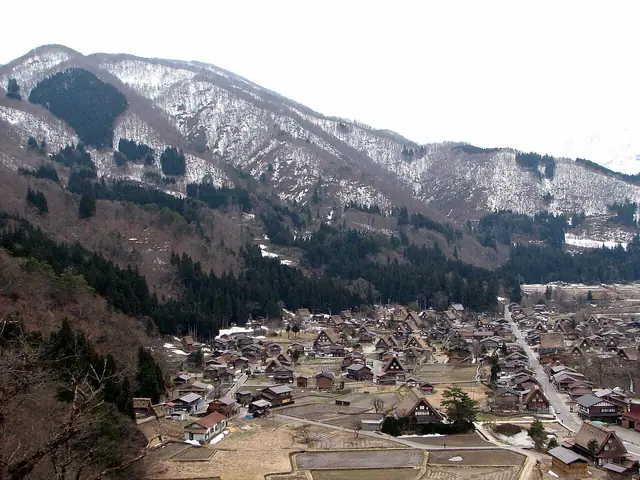
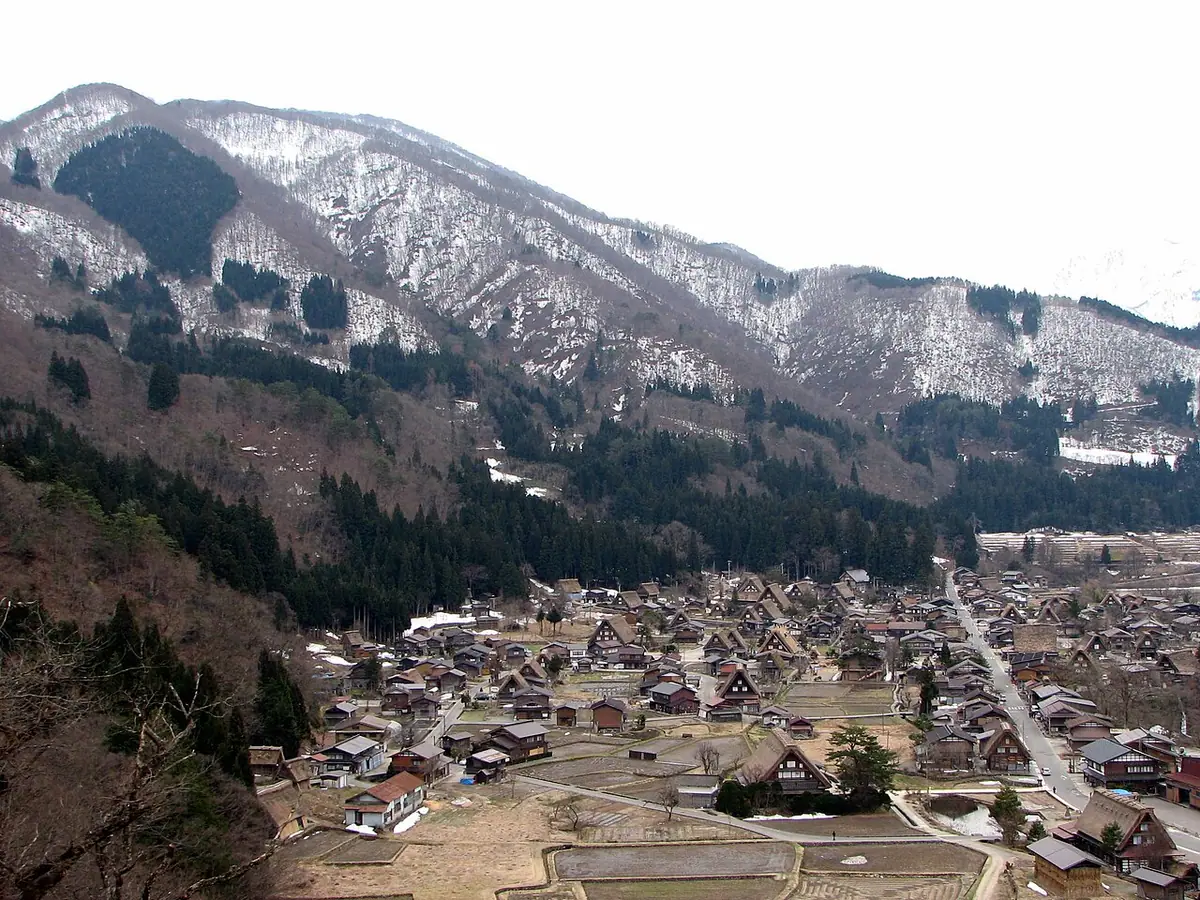
Ogimachi settlement. Photo: Bernard Gagnon, April 2008. Wikimedia Commons, CC BY-SA 3.0. Uses a reduced-size image provided by Commons.
Visiting a residential place
The guidance for ordinary day visits is 08:00–17:00, with nighttime visits limited to guests staying within the settlement. If you want to spend the evening here, a stay in the settlement is an option. The Takayama, Gero and Shirakawago accommodation comparison explores the pleasures of staying in each place.
Not every house in the photographs is a visitor attraction. Only enter buildings marked as open to the public, and stay within their designated visiting areas. You can admire private homes from the street and explore the interiors of houses that welcome visitors.
Compare the buildings at Hida Folk Village
Hida Folk Village has gassho-zukuri houses alongside other types of homes and everyday tools from the Hida region. Part of the interest is comparing not just roof shapes but the number of hearths and how rooms were used.
For example, the second floor of the former Nishioka House displays silkworm-rearing tools. They connect the spacious loft with the work of raising silkworms. The former Taguchi House has three hearths and a large wooden-floored room, showing the gathering space of a village headman’s home. One house draws attention to work, the other to people coming together. Comparing them reveals how the buildings served the lives within them.
The official FAQ suggests 40 minutes to an hour for a walk with stops at buildings that interest you. You may want longer if the tools or architecture catch your attention. The 2–3-hour estimate from Takayama includes return bus travel and waiting time.
Regular opening hours are 08:30–17:00; admission is ¥700 for adults and ¥200 for elementary and junior high school students. If you walk or take a taxi, calculate admission and transport separately. Adults taking the bus both ways can buy the set ticket mentioned above at the counter to include admission.
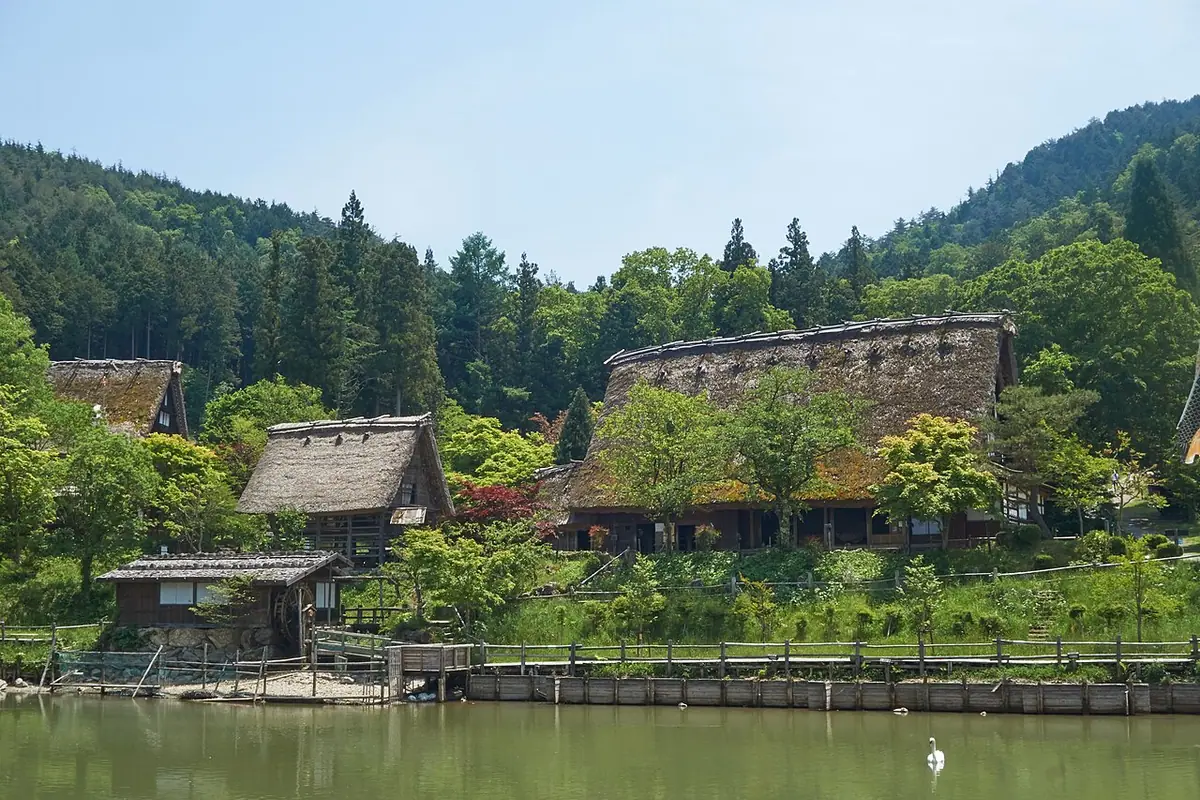
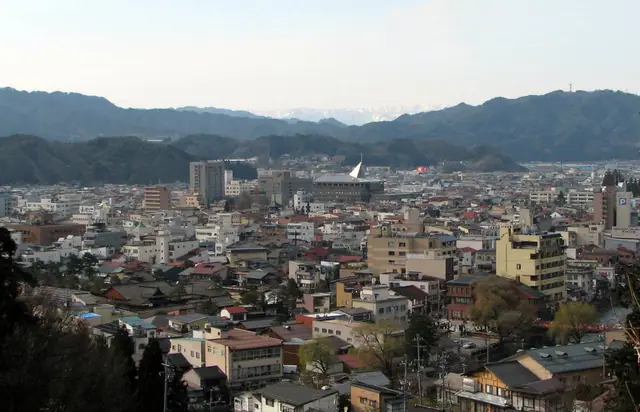
Hida Folk Village. Photo: Celuici, May 2017. Wikimedia Commons, CC BY-SA 3.0. Uses a reduced-size image provided by Commons.
Taking the bus from Takayama
- Buy the Hida Folk Village set ticket at Takayama Nohi Bus Center. You can show the counter staff “飛騨の里セット券” — Hida no Sato setto-ken (“Hida Folk Village set ticket”).
- Take the Sarubobo Bus and get off at “S4 Hida no Sato.” From Takayama Nohi Bus Center, the ride takes about 10 minutes, with two departures per hour during the 09:00 through 15:00 hours.
- Check your return service before entering, then take the bus back to Takayama Nohi Bus Center after your visit. Some services follow a loop, so check the arrival time rather than assuming the return ride takes as long as the outward one.
The museum has no restaurant, but does provide a rest area where you can eat and drink. You could bring lunch or enjoy a meal in Takayama before or after the visit.
Bookings and luggage
For Shirakawago, separate an ordinary walk around the village from the transport booking needed to get there. The Takayama–Shirakawago route has both reservation-only services and services without reservations. Check the return or onward bus as well as the outward journey before deciding how long to stay. The detailed bus booking guide covers options when services are full.
Hida Folk Village also offers opportunities to try a craft alongside visiting the houses. For example, kumihimo braiding at the former Tomita House costs ¥2,500 for an individual participant, including tax. It is held on an irregular schedule, with hours listed as 10:00–15:00; the activity’s duration is not published. Use the contact information on the official experience page to check whether it runs on your visit date, how to sign up and how long it takes.
If you are traveling through Shirakawago to Kanazawa with large bags, lockers in the bus terminal or the nearby luggage storage office are options. Drop-off and collection are within 08:00–17:00 on the same day. Note where you left your bags and the collection deadline, and leave time to retrieve them before your next bus.
If you are returning to Takayama, you could ask your accommodation about luggage storage before setting out. Check whether it can hold bags after checkout; do not assume you can always leave them at the entrance to Hida Folk Village.
Rain, snow and deciding whether to visit both
Both places involve outdoor walking. Hida Folk Village offers free umbrella loans, and boots during the rainy and snowy seasons, but it is not a museum where you can stay indoors throughout a rainy day. If you switch a Shirakawago visit to Hida Folk Village, consider local weather and walking conditions there too.
Buses toward Shirakawago may face delays of two hours or more because of snow, traffic or road closures. If you have planned a tight connection to an afternoon long-distance train, revise it without assuming the bus will return on time. For winter scenery or events, see the Shirakawago winter travel guide.
To see both, you could visit Hida Folk Village on the day you arrive in Takayama, then Shirakawago the next day. After seeing silkworm-rearing tools and hearths, walking through the settlement may help you imagine the lives once lived beneath those large roofs. Whether you spend time at one place or compare the two, let what you want to see guide the choice.
FAQ
- Are Hida Folk Village and Shirakawago the same place?
- No. Ogimachi in Shirakawago is a World Heritage settlement where people still live. Hida Folk Village is an open-air museum in Takayama, with houses relocated and restored from across the Hida region.
- Which is quicker and cheaper for seeing gassho-zukuri houses from Takayama?
- Hida Folk Village. An adult set ticket costs ¥1,000 and includes return bus travel from Takayama Nohi Bus Center and admission. Two ordinary one-way bus tickets to Shirakawago and back cost ¥5,600 per adult.
- Is it worth visiting both Shirakawago and Hida Folk Village?
- Both are options if you want to enjoy village scenery and explore how the houses were built. Seeing everyday tools at Hida Folk Village before walking through Shirakawago may change how you look at the houses. With only half a day, you could take your time at just one.
* This article was translated from the original Japanese with the help of machine translation. Some expressions may not read naturally.