
How to Eat Sushi on a Budget in Tokyo
Choose sushi in Tokyo by your meal budget. Compare tax-inclusive menu prices, opening and check-in times, access, and reservations at branches in Ueno, Asakusa, and Ginza. Learn how conveyor belt sushi works and what to check at standing bars and when buying discounted supermarket sushi.
tokyo.how uses affiliate links. If you buy through these links, we may earn a commission at no extra cost to you.
On this page
To keep sushi spending down in Tokyo, check the menu for the branch you plan to visit and add up a full meal. The lowest price in a chain’s advertising will not tell you what ten plates and a soup will cost. Weekday sets, individual plates, and takeaway each call for a different approach.
I have paid around ¥2,500 for ten plates and aosa seaweed miso soup at a conveyor belt sushi restaurant. I have also bought a supermarket sushi pack with a discount sticker for ¥400, while a course at a high-end restaurant for a company dinner cost over ¥10,000. These are prices from past visits in Tokyo, not current menu prices.
Start with Your Budget for One Meal
These examples come from official menus. The menu at the time of your visit takes precedence, including extra orders and items that have sold out.
| Way to eat | Example price, including tax | Conditions for this price |
|---|---|---|
| Weekday set | Sushiro Ueno: 10 kinds of sushi, miso soup, and chawanmushi for ¥1,010 | Weekdays until 15:00. Limited quantities, dine-in only, no extra orders |
| Choose individual plates | At Sushiro Ueno: eight ¥150 plates + two ¥180 plates = ¥1,560 | An example order calculation. Excludes soup, drinks, and dessert |
| A platter you can reserve | Sushi no Midori Ginza: “Matsuri” for ¥3,850 | Listed on the official booking page. Prepaid; extra orders cost more |
| Supermarket takeaway | The tax-inclusive price or discounted amount on the label | Depends on the store and that day’s stock. Discounts are not guaranteed |
The sources are the Sushiro Ueno menu and the Sushi no Midori Ginza booking page. A set with ten kinds of sushi does not mean ten plates. When comparing plate counts, check the number of pieces and what each plate contains.
If your budget is ¥2,000, decide what to order first and how much you can spend on extras. A ¥1,560 order, for example, leaves ¥440. Everyone may eat a different amount, so check children’s menus before simply multiplying a per-person budget by your family size.
Specific Branches in Ueno, Asakusa, and Ginza
These three restaurants are accessible from nearby stations and differ in cost and check-in arrangements. They are options compared using official restaurant information, not a ranking based on meals I have eaten there.
Sushiro Ueno
The branch information and map place it three minutes on foot from JR Okachimachi Station and four minutes from Ueno Station, on basement level 1. Hours are 11:00–23:00 on weekdays and 10:30–23:00 on weekends and public holidays, with last orders at 22:30.
The branch menu has different prices by plate: salmon, for example, is ¥150, while selected lean tuna is ¥180. If the weekday set has sold out, you can switch to individual plates while keeping track of the total.
The official app offers “今から行く” (Ima kara iku, go now) for joining the queue and “後から行く” (Ato kara iku, go later) for reservations. You can book up to one month ahead, but the seating time can shift. Check in when you reach the restaurant. If you are not using the app, follow the check-in instructions at the entrance.
The branch page lists accepted credit cards and a diaper-changing station. If you have large luggage or a stroller, checking storage arrangements through the branch’s contact information before visiting can help you plan your seating needs.
Kura Sushi Global Flagship Store Asakusa ROX
The current branch page lists plates from ¥145. Not every item costs ¥145, so check the prices on the ordering screen. The branch page links to the app and to web reservations that do not require membership registration.
The restaurant is on the fourth floor of Asakusa ROX. The ROX access guide lists a one-minute walk from Exit A1 of Asakusa Station on the Tsukuba Express and a five-minute walk from Tawaramachi Station on the Ginza Line. The Tsukuba Express station is separate from Asakusa Station on the Ginza and Toei Asakusa lines, so check the line name too.
Regular hours are 11:00–23:00 on weekdays and 10:20–23:00 on Saturdays and Sundays. The stated final admission is 30 minutes before closing; this is different from a last-order time. Check the listing for your visit date for public holidays and temporary changes. After 21:00, the instructions direct visitors to the Kura Sushi elevator beside ROX to reach the fourth floor.
For a family meal, check both the seating options and dishes everyone can eat. Children’s games alone need not decide your choice; compare portion sizes and the time you will head back as well.
Sushi no Midori Ginza
This is one option if you want to choose a platter in advance. The official booking page lists the Ginza-only “Matsuri” at ¥3,850. It requires prepayment, and seating is generally at tables. Individual set meals come with a stated 90-minute seating limit. Drinks and other extras cost more. Before purchasing the prepaid set, read the booking page’s change, cancellation, and late-arrival terms.
Items available to walk-in diners and products sold through the booking page may differ. Finding a cheap lunch menu does not mean you can reserve a seat alone and pay that price; check the product you have selected. Include children in the party size. The page says children under ten can order on arrival.
The branch guide lists a five-minute walk from the Ginza Exit of JR Shimbashi Station or Exit 5 of Shimbashi Station on the Ginza Line. Weekday hours are 11:00–15:00 (last orders 14:00) and 17:00–21:00 (last orders 20:30). On weekends and public holidays, hours are 11:00–21:00 (last orders 20:30). A closure is listed for October 14, 2026, so check the latest notice if visiting around that date too.
Same-day queue tickets are issued from 10:00 at the machine outside the restaurant. Smartphone waitlist registration is not available, and ticket distribution may end early depending on demand. Payment options include cash, credit cards, and transport IC cards.
From Check-in to Payment at Conveyor Belt Sushi
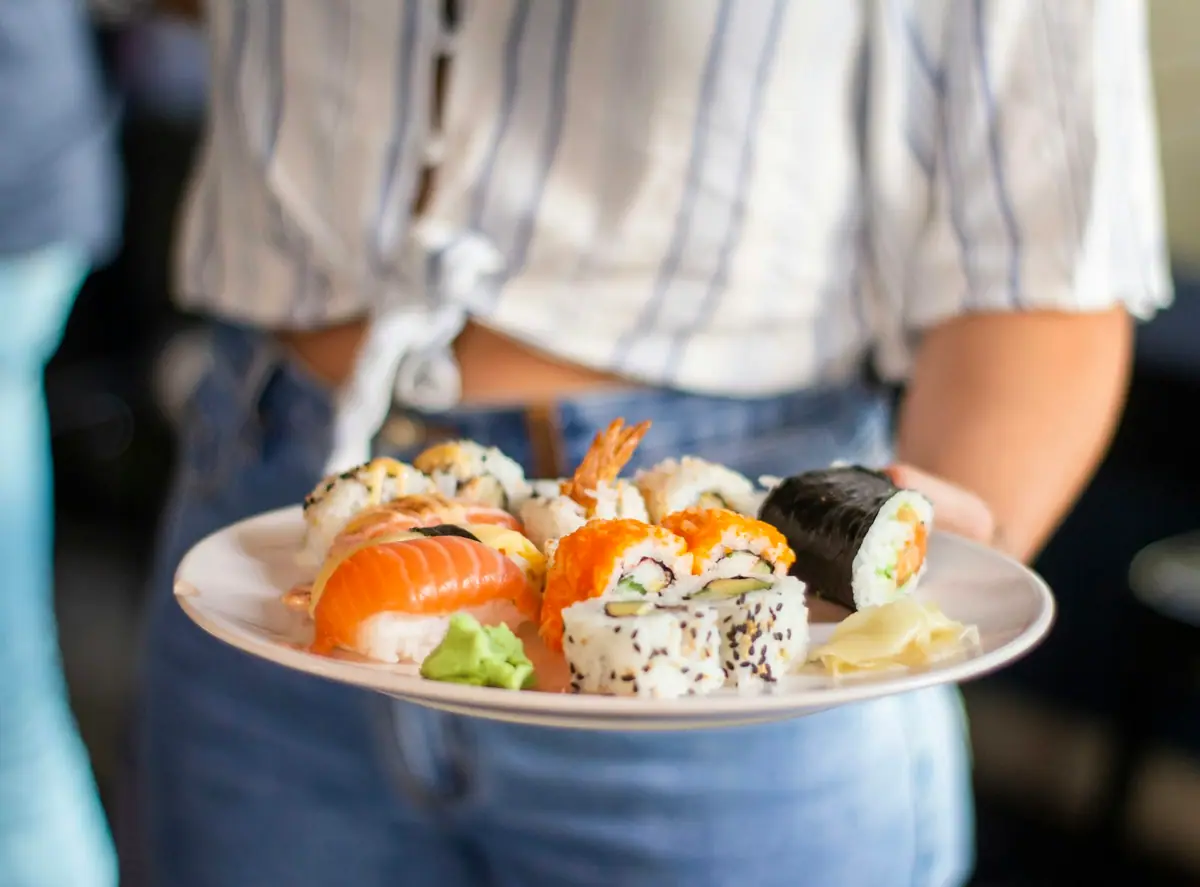
Knowing what to do at the entrance makes a first visit easier. Machines and payment procedures vary by restaurant, so these are general steps. Kura Sushi’s first-visit guide shows its actual check-in machines and how to read your seat number.
- Check in at the entrance. Check in your reservation, or enter or tell staff your party size if you do not have one. Follow the seat number on your ticket or the staff’s directions.
- Check the menu language and prices. Select a language on the touchscreen, then check the number of plates and pieces in your order. Follow the restaurant’s instructions for collecting food from the delivery lane and handling empty plates.
- Review your order history before paying. When you finish, use the checkout or call-staff button and check the amount. If the restaurant uses a bill or seating ticket, take it to the register.
Payment methods vary by branch. Check the Sushiro FAQ or the restaurant’s payment information, and do not assume all branches accept transport IC cards. The Tokyo payment guide covers the options in more detail.
For other nearby choices, you can search branches and menus on the official sites of Hama-Zushi and Uobei. Adjusting your order at a nearby restaurant can sometimes cost less overall than paying train fares to reach a distant branch with a lower starting price.
Disliking Raw Fish and Having a Food Allergy
If you dislike raw fish, look for fully cooked dishes or vegetable rolls on the menu. However, the word “aburi” (seared) alone does not tell you that the center is cooked through. Ask the restaurant if you need to know.
Food allergies require separate checks. Cooking egg or shrimp does not make it safe for everyone. Using the Consumer Affairs Agency’s guidance on restaurant and takeaway food, ask about the allergen itself, seasonings such as sauces and stock, and cross-contact from cooking equipment. Dishes other than sushi may also contain the ingredient you need to avoid.
Trying a Standing Sushi Bar
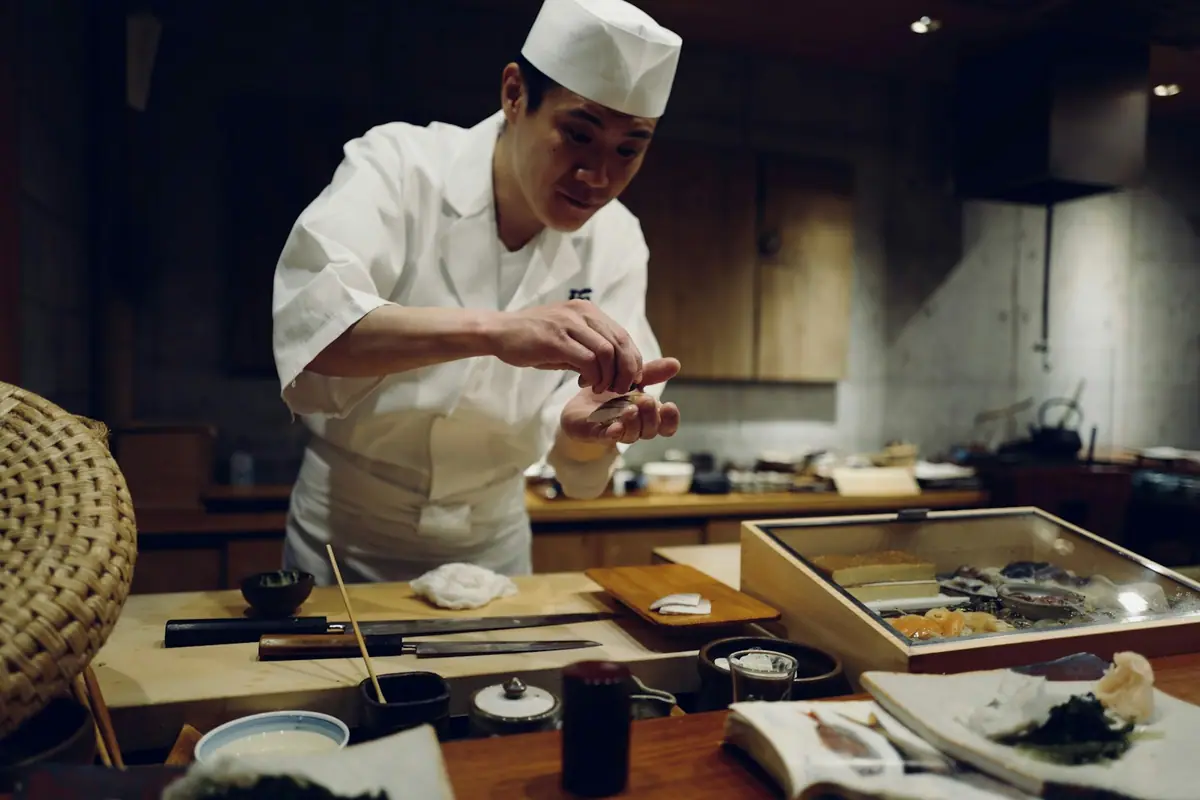
When I tried standing sushi at Tokyo Station, I ordered verbally and the chef made the sushi in front of me. The closer conversation stood out compared with ordering through a touchscreen at conveyor belt sushi.
One option at Tokyo Station is Hinatomaru Gransta Yaekita Shokudo. Its official page lists hours of 11:00–22:00. Current set prices and last-order times could not be confirmed on that page, so contact the restaurant before booking or visiting.
If ordering feels daunting, start by checking the menu price and number of pieces per order. You can also say, “My budget is ¥2,000. Can I order within that amount?” Before choosing omakase, ask what is included and what the total will be.
| What you want to say | Japanese phrase |
|---|---|
| Check the quantity and price | “これは何貫で、いくらですか?” (Kore wa nankan de, ikura desu ka? — How many pieces is this, and how much does it cost?) |
| Ask for no wasabi | “わさび抜きでお願いします” (Wasabi nuki de onegai shimasu — Without wasabi, please) |
| Pay the bill | “お会計をお願いします” (Okaikei o onegai shimasu — The bill, please) |
If you are visiting with children or someone who finds standing difficult, ask whether chairs are available. The label “standing sushi” alone does not establish whether the restaurant has seating everyone in your group can use.
Eating at Tsukiji Outer Market and Toyosu
Tsukiji Outer Market has sushi restaurants alongside shops selling ingredients and kitchenware. Its official visitor guide suggests a morning visit and includes an itinerary starting at 9:00. Opening days vary by shop, so check both the official calendar and your chosen restaurant’s own information.
On a past visit to Tsukiji, I ordered a plate each of shellfish and lean tuna for around ¥300–600. Those were past order prices. For today’s budget, check the menu outside, the contents of each set, and the number of pieces in individual orders.
The market’s guidance asks visitors to eat purchases inside the shop or in its designated space outside, rather than while walking. If the tableware and kitchen tools catch your interest, you could spend another day exploring Kappabashi’s kitchenware shops and craft experiences.
Toyosu Market also has restaurants open to the public. It is an option for combining market viewing with a meal. The viewing corridors and restaurants do not share the same opening hours, and you need to check market closure days too. Choose according to the restaurant you want to try and your itinerary, rather than treating Tsukiji as the only place for sushi and Toyosu as only an auction venue.
Taking Supermarket Sushi Home
If discounted packs are available, supermarket sushi can cost less than a restaurant meal. I once bought a sushi pack priced at around ¥700 at Life with a 40% discount. It tasted like supermarket sushi, but it was perfectly good for taking back to the hotel.
Discount times and percentages depend on the store and that day’s stock. Do not build your plans around assumptions such as “it gets cheaper at 17:00” or “it is always half-price before closing.” Check the label and decide whether to buy. Follow the storage instructions and use-by date, and avoid leaving it at room temperature for a long time after taking it home.
Convenience stores are another option for late-night shopping. Official product pages such as FamilyMart’s sushi list can help you look, but product listings do not establish availability or stock at a particular store.
When comparing costs, check for seating charges, otoshi, and service charges as well as the food price. For meals beyond sushi, see the Tokyo budget eating guide; for booking fees and cancellation terms, see the restaurant reservation guide. Once you set a budget for one meal, it is easier to choose what you want from the menu.
FAQ
Can I eat sushi in Tokyo for ¥1,500 or less?
How much are ten ¥150 plates at Sushiro Ueno?
Do I need a reservation for conveyor belt sushi in Tokyo?
What should I check when visiting with children?
Can I eat sushi at both Tsukiji and Toyosu?
Can I use Suica at conveyor belt sushi restaurants?
Does supermarket sushi always become half-price in the evening?
* This article was translated from the original Japanese with the help of machine translation. Some expressions may not read naturally.
Related Guides
How to Book Tokyo Restaurants in English
Compare booking fees and payment timing for TableCheck, Tabelog, OMAKASE, Pocket Concierge, and TABLEALL. Learn how to tell a request from a confirmed booking, change party size, cancel, check refunds, and contact a restaurant when a phone call in Japanese is difficult.
How to Eat in Tokyo on Less Than ¥2,000 a Day
Matsuya beef bowls for ¥480, Fujisoba noodles for ¥430, supermarket bento for ¥300 after evening markdowns. A practical guide to eating well in Tokyo on a budget, with chain names, prices, and ordering tips.
Tokyo Restaurant Extra Charges Explained
A small dish you didn't order. A service fee on your bill. This guide breaks down the four extra charges at Tokyo restaurants — otoshi, table charge, service fee, and consumption tax — with typical prices and cultural context.
Gifu Crafts in Tokyo: Knives, Pottery and Food Replicas
Shop for Seki knives and Mino ware, or make wax food replicas in Tokyo. Find example shops, workshop prices, booking steps and language rules.
Christmas in Tokyo 2026: Lights, Markets and Food
Tokyo Christmas 2026 by date and budget: lights, market entry fees, small cakes, dinner bookings, indoor stops, late hours and post-Christmas sights.