
Shinkansen Guide: Booking, Fares & How to Ride
How to book the shinkansen with SmartEX: Tokyo–Shin-Osaka Nozomi reserved fare ¥14,520 in the standard season, seat choices, JR Pass rules, and baggage tips.
tokyo.how uses affiliate links. If you buy through these links, we may earn a commission at no extra cost to you.
On this page
Which booking service you use depends on where you’re headed. English-language booking sites are available, but how you pass through the gates depends on the seller and ticket product. Alongside the fare and seat, check whether you need to collect a ticket before boarding.
First time? Here’s the short version: ① Choose a booking service for your destination (such as SmartEX for Osaka, Kyoto or Nagoya) → ② Select your travel date, train and seat → ③ Check the total price and change/cancellation terms before paying → ④ Follow the seller’s instructions to confirm whether you’ll use a boarding QR code, an IC card or a paper ticket.
Choosing a Booking Service
Pick the right service for your destination.
| Destination | Line | Booking Service |
|---|---|---|
| Osaka, Kyoto, Nagoya, Hiroshima, Hakata | Tokaido / Sanyo / Kyushu Shinkansen | SmartEX |
| Sendai, Shin-Aomori, Kanazawa, Niigata, Nagano | Tohoku / Hokuriku / Joetsu Shinkansen | Eki-net |
| Complex itineraries, JR Pass seat reservations | All lines | Midori-no-madoguchi (JR ticket office) |
SmartEX
SmartEX is the online booking service for the Tokaido, Sanyo, and Kyushu Shinkansen lines (Tokyo–Shin-Osaka–Hakata–Kagoshima-Chuo). There’s no annual fee, the interface is in English, and you can pay with a credit card issued outside Japan (Visa, Mastercard, JCB, Amex, Diners).
The regular SmartEX product opens for booking at 5:30 one year before travel. Bookings made more than one month ahead use a provisional timetable and have limited availability; the train, departure and arrival times, and seat number are confirmed from 8:00 one month before travel. You cannot select a seat position at this early stage. Advance-discount products have different booking windows.
The English-language SmartEX service offers a QR-Ticket for boarding: scan it at a QR-enabled shinkansen gate without collecting a paper ticket. This is different from the pickup code used to collect paper tickets. The official guidance also recommends printing your QR-Ticket in advance, as some devices may not scan at the gate.
Eki-net
Eki-net is JR East’s reservation site, covering the Tohoku, Akita, Yamagata, Hokkaido, Joetsu, and Hokuriku Shinkansen lines. Basic booking is available in English, but discounted tickets (Tokuda-ne fares) are only accessible via the Japanese-language interface and require a Japanese address and phone number.
Midori-no-madoguchi (JR Ticket Office)
This is the staffed ticket counter at major stations. It’s the most reliable option for complex itineraries or JR Pass seat reservations — most large stations have staff who speak English. Writing down your destination, date, time, and seat preference on a piece of paper before you arrive makes things go smoothly.
One thing to watch: JR companies run their counters separately. “Midori-no-madoguchi” is JR East’s counter, while JR Central — which operates the Tokaido Shinkansen — calls its windows “kippu-uriba” (JR ticket office). A paper ticket booked through SmartEX for the Tokaido, Sanyo, or Kyushu Shinkansen cannot be collected at a JR East counter (Midori-no-madoguchi). For counter help, go to a JR Central kippu-uriba instead — at Tokyo Station these are on the Yaesu side by the Tokaido Shinkansen gates, and Shinagawa Station has one too. Within the JR East area you can still collect a SmartEX ticket at reserved-seat ticket machines (in central Tokyo, Yokohama, Kawasaki, Odawara, and Atami), but not at the staffed counters. SmartEX also lets you board with a registered IC card, or with a QR-Ticket from the English-language service. These options do not require paper ticket collection.
How to Book on SmartEX
The online booking process moves step by step.
- Create an account — Register your email address and credit card on SmartEX’s sign-up page. No annual fee required.
- Enter your route and date — Select departure station, destination, and travel date and time.
- Choose your train and seat — Pick a train from the list and select your seat. You’ll choose your car class (standard or Green Car) and window or aisle preference here.
- Pay — Complete payment with the credit card you registered.
- Check your boarding method — The English-language SmartEX service offers boarding with a QR-Ticket, a registered IC card, or a paper ticket collected at the station. A boarding QR-Ticket and a code for collecting paper tickets serve different purposes.
With the regular SmartEX product, you can change a booking repeatedly without a change fee before entering the gates or collecting paper tickets, and before your booked train departs. Any fare difference is settled. The new train must be at least four minutes from departure, and limits apply to how far you can move the travel date; check the change conditions. Discount products such as EX Hayatoku 21 have different rules.
Fares and Travel Times by Route
The table below shows approximate standard-season fares for reserved seats in standard cars. Prices vary by season (off-peak, standard, peak, busiest peak) and purchase method, so confirm the final amount at the booking screen. Travel times reflect the fastest available service.
Tokaido Shinkansen (book via SmartEX)
| Route | Nozomi reserved seat, standard season | Fastest travel time |
|---|---|---|
| Tokyo → Nagoya | ¥11,100 | approx. 1h 34m |
| Tokyo → Kyoto | ¥13,970 | approx. 2h 10m |
| Tokyo → Shin-Osaka | ¥14,520 | fastest 2h 21m |
The table shows SmartEX ordinary reserved-seat fares for one adult, one way, in the standard season — see the SmartEX fare table for prices and JR Central for travel times. Standard tickets bought at stations have different prices and rules for connecting local trains. The fastest Tokyo–Shin-Osaka Nozomi takes 2h 21m, but services with more stops take around 2h 30m.
If you’re deciding where to book Tokyo–Kyoto, return to the SmartEX, Klook and Japan Experience comparison. The table shows SmartEX fares; the total charged by another seller may differ.
Using the EX Hayatoku 21 advance discount: Book from 10:00 one month before travel until 23:30, 21 days before travel. Tokyo–Shin-Osaka costs ¥12,980, ¥1,540 less than the standard-season SmartEX Nozomi reserved fare above. Seats are limited and blackout dates apply. You cannot change trains, and the ticket is valid only for the train booked. To change your plans, refund before departure, pay the refund fee, and buy a new ticket. If you miss the train, you need another ticket; the refund process and amount also differ after departure. See “If Things Don’t Go as Planned” below.
Tohoku and Hokuriku Shinkansen (book via Eki-net)
| Route | Train | Reserved seat, standard season | Fastest travel time |
|---|---|---|---|
| Tokyo → Sendai | Hayabusa | approx. ¥11,630 | approx. 1h 30m |
| Tokyo → Kanazawa | Kagayaki | approx. ¥14,380 | fastest 2h 24m |
The fares above are standard-season estimates — check current exact fares with JR East’s fare search tool. The Tokyo–Kanazawa Kagayaki reached its fastest time of 2h 24m with the March 14, 2026 timetable revision. Note that JR East revised the base fare portion of Tohoku and Hokuriku Shinkansen tickets on March 14, 2026 (limited express surcharges remain unchanged).
Train Types and Seat Selection
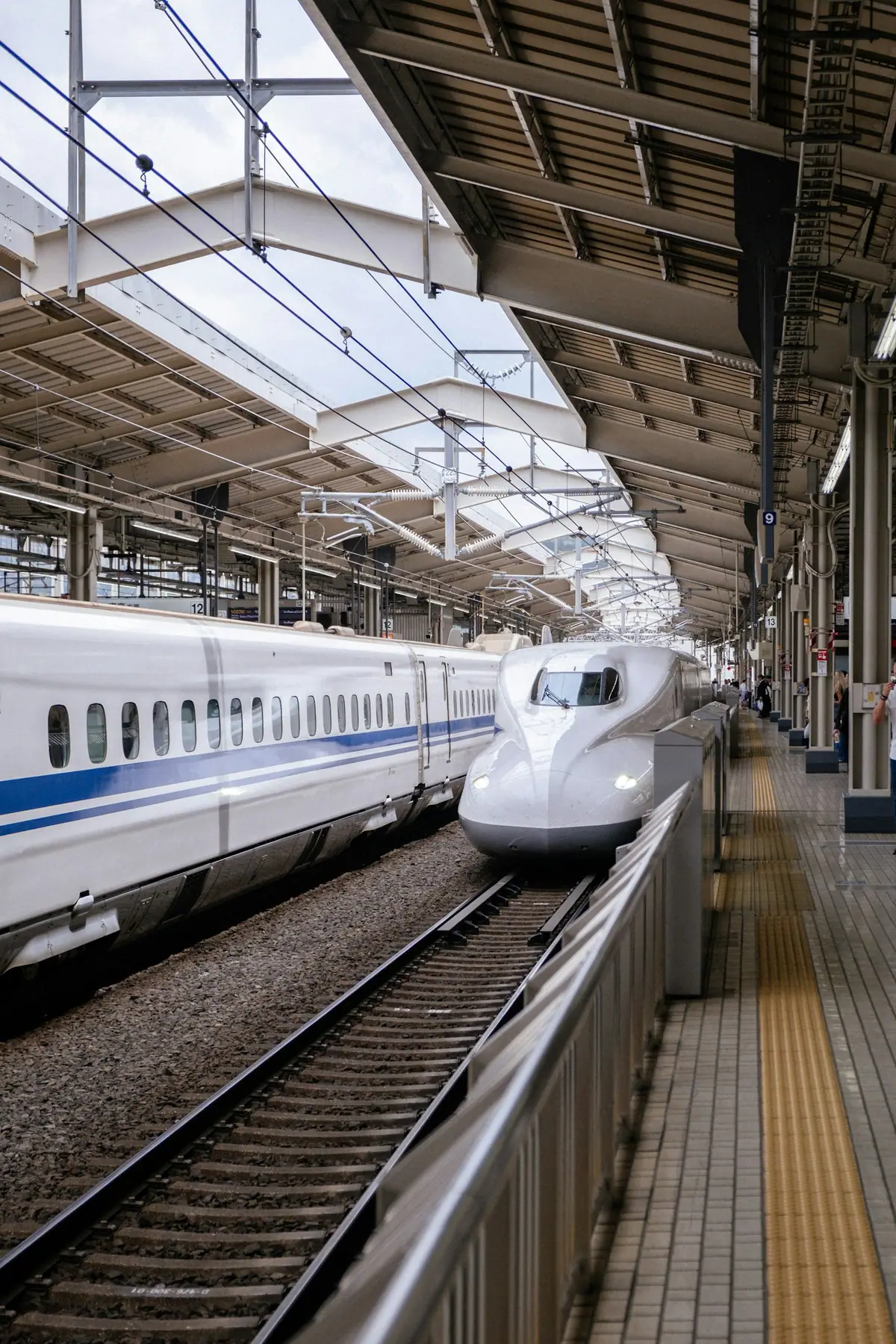
Even on the same route, the train type affects your travel time and whether your JR Pass is valid.
| Nozomi | Hikari | Kodama | |
|---|---|---|---|
| Speed | Fastest | Medium | Local (all stops) |
| Tokyo → Shin-Osaka | fastest approx. 2h 21m | approx. 2h 50m | approx. 4h |
| Frequency | 3–6 per hour | 2 per hour | 1–2 per hour |
| JR Pass | Special additional ticket required before boarding | Accepted | Accepted |
The JR Pass alone does not cover Nozomi or Mizuho, but you can ride them by purchasing the special additional ticket before boarding. Hikari, Sakura, and Kodama are covered at no extra charge when using a seat class included in your pass.
On the Tohoku and Hokuriku Shinkansen, the fastest trains — Hayabusa and Kagayaki — run fully reserved with no unreserved cars. The slower Yamabiko and Hakutaka offer unreserved cars. JR East shows cars 1–5 for its E5-series Yamabiko example and cars 1–4 for Hakutaka, but car assignments can vary by train. Check the information for your specific departure before joining a queue.
Seat Classes and How Pricing Works
There are three seat classes: unreserved (jiyuseki), reserved (shiteiseki), and Green Car.
| Class | Seat layout | Notes |
|---|---|---|
| Unreserved | 3+2 | Cheaper than a regular reserved fare. Seats are first-come, first-served; you may have to stand. An advance-discount reserved seat can cost less |
| Reserved | 3+2 | Guaranteed seat. Price varies by season |
| Green Car | 2+2 | More spacious and quieter. Roughly ¥5,000–¥6,000 more than a standard reserved seat |
The price difference depends on the train, season, and ticket product. With the regular SmartEX product, one adult traveling one way from Tokyo to Shin-Osaka in the standard season pays ¥13,870 for an unreserved seat or ¥14,520 for a Nozomi reserved seat, a ¥650 difference. However, EX Hayatoku 21 costs ¥12,980 for a reserved seat, so unreserved is not always cheapest. Compare change rules and availability too. Tokyo is the first stop on the Tokaido Shinkansen, but an unreserved seat is not guaranteed. Book reserved if you want a seat secured, and watch for periods when Nozomi runs with all seats reserved.
Reserved limited express surcharges shift by season: ¥200 less in off-peak periods, ¥200 more in peak periods, and ¥400 more during the busiest periods.
Seats with a View of Mt. Fuji
On westbound Tokaido Shinkansen services from Tokyo toward Shin-Osaka, Mt. Fuji appears on the right side of the train. In standard cars, seat E is the window seat on the Mt. Fuji side; in the Green Car, it’s seat D. The mountain is visible roughly between Shin-Fuji and Shizuoka — about 40–45 minutes out of Tokyo. Clear winter days offer the best views.
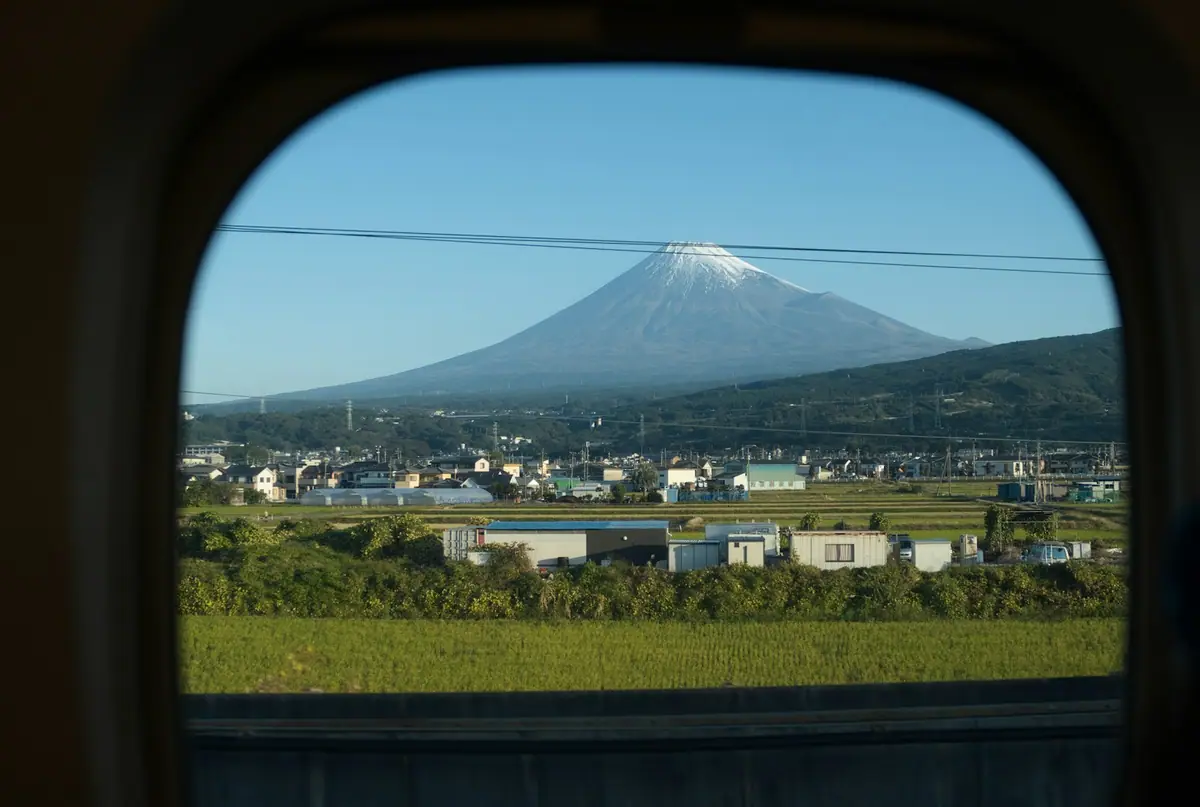
Standard cars have a 3+2 seat layout labeled A through E, with the Mt. Fuji-side window at seat E on the right.
3-seat side        2-seat side
Window A  B  C │aisle│ D  E Window ← Mt. Fuji (right side, direction of travel)
Using a JR Pass
JR Pass holders can use covered seat classes on Hikari, Sakura, and Kodama at no extra charge. To ride Nozomi or Mizuho, you need a valid pass and a special additional ticket purchased before boarding: ¥4,960 per adult one way from Tokyo to Kyoto or Shin-Osaka, or ¥4,180 from Tokyo to Nagoya. The additional ticket is required even for non-reserved seats.
To decide whether to buy a pass, compare the total for your full itinerary. An adult 7-day Ordinary Car pass costs ¥50,000 on the official sales website or ¥53,000 through overseas agents. Add conventional train fares and other separate costs to individual bookings; add Nozomi additional tickets and excluded fares to the pass price. The number of cities you visit alone does not determine the saving. The JR Pass itinerary comparison shows examples using the same number of days, trains, and seat classes.
Oversized Baggage Rules
On the Tokaido, Sanyo, and Kyushu Shinkansen, large suitcases require an advance reservation.
| Size (total of three dimensions) | Rule |
|---|---|
| 160 cm or under | No reservation needed. Can be stored in the overhead rack or at your feet |
| Over 160 cm up to 250 cm | Advance reservation required for the oversized baggage seat (free of charge) |
| Over 250 cm | Cannot be brought into the cabin |
Bringing an oversized bag without a reservation incurs a ¥1,000 (tax included) surcharge. Strollers, wheelchairs, and covered sports equipment are exempt from the reservation requirement.
From July 2025, unreserved luggage areas are being trialled in vestibule spaces, but bags with total dimensions exceeding 160 cm are not permitted there — the oversized baggage seat reservation is still required. This rule does not apply to the Tohoku, Hokuriku, or Joetsu Shinkansen.
Getting on the Train: Day-of Flow
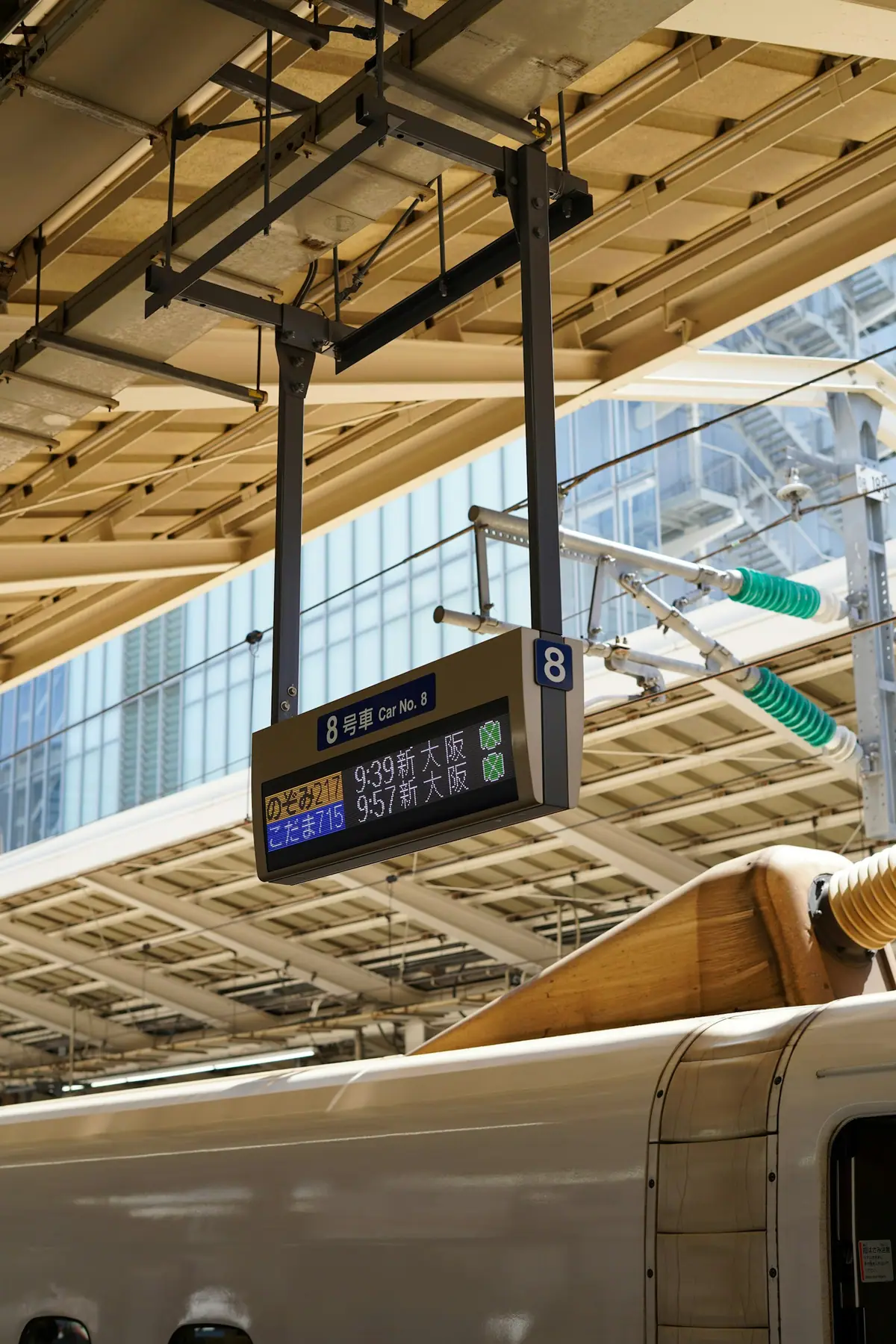
- Follow your seller’s boarding instructions at the gate — Scan a QR-Ticket from the English-language SmartEX service at a QR-enabled gate, or tap your registered IC card on the IC reader. With a QR-Ticket, collect the Seat Information slip issued by the gate and keep it with you on the train. If you booked with Japan Experience or another seller, follow the instructions for that product. A QR code for paper ticket collection must be exchanged at the specified location first. If you have separate base fare and limited express tickets, insert them together into the gate.
- Find your car on the platform — Car numbers are marked on the platform floor. Stand in the queue for your car number.
- Take your seat — Seat numbers are a number plus a letter, e.g. 5A.
- Settle in for the ride — Food and drinks are allowed on board. For ekiben (boxed station meals / 駅弁), Tokyo Station’s Ekiben-ya Matsuri in the Gransta Tokyo concourse (1F, ground floor, inside the fare gates) stocks over 150 varieties and is open daily from 5:30 AM to 10:00 PM. Make phone calls in the vestibule between cars. Free Wi-Fi is available throughout the journey.
Shinkansen vs. Overnight Bus vs. Local Train
The Tokyo–Osaka corridor has more transport options than almost anywhere else in Japan. The right choice depends on whether you’re prioritizing time or money.
| Option | Approximate one-way fare | Travel time | Notes |
|---|---|---|---|
| Shinkansen (SmartEX Nozomi reserved, standard season) | ¥14,520 | fastest 2h 21m | Fast, frequent |
| Overnight / highway bus | 4-seat row from approx. ¥3,300 / 3-seat row from approx. ¥5,000 | approx. 8–9h | Inexpensive; you save on a night’s accommodation. Prices vary by date and when you book |
| Seishun 18 Kippu (local trains) | 5-day pass ¥12,050 (approx. ¥2,410/day) | approx. 9h | Local and rapid trains only — no shinkansen or limited express. Available only in spring, summer, and winter windows |
Overnight buses cover the distance while you sleep and eliminate a night’s hotel cost, though seats are tighter than a shinkansen. Booking is available online with credit card payment. The Seishun 18 Kippu is the low-cost option, but requires multiple transfers and is only available during specific periods. These are worth considering if the schedule allows and you want to keep costs down.
Weekend Trips by Shinkansen from Tokyo
Several destinations within one to two hours of Tokyo make for easy weekend escapes. Travel times below are for the fastest available service.
- Atami — Fastest approx. 40 minutes by Hikari (Kodama takes approx. 45–50 minutes). A seaside hot spring town with a retro shopping street and cafés near the station. Works well as a day trip. Plum blossoms in late winter and early spring, beaches and fireworks in summer.
- Karuizawa — Approx. 1 hour by Hakutaka or Asama. A forested highland resort — walking along the old Karuizawa Ginza street or around Kumobaike Pond is enough to feel the cooler air. Popular for summer escapes and autumn foliage.
- Nasu (Nasushiobara / Nasu Kogen) — Approx. 1h 04m by Nasuno. A highland resort scattered with farms, art museums, and hot springs, with day-trip onsen facilities available. Pleasantly cool in summer.
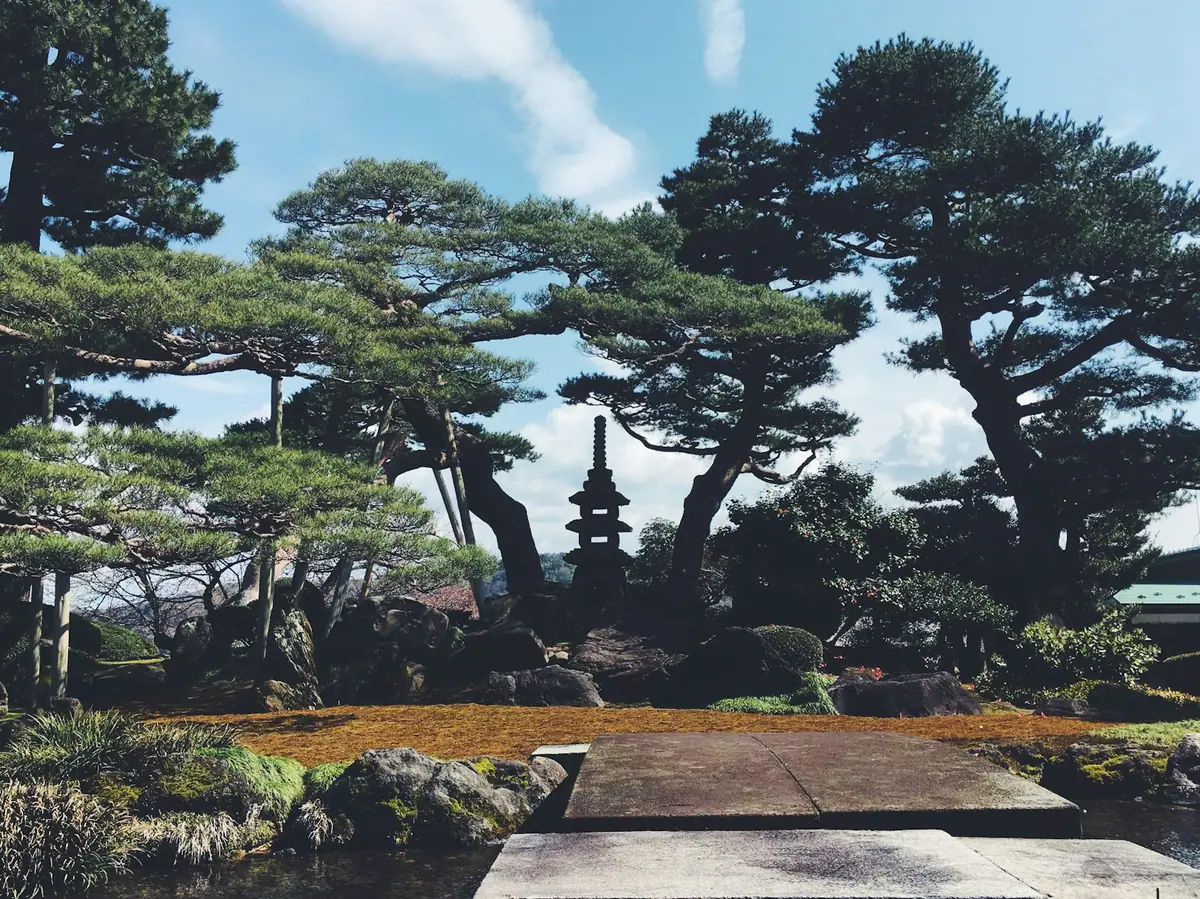
- Kanazawa — Fastest 2h 24m by Kagayaki. Home to Kenrokuen, Omicho Market, and well-preserved samurai districts — it’s a city that rewards an overnight stay. In winter, Kenrokuen under snow is a draw in its own right.
If Things Don’t Go as Planned
No unreserved seats available: During busy periods you may end up standing in the aisle. Tokyo is the first stop on the Tokaido Shinkansen, so arriving early gives you a reasonable chance of getting an unreserved seat — but if you want to be sure, book reserved.
Card payment isn’t going through on SmartEX: If you’re unsure of the payment result, check your reservations before buying again. You can also try contacting your card issuer or the seller if something is unclear. Once you’ve confirmed that no booking was made, you could compare other sellers’ prices and conditions, or buy at a station ticket office if you’re already in Japan.
Missed your train: With the regular SmartEX product, you can use an ordinary unreserved car on a later train over the same route that day. Fully reserved trains and other discounted products have different rules, so show your ticket to station staff and check. EX Hayatoku 21 does not allow travel on a later train, even in an unreserved car; you need to buy another ticket.
EX Hayatoku 21 refund rules change after departure. Before entering the gates or collecting paper tickets, you can request a refund before departure for ¥320 per person. After departure, you cannot process it yourself: an unused booking is refunded automatically on or after the following day, less a specified amount for the route. If you have collected paper tickets, take them and the payment credit card to a major JR Central, JR West, or JR Kyushu station counter no later than the travel date. Train cancellations and delays have separate rules; check the official guidance.
Related Articles
- JR Pass Guide — Whether the JR Pass makes financial sense
- Navigating Tokyo’s Stations — Getting to the shinkansen platforms at Tokyo Station
- Suica Card Guide — Transferring to local trains after your shinkansen journey
Sources:
- SmartEX “Getting Started” https://smart-ex.jp/en/beginner/
- SmartEX “How to Board” https://smart-ex.jp/en/entraining/
- SmartEX “Where to Pick Up Tickets” https://smart-ex.jp/en/entraining/ticket/place/
- JR Central “Tokyo Station Ticket Office Guide” https://railway.jr-central.co.jp/station-guide/shinkansen/tokyo/index.html
- SmartEX Fare Table https://smart-ex.jp/product/plan/service/pdf/service_fares_reserved.pdf
- EX Hayatoku 21 Fare Table https://expy.jp/product/hayatoku21/pdf/hayatoku21_fares_from_260313.pdf
- EX Hayatoku 21 Product Information https://expy.jp/product/hayatoku21/
- JR Central “Tokyo–Shin-Osaka Travel Time” (EN) https://global.jr-central.co.jp/en/goldenroute/shinkansen/
- JR Central “Seasonal Reserved Seat Surcharges” https://railway.jr-central.co.jp/ticket-rule/rule30.html
- JR Central “Unreserved Seat Surcharges” https://railway.jr-central.co.jp/ticket-rule/rule31.html
- JR Central “Oversized Baggage” https://railway.jr-central.co.jp/oversized-baggage/
- JR Central “Oversized Baggage” (EN) https://global.jr-central.co.jp/en/info/oversized-baggage/
- JR Central “Trial Unreserved Luggage Area Announcement” https://jr-central.co.jp/news/release/_pdf/000044215.pdf
- JR Central “All Nozomi Seats Reserved” (EN) https://global.jr-central.co.jp/en/nozomi/
- JR Central “Seat Types” (EN) https://global.jr-central.co.jp/en/tickets/type/types.html
- JR Central “Free Wi-Fi” (EN) https://global.jr-central.co.jp/en/info/wireless/
- JR East “E5 Series (Hayabusa/Yamabiko)” https://www.jreast.co.jp/train/shinkan/e5.html
- JR East “E7 Series (Kagayaki/Hakutaka)” https://www.jreast.co.jp/train/shinkan/e7.html
- JR East “2026 Fare Revision” https://www.jreast.co.jp/en/2026unchin-kaitei/
- JR East “Revised Fare Search” https://unchinkensaku.jre-maas.com/
- JR West “Hokuriku Area Timetable Revision” https://www.westjr.co.jp/press/article/items/251212_00_press_daiyakaisei_hokurikuarea.pdf
- Eki-net https://www.eki-net.com/en/
- Japan Rail Pass “Nozomi/Mizuho Special Ticket” https://japanrailpass.net/en/use/special-ticket/
- Japan Rail Pass “Covered Routes” https://japanrailpass.net/en/about_jrp/route/
- Japan Rail Pass “Prices” https://japanrailpass.net/en/purchase/price/
- Nishi-Nippon JR Bus “Tokyo–Osaka Fare Table” https://timetable.nishinihonjrbus.co.jp/faretable/1-2-N.html
- JR Group “Seishun 18 Kippu” https://www.jreast.co.jp/press/2025/20260205_ho02.pdf
- Gransta Tokyo “Ekiben-ya Matsuri” https://www.gransta.jp/mall/gransta_tokyo/ekibenyamatsuri/
- Atami Tourism Association https://www.ataminews.gr.jp/
- Karuizawa Tourism Association https://karuizawa-kankokyokai.jp/en/
- Nasu Tourism Association https://www.nasukogen.org/
- Kenrokuen https://kenrokuen.or.jp/
- Kanazawa Tourism Association https://www.kanazawa-kankoukyoukai.or.jp/
* This article was translated from the original Japanese with the help of machine translation. Some expressions may not read naturally.
Related Guides
Is the JR Pass Worth It? October 2026 Prices and Itineraries
A 7-day Ordinary JR Pass costs ¥50,000 direct or ¥53,000 through overseas agents. Compare six itineraries, coverage, regional passes, and pickup requirements.
Golden Week 2026 in Tokyo: Why the City Empties Out (and How to Use It)
Golden Week 2026 runs April 29 to May 6. Tokyo's business districts can be quieter while tourist spots fill up and banks and offices close for days. Nozomi reserved-only policy, crowd patterns, and what stays open.
Narita & Haneda to Central Tokyo: 2026 Airport Access Guide
Compare trains, buses and taxis from Narita and Haneda to Tokyo with 2026 fares. Find routes to your hotel, late-night options and tips for using Suica.
What to Book in Advance in Tokyo — teamLab, Ghibli & Shibuya Sky (2026)
teamLab, Ghibli Museum, and Shibuya Sky sell out weeks ahead. On-sale dates, prices, booking steps, and free backup spots when tickets are gone.
Tokyo Etiquette — Manners for Trains, Restaurants, Shrines & Onsen
No calls on trains, no swimsuits in onsen, no tipping. A scene-by-scene guide to Tokyo manners for trains, dining, shrines, and hot springs.