
Nikko Day Trip from Tokyo: Temples or Lake Chuzenji?
Plan a Nikko day trip from Asakusa: choose Toshogu or Lake Chuzenji, compare train and pass costs, and leave time for the return bus and train.
tokyo.how uses affiliate links. If you buy through these links, we may earn a commission at no extra cost to you.
On this page
Look up beneath the eaves at Toshogu Shrine (東照宮) and you can search for carvings such as the Three Wise Monkeys and the Sleeping Cat. Walk the cedar-lined approaches, stop for lunch, then visit another temple hall. The shrines and temples alone can fill a day trip from Tokyo to Nikko (日光).
For mountain scenery, Lake Chuzenji (中禅寺湖) and Kegon Falls (華厳滝) are another option. They require a further bus ride uphill from the station, so decide on an early departure and a midday bus back down first. Both itineraries below go from Asakusa (浅草) to Nikko, allow time for sightseeing, and return to Asakusa the same day. Add travel time between your accommodation and Asakusa separately.
Choose between the temples and a day including the lake
For a first visit, a day centered on Toshogu is easier to arrange and to shorten if your children get tired. The lake itinerary suits travelers who want scenery and are comfortable with an early start and longer bus journeys.
| Itinerary | What to enjoy in Nikko | Example departure and return at Asakusa (outbound / inbound) | Transport and admission (breakdown) |
|---|---|---|---|
| Focus on shrines and temples | Toshogu, lunch, and Rinnoji if time allows | Depart 9:30 / return 18:15 | ¥8,140 |
| Include the lake and waterfall | Lake Chuzenji, Kegon Falls, and Toshogu if there are no delays | Depart 6:30 / return 18:15 | ¥10,600 |
These examples use the daily Revaty Kegon No. 1 or No. 13 outbound and No. 42 back. The bus itineraries rely on the timetable valid April 1–November 30, 2026. For other dates, replan using Tobu Bus’s Nikko area information.
The budgets are for one adult in the normal fare period, using individual rail tickets plus the bus fares and admission listed below. The temple itinerary includes Toshogu only; the lake itinerary includes Toshogu and the Kegon Falls elevator. Meals, transport and accommodation on the Tokyo side, and Rinnoji are extra. For a lower budget, the temple itinerary without limited express trains costs ¥4,840, with a journey of about three hours each way in the example below.
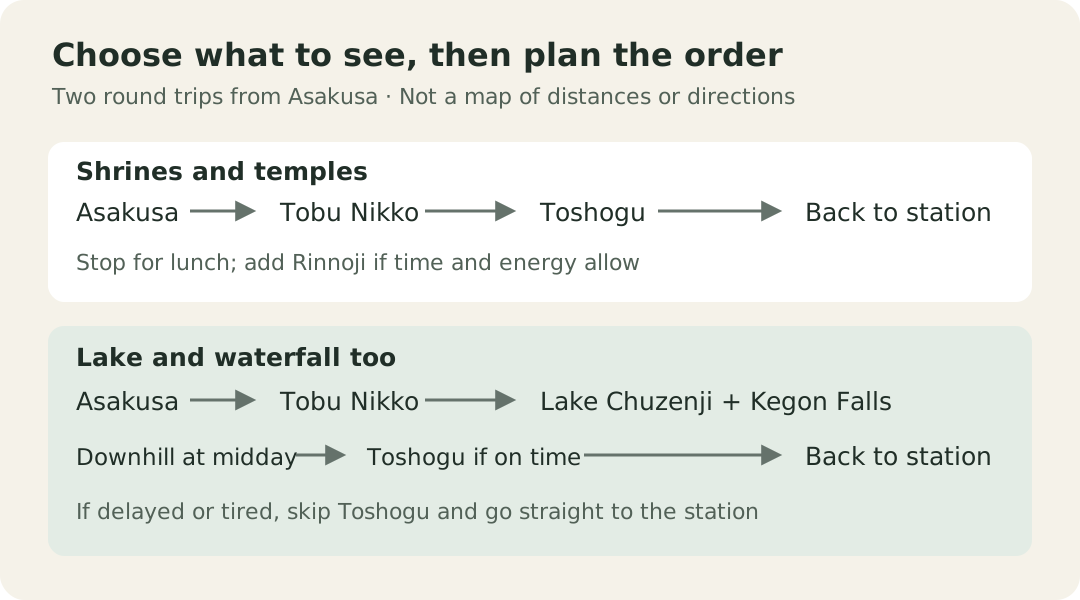
The diagram shows the order of visits, not distances or compass directions.
Choose your outward and return trains before leaving Asakusa
A basic-fare ticket pays for travel over the route; a limited express ticket pays the extra charge for a reserved seat on a limited express train. Tobu limited express trains require both, so a limited express ticket alone is not enough. Even if World Heritage Area or All Area covers your basic fare, you still need a separate limited express ticket.
- Check the route from your accommodation to Tobu Asakusa Station. For the lake itinerary, you need an early enough connecting service to catch the morning train. If transferring from the subway, find the Tobu Railway side on the Asakusa Station map.
- Arrange both limited express tickets first. The return is Revaty Kegon No. 42, leaving Tobu Nikko (東武日光) at 16:20 and reaching Asakusa at 18:15. Outbound, use No. 13 at 9:30–11:22 for the temples, or No. 1 at 6:30–8:25 for the lake. Limited express tickets go on sale at 9:00 one month before travel.
- Choose basic-fare tickets or a pass whose eligibility and collection rules you understand. If unsure, you can budget for individual tickets. Do not rely on exchanging a pass early that morning: have the collected pass, or a digital ticket ready to activate, before departure.
Travelers living outside Japan can find purchase options for the Nikko and Kinugawa area through Tobu’s English sales information. To pay cash, you can also buy both limited express tickets at a station counter such as Tobu Asakusa. If taking the 6:30 train, aim to have both tickets ready by the previous day.
TOBU CHIKE! (トブチケ!) allows limited express purchases without a member account. However, the service is intended for Japan residents, use by people living overseas is not guaranteed, and cards must have been issued in Japan. Its instructions also say not to use debit or prepaid cards.
Aim to reach Tobu Asakusa Station 30 minutes before departure and buy a separate basic-fare ticket to Tobu Nikko from a station ticket machine. That basic-fare ticket is the one you put into the ticket gate. At the Revaty Kegon limited express boarding area by platforms 3 and 4, check the destination, car and seat numbers against your limited express ticket.
If using TOBU CHIKE!, make sure you can open the limited express ticket display from your purchase email. With other sellers, follow the presentation instructions on your ticket.
At the counter, you can show this: 「○月○日、浅草から東武日光へ。行きはリバティけごん○号、帰りは42号。乗車券と特急券をお願いします」—○-gatsu ○-nichi, Asakusa kara Tobu Nikko e. Iki wa Ribatī Kegon ○-gō, kaeri wa yonjūni-gō. Jōshaken to tokkyūken o onegai shimasu (“On [month/day], from Asakusa to Tobu Nikko. Revaty Kegon No. [number] outbound and No. 42 back. Basic-fare and limited express tickets, please”). If you already have the limited express tickets, say 「乗車券だけ」—Jōshaken dake (“Basic-fare tickets only”). See the station navigation guide for help finding your way around.
Explore the shrines and temples around Toshogu
This example assumes you arrange both limited express tickets by the previous day, then pay separately for the basic rail fares and the bus round trip to Shinkyo (神橋).
| Stage | Journey and time | When to shorten the plan |
|---|---|---|
| Outbound | Asakusa 9:30 → Tobu Nikko 11:22. Route C from stand 2C at 11:35 → Shinkyo stop 7 at 11:39 | If you miss the bus, take the next one and skip Rinnoji |
| Shrines and temples | Walk 15 minutes from Shinkyo to Toshogu, visit the shrine and have lunch. Aim to leave Toshogu around 15:00 | Skip the extra temple if you are tired |
| Return | Station-bound bus from Shinkyo at 15:29 → Tobu Nikko 15:36. No. 42 at 16:20 → Asakusa 18:15 | If a delay looks likely, change your limited express train |
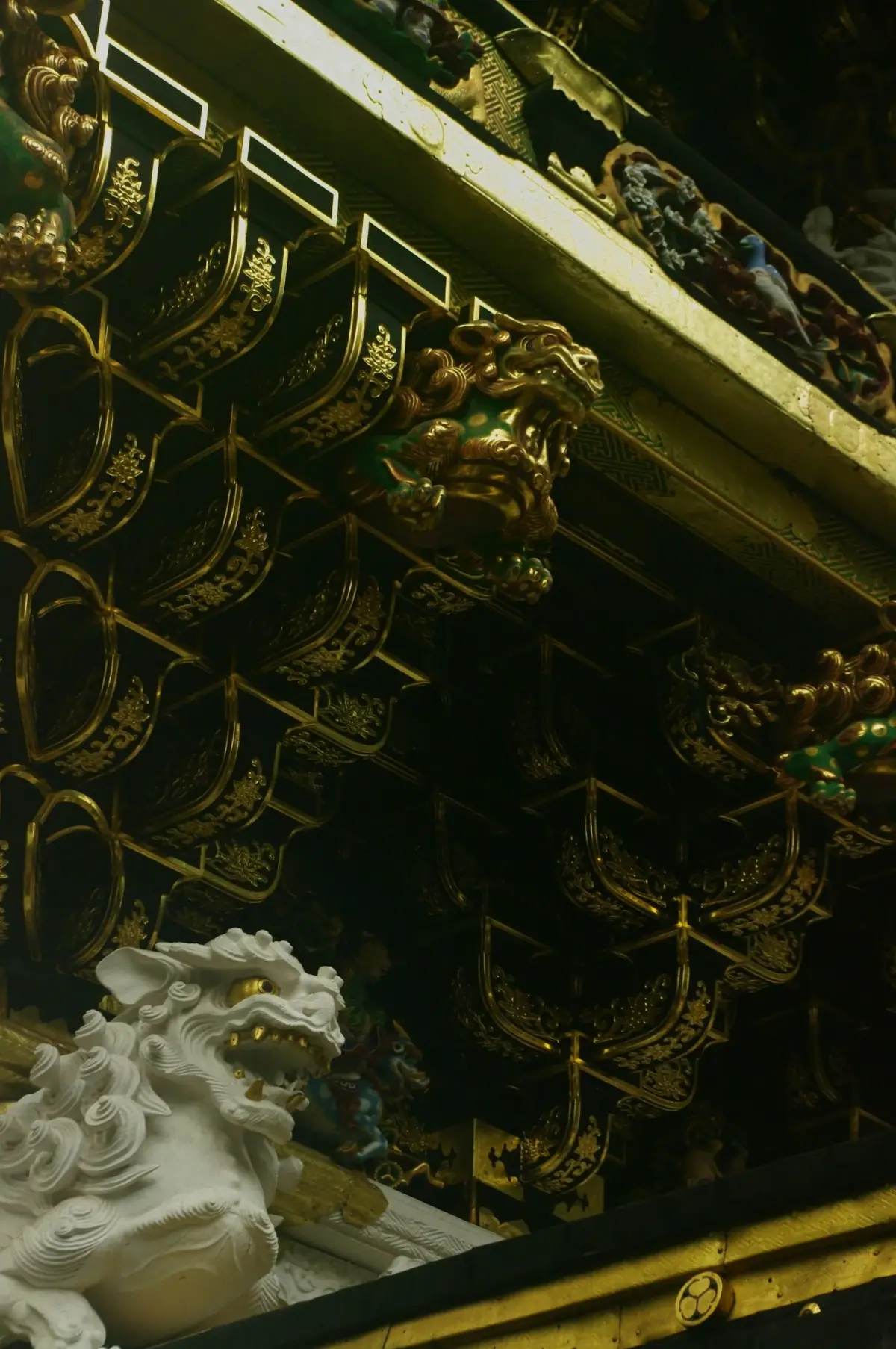
There is plenty to see beyond Toshogu’s gates. Follow the Shinkyusha sacred stable (神厩舎), home to the Three Wise Monkeys, Yomeimon Gate (陽明門), and Nemurineko, the Sleeping Cat (眠り猫), looking for carved animals and people along the way. Leave room to stop in front of details that catch your eye instead of rushing through the grounds.
The alternative World Heritage sightseeing bus, route W, takes detours on certain dates and skips stops including Omotesando (表参道). This example uses a regular route to Shinkyo, followed by a walk to the shrines and temples. The same area diagram marks the stairs, so a temples-only day is easier to adjust if walking fatigue is a concern.
Toshogu admission is ¥1,600 for adults and high school students, and ¥550 for elementary and junior high school students. Opening hours are 9:00–17:00 from April to October and 9:00–16:00 from November to March, with admission closing 30 minutes before closing time.
After taking your time with Toshogu’s carvings, stop for lunch. If your children are tired, it is fine to skip the next temple.
For one more stop, consider Sanbutsudo Hall (三仏堂) at Rinnoji Temple (輪王寺). Admission to Sanbutsudo alone costs ¥400 for adults and ¥200 for elementary and junior high school students. The Toshogu admission ticket and Rinnoji ticket are separate, so you can decide after lunch based on your energy and the return bus time.
Return on a bus from Shinkyo toward the Nikko stations. Before walking up to the shrines and temples, check the destination signs to locate the return stop.
Visit Lake Chuzenji and Kegon Falls in the morning
This example uses round-trip limited express and basic-fare tickets, plus a Chuzenji Onsen Free Pass bought before heading up to the lake. If keeping to your return time matters most, choose the temples-only day when traffic congestion is expected, such as during autumn foliage season.
| Stage | Journey and time | When to shorten the plan |
|---|---|---|
| Outbound | Asakusa 6:30 → Tobu Nikko 8:25. Route YK from stand 2A at 8:45 → Chuzenji Onsen 9:30 | If you cannot board the next departure at 9:05 either, skip the lake |
| Midday | After the lakeshore and Kegon Falls, take route YK from stand 26B at 12:40 → Nishisando Iriguchi stop 9 at 13:07, then walk to Toshogu | If still at the lake at 13:30, go straight to the station without visiting the shrines and temples |
| Return | Station-bound bus from Shinkyo at 15:29 → Tobu Nikko 15:36. No. 42 at 16:20 → Asakusa 18:15 | If queues or traffic cause delays, change the limited express too |
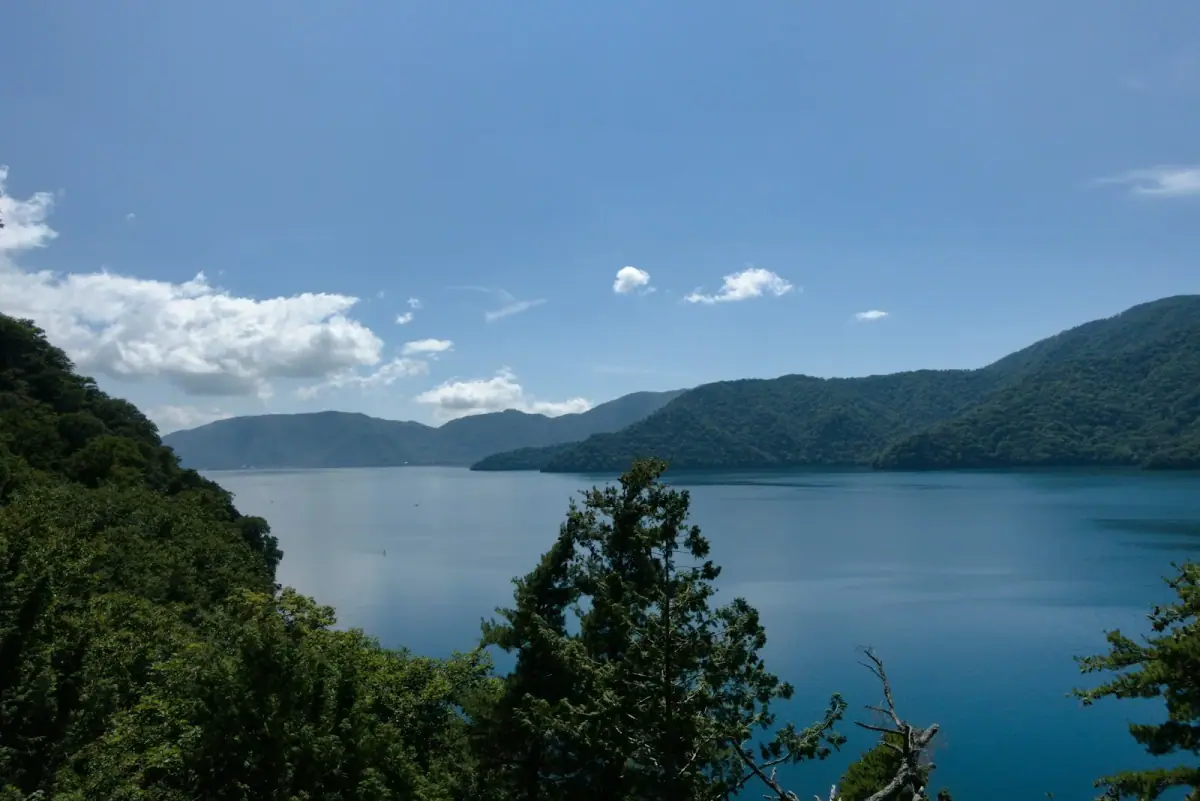
For a day enjoying the lake’s expanse and the waterfall’s drop, head into the mountains before visiting the temples. The photograph shows the lake from above; this itinerary takes you along the lakeshore.
Take the bus uphill from the station
The summer timetable lists route YK from Tobu Nikko stand 2A at 8:45, arriving at Chuzenji Onsen (中禅寺温泉) at 9:30. That leaves 20 minutes to transfer from the train. Queues at the ticket counter or toilets may mean you miss the connection.
You can buy a paper Chuzenji Onsen Free Pass on arrival at the Tobu Nikko Station Tourist Center, open 8:20–16:20. Keep the next YK departure, 9:05–9:50, as an alternative if there is a queue. Digital tickets can be bought ahead of time; activation and boarding instructions vary by seller.
To avoid squeezing both the lake and Toshogu into the afternoon, use this cutoff: if you cannot board the 9:05 bus either, switch to the shrines and temples only.
See Kegon Falls, then walk to the lake
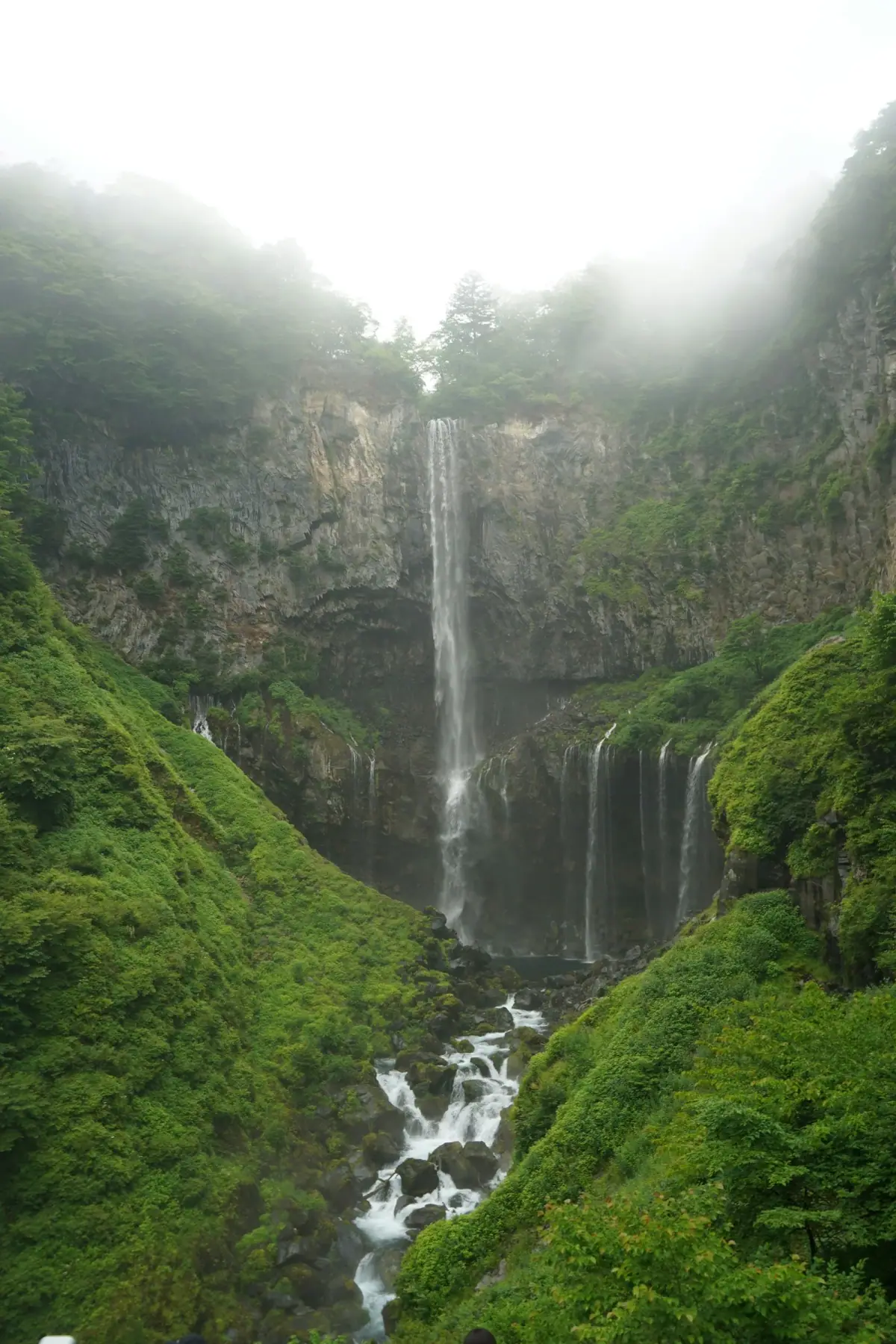
Kegon Falls is about a five-minute walk from the Chuzenji Onsen bus stop. There is a free upper viewing platform; to view the falls from below, use the paid elevator. Round-trip elevator tickets cost ¥600 for adults and ¥400 for elementary school students; preschool children are free. Hours are 8:00–17:00 from March to November and 9:00–16:30 from December to February, with last admission 20 minutes before closing.
After the waterfall, walk to the lakeshore and have lunch in the area. Adding a sightseeing boat or Oku-Nikko (奥日光) would change the return plan, so neither is included here. The Akechidaira Ropeway (明智平ロープウェイ) is closed for equipment renewal and is scheduled to reopen in September 2027.
Take a midday bus down to the shrines and temples
For the return downhill, take route YK from Chuzenji Onsen stand 26B at 12:40, reaching Nishisando Iriguchi at 13:07 and Tobu Nikko at 13:16. The boarding location changed on September 24, 2026, so follow the local signs for 26B.
If the bus is on time, get off at Nishisando Iriguchi (西参道入口), stop 9, and walk 10 minutes to Toshogu. Nishisando Iriguchi, stop 9, and the similarly named Nishisando Chaya (西参道茶屋), stop 84, are different stops: checking the number before getting off helps avoid a mistake. After sightseeing, use the same station-bound Shinkyo stop as in the temples-only itinerary.
On October 19 and 26, 2026, a trial offers priority bus boarding through an online registration system during some periods for buses from Chuzenji Onsen toward the stations. If visiting on either day, read the notice for the applicable times and queue arrangements as well as the regular boarding information.
During autumn foliage season and other busy periods, road congestion can cause major bus delays. The fallback for this itinerary is to skip Toshogu and go straight to the station if you are still at the lake after 13:30. A long queue is also a reason to prioritize getting downhill over adding an afternoon visit.
Compare the total cost of individual tickets and passes
Looking only at a pass price makes it easy to miss the separate limited express supplement and admission fees. These comparisons are for one adult traveling between Asakusa and Tobu Nikko in a standard Revaty seat during the normal fare period. Meals, transport and accommodation on the Tokyo side, and additional attractions are excluded.
In the normal fare period, the one-way paper basic fare of ¥1,400 plus the ¥1,650 limited express supplement comes to ¥3,050. Round trip, that is ¥2,800 in basic fares plus ¥3,300 in limited express supplements. Spacia X and special seat types are outside this comparison. Add ¥400 in total if both journeys fall in the busy fare period.
Costs for a day at Toshogu
These options all cover a bus round trip between the station and Shinkyo, plus Toshogu admission. The comparison uses the ¥220 one-way bus fare to Shinkyo, the ¥600 one-day World Heritage sightseeing bus pass, and the ¥3,000 two-day World Heritage Area pass.
| Ticket choice | Basic fare and buses (rail / bus) | Separate round-trip limited express supplements | Toshogu | Total |
|---|---|---|---|---|
| Pay separately for trains and buses | ¥2,800 + ¥440 | ¥3,300 | ¥1,600 | ¥8,140 |
| Rail tickets + one-day bus pass | ¥2,800 + ¥600 | ¥3,300 | ¥1,600 | ¥8,300 |
| World Heritage Area | ¥3,000 | ¥3,300 | ¥1,600 | ¥7,900 |
For just the round trip to Shinkyo, two ¥220 single fares total ¥440, which is ¥160 less than the ¥600 day pass. If you plan more bus rides around the shrines and temples, compare the pass coverage with the individual fares.
World Heritage Area includes the round trip from the Asakusa end of the route and rail and bus travel within its designated area. It excludes buses toward Lake Chuzenji, limited express supplements, and shrine and temple admission. For an eligible traveler, the total is ¥240 less than the ¥8,140 individual-ticket option. Alongside the price, check whether the collection arrangements fit an early train.
Besides Tobu’s official sales options, Japan Experience also sells the pass. The table compares Tobu’s official prices. Check your chosen seller’s billed amount, including currency conversion and fees, as well as purchase eligibility and exchange conditions.
Costs for the lake and Toshogu
The Chuzenji Onsen Free Pass costs ¥2,300 for two days. It also covers the World Heritage sightseeing bus area, so you do not need to buy the temple-area day pass as well. NIKKO PASS All Area costs ¥8,000 for four days.
| Ticket choice | Basic fare and buses (rail / bus pass) | Separate round-trip limited express supplements | Toshogu + Kegon Falls elevator | Total |
|---|---|---|---|---|
| Rail tickets + Chuzenji Onsen Free Pass | ¥2,800 + ¥2,300 | ¥3,300 | ¥2,200 | ¥10,600 |
| All Area | ¥8,000 | ¥3,300 | ¥2,200 | ¥13,500 |
For the travel covered by this day trip, separate rail tickets plus the bus pass cost less. The comparison changes if you visit other places during All Area’s validity period.
The Japanese-language NIKKO MaaS service also lists a Digital Chuzenji–Kegon Falls Free Pass from Asakusa for ¥4,500, with limited express supplements extra. You need to confirm whether it covers every part of this itinerary. If you are unsure whether the conditions fit, budget for separate rail tickets and the Chuzenji Onsen Free Pass.
Separate the rules for residents and children
The English NIKKO PASS FAQ limits eligibility to non-Japanese nationals visiting Japan and Japanese nationals accompanying them, and requires a passport when purchasing. It does not explicitly state whether Japan residents qualify. If your eligibility is unclear, the individual-ticket temple itinerary provides a ¥8,140 budget. The Digital Nikko World Heritage Free Pass sold for the domestic market is a different product.
For elementary school children, halve the paper basic fare and round up to the next ¥10. Apply the same half-price calculation and ¥10 rounding to the limited express supplement. In the normal fare period, ¥700 plus ¥830 each way comes to ¥3,060 round trip.
A five-year-old using their own reserved seat also needs both a child basic-fare ticket and a child limited express ticket. Up to two young children per accompanying adult or child ticket holder travel free when they do not use reserved seats and the accompanying passenger holds a non-group ticket.
Child bus passes cost ¥300 for the World Heritage sightseeing pass and ¥1,150 for the Chuzenji Onsen Free Pass. On regular buses, up to two young children ride free per accompanying fare-paying adult or child. Attractions use different age bands: Toshogu charges ¥550 for elementary and junior high school students, while the Kegon Falls elevator charges ¥400 for elementary school students and is free for preschool children.
For example, two adults with an eight-year-old and a five-year-old, all with their own limited express seats, pay ¥18,320 for round-trip rail travel at the normal-period fares above. On the temple itinerary, paying individual bus fares costs ¥1,100 for the Shinkyo round trip, using the ¥220 adult fare and half-price child fare and accompanied-child exemption. Add ¥3,750 for Toshogu admission for the adults and eight-year-old to reach ¥23,170. This ¥23,170 is a subtotal excluding the five-year-old’s Toshogu admission, meals, and travel from your accommodation. The official admission page does not list a preschool rate, so whether that admission is free needs to be confirmed.
Save money by skipping the limited express
Ordinary trains require only a basic-fare ticket. Paying individually costs ¥2,800 for round-trip rail travel, plus two ¥220 bus rides to and from Shinkyo and ¥1,600 for Toshogu: ¥4,840 per adult. Eligible visitors can use the ¥3,000 World Heritage Area pass plus ¥1,600 for Toshogu, totaling ¥4,600. Neither figure includes meals or accommodation.
An example for October 20, 2026 leaves Asakusa at 6:13 and reaches Tobu Nikko at 9:18, with one transfer at Minami-Kurihashi (南栗橋), taking 3 hours 5 minutes. The return example on the same day leaves Tobu Nikko at 16:03 and reaches Asakusa at 18:51, changing at Minami-Kurihashi and Hikifune (曳舟). Search again for your travel date, excluding paid limited express trains, to check transfers and times. With this option, it is better to skip the lake and focus on the shrines and temples.
Pay for buses and shorten the day when needed
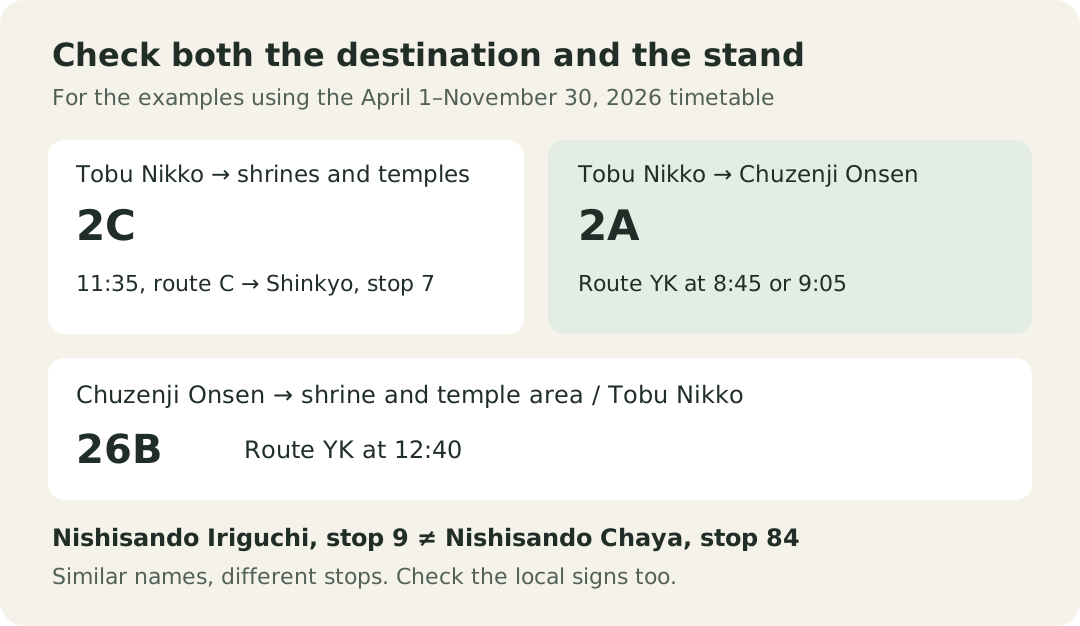
When paying cash, take one numbered ticket per person on boarding, then put it into the farebox and pay the displayed fare when getting off. With a transport IC card or contactless payment card, tap both when boarding and when getting off. Supported options include Visa, Mastercard and JCB contactless payments. The official boarding and alighting photographs show where to find the readers.
With paper bus passes, show everyone’s pass to the driver on boarding and getting off; on buses boarded through the middle door, show them when getting off. With a NIKKO MaaS ticket, activate it using 「チケットを使う」 (Chiketto o tsukau, “Use ticket”), then open 「チケットを見せる」 (Chiketto o miseru, “Show ticket”) to display the bus QR code and scan it on boarding and getting off. Presentation methods vary by seller, so follow the instructions on your ticket screen.
If you have already paid the ¥3,300 round-trip limited express supplements by card, subtract that from the totals above. The remaining transport and admission costs are ¥4,840 for the temple itinerary or ¥7,300 for the lake itinerary. Add meals to estimate how much you might need if paying cash. Subtract any other prepaid tickets when deciding how much to carry.
If you are new to Suica, read how to get and top up a Suica card before the trip so you do not need to find a payment method on arrival. Passes for unlimited travel within Tokyo cover a different area; consider Tokyo transport passes separately.
If you skip the lake, an already-purchased Chuzenji Onsen Free Pass still covers buses around the shrines and temples. Your spending does not, however, drop back to the individual-ticket temple budget.
To change a limited express ticket bought through TOBU CHIKE! without a member account, follow the link in your purchase email, verify your identity, open the purchase history details, and select 「購入済チケットの変更」 (Kōnyūzumi chiketto no henkō, “Change purchased ticket”). The deadline is before the original train departs and at least three minutes before the replacement train’s departure. There is no change fee, but the new fare is charged to your card and the original fare is refunded. Seats must also be available, so reconsider your return train as soon as a bus delay becomes apparent.
For paper limited express tickets, see Tobu’s general change rules; for tickets bought through a retailer, follow that seller’s conditions. If the departure time has already passed, ask station staff how you can return using the tickets you hold. If limited express seats are sold out, another option is to search for a route to Asakusa that includes ordinary trains.
Keep the train name, time and purchase details somewhere separate in case you cannot use your phone. You can tell station staff: 「予約した列車に間に合いません。浅草へ帰る方法を確認したいです」—Yoyaku shita ressha ni maniaimasen. Asakusa e kaeru hōhō o kakunin shitai desu (“I will not make my reserved train. I would like to check how to get back to Asakusa”). If you cannot open the TOBU CHIKE! ticket screen, read its rules for cases where you can show a saved purchase-completion screen or email. You still need a separate basic-fare ticket.
Would you rather linger over carvings, or see the lake and waterfall? Choosing your priority first makes it easier to plan a Nikko day that fits your return journey. For fitting it into a longer stay, see the Tokyo itinerary planning guide.
Frequently asked questions
Can you visit Nikko on a day trip from Tokyo?
You can take a limited express from Asakusa to Tobu Nikko and spend the day around Toshogu. To add Lake Chuzenji and Kegon Falls, leave early and plan to head down from the lake in the early afternoon. On busy days, staying in the shrine and temple area is an option.
Does NIKKO PASS include limited express supplements and Toshogu admission?
Both World Heritage Area and All Area require separate payment for limited express travel and Toshogu admission. World Heritage Area also excludes buses toward Lake Chuzenji, so compare bus costs separately for a lake trip.
Can residents of Japan buy the visitor NIKKO PASS?
Tobu’s English FAQ defines eligible buyers as non-Japanese nationals visiting Japan and Japanese nationals traveling with them. It does not explicitly state whether residents of Japan qualify. If your eligibility is unclear, budget for individual tickets; you can also compare the digital tickets sold through the Japanese-language service.
Is a limited express seat free for a preschool child?
A preschool child using their own reserved seat needs both a child basic-fare ticket and a child limited express ticket. Up to two young children per accompanying adult or child ticket holder travel free if they do not use reserved seats and the accompanying passenger holds a non-group ticket. Attractions use different age categories from the railway.
Can I use the same itinerary in autumn or winter?
The bus examples use the timetable valid from April 1 to November 30, 2026. Even within that period, autumn foliage traffic needs extra allowance. From December, replan using the winter timetable and attraction opening hours; it is better not to assume you can fit in both the lake and the shrine and temple area.
Sources and photographs
Service information comes from Tobu Railway’s timetables and Tobu Bus; rail prices come from Tobu’s fare information. Admission details are sourced from Nikko Toshogu, Rinnoji and the Kegon Falls elevator.
Photographs are by Eri Nagakusa, Gabriele Girelli, Yosuke Ota and Chuck Eugene on Unsplash, used under the Unsplash License.
* This article was translated from the original Japanese with the help of machine translation. Some expressions may not read naturally.
Related Guides
How to Plan Your Tokyo Itinerary Without Burning Out
2-3 spots per day is the right pace. Group nearby areas, add 15-minute buffers, and halve your plans on jet-lag day one. A practical framework to avoid over-scheduling.
Tokyo Station Transfers: Shinjuku, Shibuya, Tokyo and Ikebukuro
Use official maps to find gates and lines at Tokyo's major stations. Check Shinjuku's Oedo stations, Keiyo transfers, Shinkansen IC tickets, and elevator routes.
Suica Card in 2026: Buy, Top Up & Use (Physical + Mobile Guide)
Where to buy Suica, child cards, Apple Wallet vs. Welcome Suica Mobile, cash top-ups and refunds: a guide to choosing and using your card.
Tokyo Transport Passes 2026: Compare Subway, JR, and Suica by Itinerary
Compare the Tokyo Metro 24-hour Ticket, Tokyo Subway Ticket, Tokunai Pass, and more by price, lines, and validity. Calculate pass versus Suica costs for Asakusa, Ueno, Ginza, and Shibuya, and check purchase eligibility and airport sections that are not covered.
How to Eat Sushi on a Budget in Tokyo
Choose sushi in Tokyo by your meal budget. Compare tax-inclusive menu prices, opening and check-in times, access, and reservations at branches in Ueno, Asakusa, and Ginza. Learn how conveyor belt sushi works and what to check at standing bars and when buying discounted supermarket sushi.