
Moving to Tokyo as a Foreigner — Ward Office Checklist (14-Day Deadline)
Residence registration, address change, health insurance, My Number — the full ward office checklist for foreigners with required documents.

tokyo.how uses affiliate links. If you buy through these links, we may earn a commission at no extra cost to you.
On this page
The Full Process
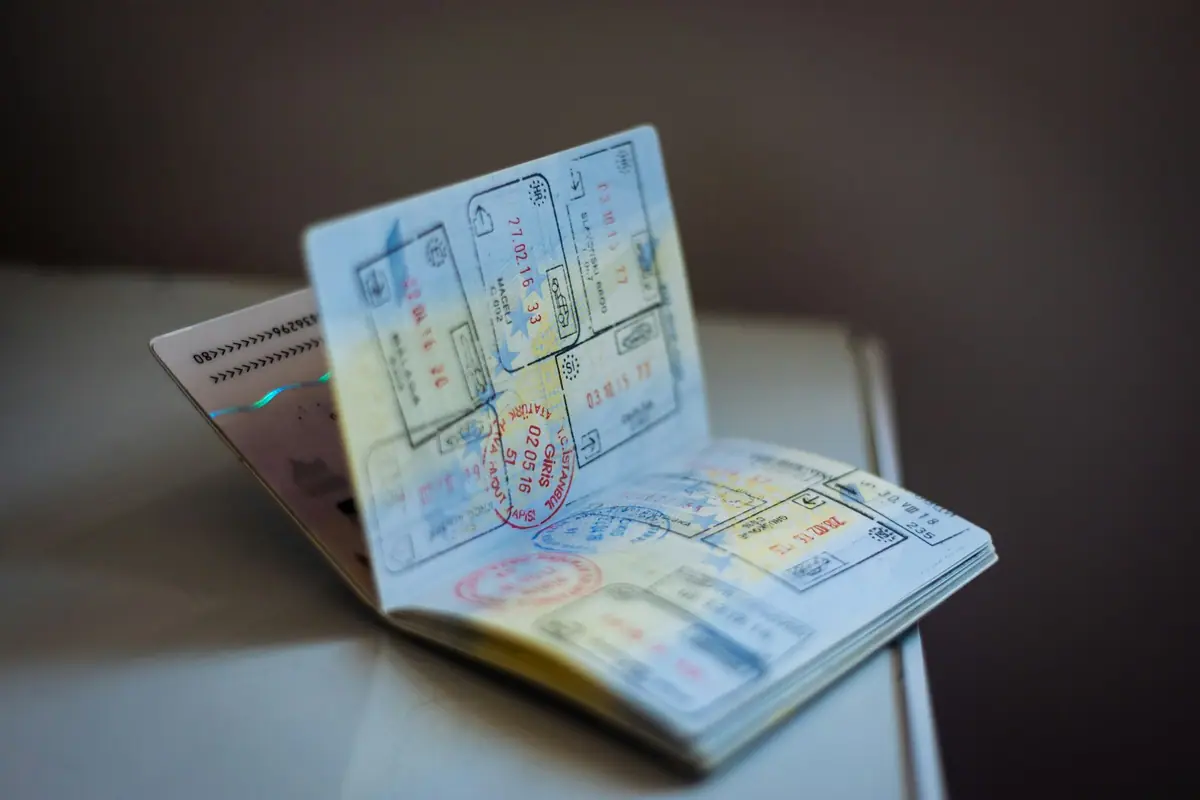
When you move between Tokyo’s 23 special wards, you notify your old ward that you are leaving and your new ward that you have arrived. Health insurance, My Number Card and other updates may also apply. This guide mainly covers moves within Japan. If you are arriving from abroad, there is no old Japanese ward certificate: check the new ward’s foreign-resident checklist and register within 14 days of establishing your actual address, not before moving in.
At your old ward office (before moving):
| Procedure | What it is |
|---|---|
| 転出届 (tenshutsu-todoke) | Moving-out notification. The ordinary route issues a Moving-Out Certificate (転出証明書); the My Number special procedure does not |
| National Health Insurance deregistration | If enrolled, confirm withdrawal and follow the old ward’s instructions for any Eligibility Confirmation Document (資格確認書) |
At your new ward office (within 14 days of moving):
| Procedure | What it is |
|---|---|
| 転入届 (tennyu-todoke) | Moving-in notification |
| Residence card address change | New address written on the back of your card |
| National Health Insurance enrollment | If eligible, enroll and confirm the new insurance eligibility information or Eligibility Confirmation Document (資格確認書) |
| My Number Card continuation | Normally requires your 4-digit PIN; ask about the procedure for a face-authentication-only card |
For people whose My Number and Basic Pension Number are linked, an address-change notification is generally unnecessary, according to the Japan Pension Service. If they are not linked, check the required filing with the pension office, municipality or employer as applicable. This exemption concerns an address change, not new enrollment or a change of insured category. For premiums and coverage, see health insurance and pension in Japan.
Outside the ward office:
| Procedure | Where | Deadline |
|---|---|---|
| Driver’s license address change | Police station or license center, unless an eligible MyNa-license-only one-stop arrangement applies | As soon as possible |
If you have a Japanese driver’s license, check whether you need a separate police or license-center procedure; the MyNa-license-only one-stop service has specific conditions.
If you’re moving within the same ward (e.g., from one Shibuya address to another), file a change-of-address notification (転居届 / tenkyo-todoke) at that ward instead of a moving-out/moving-in pair. Residence-card, My Number and insurance updates may still be needed.
Old Ward Office — Get the Moving-Out Certificate

File the moving-out notification and, if enrolled in National Health Insurance, confirm withdrawal and what to do with any Eligibility Confirmation Document (資格確認書). Allow about 30 minutes when it is not busy; online and postal options are explained below.
What to bring (based on Minato Ward and Edogawa Ward official pages):
- Residence card (在留カード / zairyu card)
- Photo ID (My Number Card or passport)
- Current NHI eligibility documents, such as 資格確認書, if issued and requested by your ward
Pick up the form, enter your new address and planned move date, and submit it. Under the ordinary procedure, you receive a Moving-Out Certificate (転出証明書 / tenshutsu shomeisho), which the new ward needs. Keep it safe. If using the My Number special procedure, including an eligible online moving-out application, a paper certificate is not issued; confirm which route applies.
What to say at the counter:
You: “転出届を出したいのですが” (Tenshutsu-todoke wo dashitai no desu ga / “I’d like to file a moving-out notification”) Staff: “こちらの用紙にご記入ください” (Kochira no youshi ni gokinyuu kudasai / “Please fill in this form”)
The form asks for your name, date of birth, current address, new address, and planned moving date. It’s in Japanese, but if you can write your address and name, you’ll get through it.
Online option: With the required My Number electronic certificates and a compatible device, you can file moving-out through Myna Portal without visiting the old ward for that notification. Other procedures may still need attention. The moving-in notification is still handled at the new ward counter; confirm the requirements if a household member or proxy will attend.
New Ward Office — The Main Event
At your new ward office, moving-in registration leads to related procedures at several counters. Preparing the required documents can reduce repeat visits, but missing documents, proxy/PIN requirements or limited opening-day services may prevent same-day completion.
Document Checklist
Based on Ota Ward (foreign nationals) and Edogawa Ward official pages.
| Document | Purpose |
|---|---|
| Moving-Out Certificate (転出証明書) | Required for the ordinary domestic transfer route; not for the My Number special procedure or first arrival from abroad |
| Residence card (在留カード) or Special Permanent Resident Certificate | Bring the documents for everyone moving; check the ward’s instructions if a residence card will be issued later |
| Passport | ID verification — sometimes requested alongside residence card |
| My Number Card (if you have one) | Continuation procedure |
| NHI deregistration proof (if received from old ward) | For new enrollment |
| Bank account info (passbook or card) | If setting up auto-pay for insurance premiums |
| Relationship proof (if joining a foreign national’s household) | Marriage certificate, birth certificate, etc. with Japanese translation (translator name + date required) |
Step by Step at the Counter
When you arrive, go to the general information desk (総合案内 / sougou annai) and say:
“転入届を出したいです” (Tennyu-todoke wo dashitai desu / “I’d like to file a moving-in notification”)
They’ll direct you to the residents’ section (住民課 / juumin-ka — the name varies by ward).
Step 1: Moving-in notification (転入届) After actually moving in, fill in the form and present residence documents for everyone moving, plus the Moving-Out Certificate for the ordinary domestic route or My Number cards for the special procedure. The staff registers the new address.
Step 2: Residence card address update Handled at the same counter as Step 1. The staff writes your new address on the back of your residence card by hand. Under Immigration Services Agency regulations, this address change is processed at the ward office — you do not need to visit immigration.
Step 3: My Number Card continuation If you have a My Number Card, you will normally enter its 4-digit PIN to continue using it. The Signature Digital Certificate used for e-Tax has a 6–16-character alphanumeric password, not a 6-digit PIN. An address change invalidates that signature certificate; request reissuance if needed.
Step 4: National Health Insurance enrollment If eligible for NHI, visit the insurance/pension section with the identity, My Number and transfer documents your ward requests. Traditional insurance cards are no longer issued. Confirm the new eligibility information for your My Number health-insurance card or the Eligibility Confirmation Document (資格確認書) provided when applicable. Delivery and same-day issue options vary by ward. If covered by employer insurance, including as a dependent, do not enroll in NHI for the same period; notify the employer/insurer of the address change.
Total time: 1–2 hours when not busy. During peak moving season (late March through early April), waiting alone can exceed an hour. Going on a weekday morning outside peak season helps.
Once you’ve completed your moving-in procedures, one of the first practical things to sort out is garbage collection — the rules vary by ward and are strictly enforced. Our Tokyo garbage sorting guide explains how to read collection schedules, separate your waste correctly, and avoid common mistakes new residents make.
The 14-Day Rule — What Happens If You’re Late

The 14-day deadline is enforced by two separate laws, each with its own penalty.
Basic Resident Registration Act (for moving-in registration): Failure to file without a justifiable reason can result in a non-criminal administrative penalty of up to ¥50,000. Do not rely on a short delay being overlooked.
Immigration Control Act (for residence-card address registration): Failure to report can result in a fine of up to ¥200,000. For mid-to-long-term residents, failure without a justifiable reason to report an address within 90 days of the permission that first establishes that status, or a new address within 90 days of leaving the registered address, can be grounds for residence-status revocation. This is not an automatic consequence of every late filing.
Being too busy to visit the ward office is understandable. But because the residence card address change is directly tied to your visa status, it’s worth treating this as a high priority. An up-to-date residence card is also needed when getting a phone number and bank account.
Language Support
Ward office forms are almost entirely in Japanese, and staff generally operate in Japanese. However, multilingual support across Tokyo’s 23 wards has been steadily improving.
Before Your Visit: TMC Navi
The Tokyo Multilingual Consultation Navi is a free phone service run by the Tokyo Tsunagari Foundation. You can ask about ward office procedures in advance and confirm what documents you need.
- Phone: 0120-142-142 (toll-free)
- Hours: Weekdays 10:00–16:00, excluding public holidays and the year-end/New Year closure
- Languages (14): English, Chinese, Korean, Vietnamese, Nepali, Indonesian, Tagalog, Thai, Portuguese, Spanish, French, Russian, Hindi, Easy Japanese
At the Ward Office Counter
Some ward offices provide tablet-based video interpretation, such as Shinjuku. An interpreter translates the conversation with staff in real time. Shinjuku lists 18 languages: 16 with language-specific weekday start times and Ukrainian/Bengali by advance reservation. Devices are limited, so availability is not guaranteed at every counter or time.
Minato Ward offers a three-way phone call service in 13 languages. You can use it directly from your smartphone.
The level of multilingual support varies between wards. Check your new ward’s website before visiting.
FRESC (Foreign Residents Support Center)
A national support center with several agencies handling residence, legal and employment questions. Languages, reservations and consultation methods vary by agency. The advertised 21-language service is for telephone reservations with the Tokyo immigration consultation office, not every FRESC service.
- Location: CO・MO・RE YOTSUYA 13F, in front of JR Yotsuya Station
- Phone: 0570-011-000 (weekdays 9:00–17:00, excluding public holidays and December 29–January 3)
Key Phrases for the Counter
Even with limited Japanese, these phrases will get your point across:
At the reception desk: “引っ越しの手続きをしたいです” (Hikkoshi no tetsuzuki wo shitai desu / “I’d like to do moving procedures”)
If you can’t communicate: “通訳サービスはありますか” (Tsuuyaku saabisu wa arimasu ka / “Is there an interpretation service?”)
If you don’t know how to fill in a form: “書き方を教えてください” (Kakikata wo oshiete kudasai / “Please show me how to fill this in”)
Common Pitfalls
Showing Up Without the Moving-Out Certificate
For the ordinary domestic transfer route, the new ward needs the Moving-Out Certificate (転出証明書) issued by the old municipality. First arrivals from abroad and eligible My Number special transfers are different procedures.
The My Number special procedure can be arranged through Myna Portal or at the old ward counter; bring the required My Number cards and PINs instead of a paper transfer certificate. If you used the ordinary route and lost the certificate, ask the old ward about reissuance, including postal options. Complete the required moving-out process before applying at the new ward.
Forgetting Your My Number Card PIN
For a standard My Number Card, continuation requires the 4-digit PIN. If you have forgotten it, resetting it needs extra identity checks and may prevent same-day completion, especially through a proxy. A face-authentication-only card has a different procedure; ask the ward.
There are several deadlines: My Number Card continuation must be completed within 90 days after filing moving-in. Late moving-in registration can invalidate the card earlier: file within 14 days after the actual move and within 30 days of the notified planned moving-out date. The 90-day continuation period does not extend those filing deadlines. Handle continuation with moving-in registration if possible.
Foreign Documents Without Japanese Translation
If you’re joining a household headed by another foreign national (e.g., moving in with your spouse), you may be asked to present documents proving the relationship — such as a marriage or birth certificate from your home country. These must be accompanied by a Japanese translation that includes the translator’s name and the date of translation. You can translate the documents yourself, but arriving without the translation means you can’t complete the process that day.
Your Name Doesn’t Fit in the Katakana Box
Ward office forms include a field for writing your name in katakana (the Japanese script used for foreign words). The boxes are often small — physically too small for many foreign names. If this happens, the staff can help with alternatives like writing in the margin or on a separate sheet.
When Things Go Wrong
| Situation | What to do |
|---|---|
| Missed the 14-day deadline | File as soon as possible. Be prepared to explain the reason for the delay. The longer you wait, the higher the risk |
| Lost your Moving-Out Certificate | Contact your old ward office and request reissuance. Some wards handle this by mail |
| Residence card back is full (no space for new address) | The ward office will guide you on applying for a new card through immigration |
| Can’t communicate at the counter | Ask staff to request TMC Navi telephone interpretation (0120-142-142, weekdays 10:00–16:00 excluding holidays/year-end closure); availability depends on the request |
| Can’t go on weekdays | Some wards hold Saturday openings once or twice a month. Search for “休日開庁” (kyuujitsu kaichou) on your ward’s website |
Driver’s License Address Change
For a Japanese driver’s license, check the Metropolitan Police address-change procedure. A separate police filing is unnecessary only if you hold a MyNa license alone and have completed the required signature-certificate submission and Myna Portal linkage for the one-stop service. Keeping a conventional license as well does not qualify for that exemption.
Where (within Tokyo):
- Any Tokyo police station (weekdays 8:30–16:30)
- Driver’s License Renewal Centers in Kanda / Shinjuku (weekdays 8:30–16:30)
- Driver’s License Testing Centers in Fuchu / Samezu / Koto (weekdays 8:30–16:30, Sundays 8:30–12:00 / 13:00–16:30)
Testing centers accept address changes on Sundays, but are closed on public holidays and December 29–January 3. Police stations and renewal centers also close on weekends; check before visiting.
What to bring:
- For a foreign resident covered by the resident-registration system with a conventional license: the license and residence card, Special Permanent Resident Certificate, or an officially issued residence-record copy containing the required particulars (issued within six months; a photocopy is not accepted)
- For a MyNa-license procedure: the MyNa license, plus a conventional license if also held; update the My Number Card address at the municipality first
The address change is free. If using a residence-record copy (住民票 / juuminhyo), confirm the required particulars when requesting it at the ward office. The documents depend on nationality and license format; a plain My Number Card is not listed as a substitute for the residence documents required of foreign holders of conventional licenses. You will also need the updated address when applying for a credit card in Japan.
Alternative Methods
Online Moving-Out via Myna Portal
With valid My Number electronic certificates and a compatible device, you can submit moving-out through Myna Portal. This avoids an old-ward visit for that notification, but does not automatically complete all insurance or other procedures. Moving-in still requires the new ward counter procedure, with the required cards/documents and any authorization for a representative.
Moving-Out by Mail
If you can’t visit your old ward office, you can file the moving-out notification by mail. Download the form from your ward’s website, enclose a copy of your ID and a return envelope. The Moving-Out Certificate will be mailed back, which can take several days to a week.
Filing Through a Proxy
A family member in the same household can file on your behalf. If the proxy is from a different household, a power of attorney (委任状 / inin-jou) is required. The form is available on each ward’s website. The proxy should also bring their own ID.
FAQ
What happens if I miss the 14-day deadline to register my new address?
Late registration of your residence card address can result in a fine up to ¥200,000 under the Immigration Control Act. File as soon as possible and explain the reason for the delay; do not assume a short delay is exempt from penalties.
Can I do ward office procedures in English?
Many Tokyo ward offices offer multilingual support, but it is not available at every counter or time. Shinjuku lists video interpretation in 18 languages, including Ukrainian and Bengali by advance reservation; start times vary by language. Minato offers a three-way phone service. You can also bring a friend to interpret or contact TMC Navi beforehand.
Do I need to visit both the old and new ward office when moving within Tokyo?
You must notify both municipalities, but do not necessarily need to visit both. Moving-out can be filed at the old ward, by mail, or through Myna Portal if eligible. The ordinary route uses a Moving-Out Certificate; the My Number special procedure does not issue a paper certificate. File moving-in at the new ward counter within 14 days of actually moving, bringing the documents for your route. A move within the same ward uses a Change of Address notification (転居届).
What documents do I need to bring to the ward office?
Bring residence cards or Special Permanent Resident Certificates for everyone moving, My Number cards if held, and a Moving-Out Certificate if using the ordinary domestic transfer route. Passport, family-relationship proof with Japanese translation, current insurance documents and pension-number documentation may also be needed depending on your situation. First arrivals from abroad do not have an old Japanese ward certificate. Check the new ward’s checklist; one-visit completion is not guaranteed.
Related Articles
- How to Find an Apartment in Tokyo — Full process from apartment hunting to contract signing
- Health Insurance & Pension in Japan — NHI enrollment, premiums, and what happens at the ward office
- Phone & Bank Account Catch-22 — Getting a phone number and bank account after moving
- Understanding Tokyo’s 23 Special Wards — What each ward is like and which might suit you
Sources:
- Ministry of Internal Affairs and Communications, “Basic Resident Registration System for Foreign Residents (Moving-in / Moving-out)” https://www.soumu.go.jp/main_sosiki/jichi_gyousei/c-gyousei/zairyu/move-in_move-out.html (accessed 2026-02-17)
- Immigration Services Agency, “Notification of Change of Address (Mid-to-Long-Term Residents)” https://www.moj.go.jp/isa/applications/procedures/nyuukokukanri10_00023.html (accessed 2026-02-17)
- Ota Ward, “Moving-in Notification (Foreign Nationals)” https://www.city.ota.tokyo.jp/seikatsu/koseki_j/gaikoku/jusho_tetsuduki/gaikokujintennnyu.html (accessed 2026-02-17)
- Edogawa Ward, “Moving-in Notification” https://www.city.edogawa.tokyo.jp/e038/kurashi/todoke/ido_todoke/tennyu.html (accessed 2026-02-17)
- Toshima Ward, “Continuation of My Number Card” https://www.city.toshima.lg.jp/096/tetsuzuki/mynumber/1706271428.html (accessed 2026-02-17)
- Chuo Ward, “Continuation of My Number Card” https://www.city.chuo.lg.jp/a0012/kurashi/touroku/mynumber/card/sonota/keizoku.html (accessed 2026-02-17)
- Japan Pension Service, “National Pension Enrollment Procedures” https://www.nenkin.go.jp/service/kokunen/kanyu/20120406.html (accessed 2026-02-17)
- Shinjuku Ward, “TV Interpretation Multilingual Service” https://www.city.shinjuku.lg.jp/tabunka/tabunka01_002088.html (accessed 2026-02-17)
- Minato Ward, “Multilingual Three-Way Call Service” https://www.city.minato.tokyo.jp/kokusaika/sansyatsuwa.html (accessed 2026-02-17)
- Tokyo Tsunagari Foundation, “Tokyo Multilingual Consultation Navi (TMC Navi)” https://tabunka.tokyo-tsunagari.or.jp/soudan/navi.html (accessed 2026-02-17)
- Immigration Services Agency, “FRESC (Foreign Residents Support Center)” https://www.moj.go.jp/isa/support/fresc/fresc01.html (accessed 2026-02-17)
- Setagaya Ward, “Online Moving-Out Notification via Myna Portal” https://www.city.setagaya.lg.jp/02233/online_tetsuzuki/94.html (accessed 2026-02-17)
- Digital Agency, “Moving Procedures Online Service” https://myna.go.jp/html/moving_oss_procedure_list.html (accessed 2026-02-17)
- Metropolitan Police Department, “Change of Registered Information (Address, Name, Registered Domicile)” https://www.keishicho.metro.tokyo.lg.jp/menkyo/koshin/kisai00.html (accessed 2026-02-17)
- Digital Agency, “My Number Health Insurance Card FAQ” https://www.digital.go.jp/policies/mynumber/faq-insurance-card (checked 2026-11-02)
- Edogawa Ward, “My Number Health Insurance Cards and Eligibility Documents” https://www.city.edogawa.tokyo.jp/e053/kurashi/iryohoken/kokuho/shikaku/hokensho.html (checked 2026-11-02)
- Shibuya Ward, “NHI Enrollment, Withdrawal and Eligibility Documents” https://www.city.shibuya.tokyo.jp/kurashi/kokuho/kokuho/kanyu_hokensyo.html (checked 2026-11-02)
- J-LIS Public Personal Authentication Service, “Passwords” https://www.jpki.go.jp/procedure/password.html (checked 2026-11-02)
- Immigration Services Agency, “Immigration and Residence Q&A — Address Registration” https://www.moj.go.jp/isa/immigration/faq/kanri_qa.html (checked 2026-11-02)
- Immigration Services Agency, “FRESC FAQ” https://www.moj.go.jp/isa/support/fresc/fresc_5.html (checked 2026-11-02)
- Tokyo Tsunagari Foundation, “TMC Navi Telephone Interpretation Support” https://tabunka.tokyo-tsunagari.or.jp/info/files/tmcnavi-interpreter-support.pdf (checked 2026-11-02)
- Ota/Edogawa moving-in instructions, Toshima My Number continuation, Japan Pension Service address changes, Shinjuku video interpretation and Metropolitan Police address-change pages listed above were rechecked on 2026-11-02.
* This article was translated from the original Japanese with the help of machine translation. Some expressions may not read naturally.
Related Guides

Living in Tokyo's Tama Region — 26 Cities with Lower Rent and More Space
26 cities west of the 23 wards with lower rent and more nature. Rent, childcare, and commute data compared city by city.

How I Landed an IT Engineering Job in Japan as a New Grad — International Student's Guide
A graduate's journey through Japan's new-grad IT hiring — summer internships, coding tests, student communities, and the path to a job offer.

Tokyo Rainy Season Mold Prevention — Room-by-Room Guide for Apartment Residents
For foreign residents experiencing their first tsuyu in Tokyo. Mold prevention by room (bathroom, closet, windows), how to use a bathroom dryer and its cost, coin laundry pricing, food safety basics from MHLW, and mental health tips for June, a month with no public holidays.
My First Solo Move in Tokyo — From Apartment Hunt to Move-In Day
A first-hand account of moving into my first apartment in Tokyo. Full breakdown of ¥300,000 in initial costs, the entire process from apartment hunting to move-in, and utility setup — all in chronological order.
Tokyo Garbage Sorting & Collection Rules
A complete guide to sorting garbage in Tokyo's 23 wards: how to find your collection schedule, dispose of bulky items, handle home appliance recycling, and avoid common mistakes that cause neighbor complaints.